Beetle vs Cockroach: 5 Easy Ways to Tell Them Apart
Quick Answer
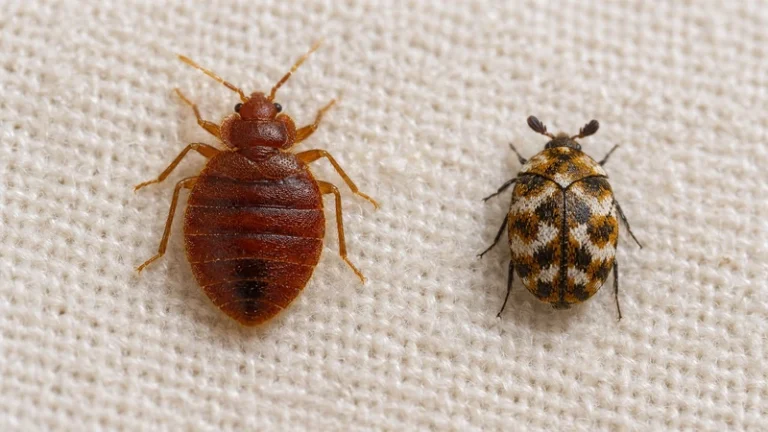
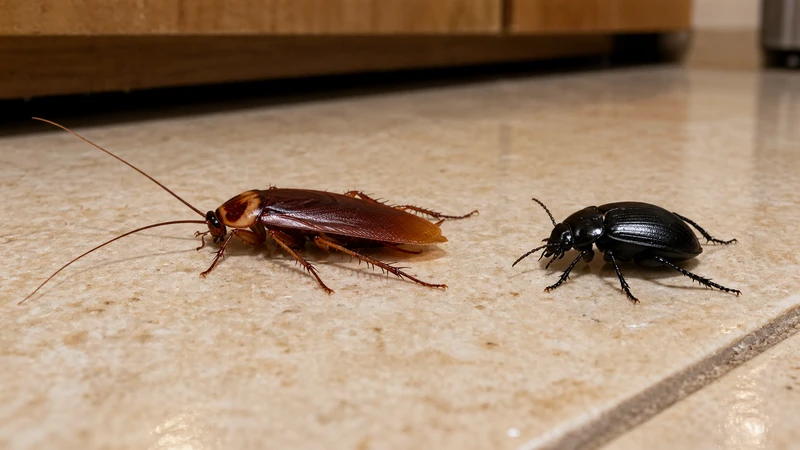
- Wing Covering: Beetles carry hard wing covers that meet in a straight line, whereas a cockroach folds leathery wings that overlap loosely.
- Antennae: On cockroaches they are thin, whip-like and extend beyond the body; on beetles they stay noticeably shorter and often clubbed.
- Body Shape: A cockroach looks flat and slippery, built to squeeze into tight spaces; a beetle appears rounder and heavily armored.
- Behaviour: Cockroaches are nocturnal, darting for cover when light hits, while most beetles keep a slower pace and wander indoors unintentionally.
- Health Risks: A cockroach infestation spreads bacteria and triggers asthma attacks, yet beetles are mostly a nuisance or property damage issue, not illness.
A dark brown bug darting across your kitchen floor in dim light triggers panic well before identification. Yet Coleoptera and Blattodea sit in separate insect orders, and according to the Smithsonian Institution, beetles alone represent roughly 40% of known insects. Knowing exactly which one you saw decides whether you need simple exclusion or urgent treatment.
Are Cockroaches Beetles? (Scientific Difference)
No, cockroaches are not beetles, and their closest relatives prove it: termites and praying mantises. According to a 2007 Biology Letters study by Inward and colleagues, termites sit inside Blattodea itself. Beetles belong to Coleoptera, so the two orders are only distantly linked as insects.
At first glance the body structures confuse people, yet life cycles settle it. Beetles pass through complete metamorphosis, egg, larva, pupa, adult, finishing beneath hardened elytra. Cockroaches hatch from oothecae as nymphs, follow incomplete metamorphosis, carry leathery tegmina and paired cerci, and show different behaviors.
Life Cycle Differences
Skip the pupa and you have the cockroach life cycle. Inside Blattodea, a hard egg case releases wingless nymphs, small copies of the adult that molt repeatedly. Each stage leaves shed skins behind, so finding those near egg casings signals breeding, not a lone wanderer.
Coleoptera rewrites the script entirely. Beetles lay eggs that hatch into grub-like larvae with an appearance nothing like the parents, then pupate before adulthood. University of Kentucky entomology specialists note carpet beetles only harm fabrics as larvae, their mandibles gnawing wool while adults visit flowers.
Body Shape and Size
Body shape settles most arguments before size does. According to Texas A&M AgriLife Extension, a German cockroach adult measures only 1/2 to 5/8 inch, yet its outline stays unmistakably flat.
- Beetles: domed and rigid, with hard shells meeting in a straight line.
- Cockroaches: oval, flattened frame; a flat shield hides the head from above.
Antennae
Skip color in poor light and check the head instead. Antenna length against body length is the fastest way to identify which insect you’re facing.
- Beetles: short antennae, often beaded or saw-toothed, rarely reaching past the thorax.
- Cockroaches: long waving antennae, thread-thin sensory organs often passing the tail end.
Wings And Outer Covering
Wings settle most roach versus beetle arguments faster than antennae ever will. According to the University of Florida’s entomology department, Coleoptera carry hardened wing covers meeting in a straight line down the back, usually reaching the abdomen tip, which creates that familiar rigid-looking, shell-like lid.
Blattodea wear something softer. University of Nebraska–Lincoln entomologists describe cockroach forewings as leathery, and BugGuide contributors note they overlap rather than forming a straight seam. Nymphs stay wingless, so baby roaches show a bare tail end where small beetles already display a hard shiny shell.
Color
Color alone causes more misidentified insects than any other trait, because dark brown bugs all blur together in low light. Texas A&M AgriLife Extension describes the German cockroach as light brown with two dark stripes on its shield, behind the head, easiest seen by flashlight.
Shade still separates the bigger suspects. Texas A&M’s guide lists American cockroaches as reddish-brown with a pale border outlining the shield, and the Oriental cockroach as nearly jet black. Ground beetles run shiny black too, while June beetles stay brown and carpet beetles look speckled.
Behavior And Movement
Behavior settles most ID doubts. Watch what happens when lights come on: one insect will scatter for dark cracks, the other usually keeps wandering slowly.
- Beetles: Clumsy fliers at porch lights, bouncing off screens; some wander inside.
- Cockroaches: Would rather run than fly; spiny legs move quickly toward crevices.
Habitat And Where Each Hides
Where a dark bug settles reveals more than its markings. Many beetles are accidental indoor visitors, while cockroaches stay put, choosing hiding spots near dampness.
Beetle Habitat
Beetles live where they eat. According to University of Kentucky entomologists, powderpost beetles develop inside hardwood floors, furniture and beams. Wardrobe feeders stay in stored clothes and rugs, while grain feeders occupy opened dry food.
Cockroach Habitat
Follow the plumbing first. German cockroaches pack into humid kitchen cabinets and drawers beside leaky pipes. The big roaches rise from sewer lines into a damp basement, wedging into dark sheltered places until night falls.
Feeding Habits
Diet separates these two faster than any marking. According to Texas A&M AgriLife Extension, cockroaches are scavengers that eat almost anything, from crumbs and food waste to pet food left overnight. That is why garbage, drains, and greasy countertops keep feeding a German cockroach population.
Beetles are specialists by comparison. Pantry beetles stay inside flour, cereal, and grains. Ground beetles are predators that hunt other outdoor insects. According to University of Kentucky Entomology, carpet beetle larvae eat wool, fur, and similar natural fibers. Wood-boring beetles feed deep inside untreated wood.
Signs, Evidence And Damage
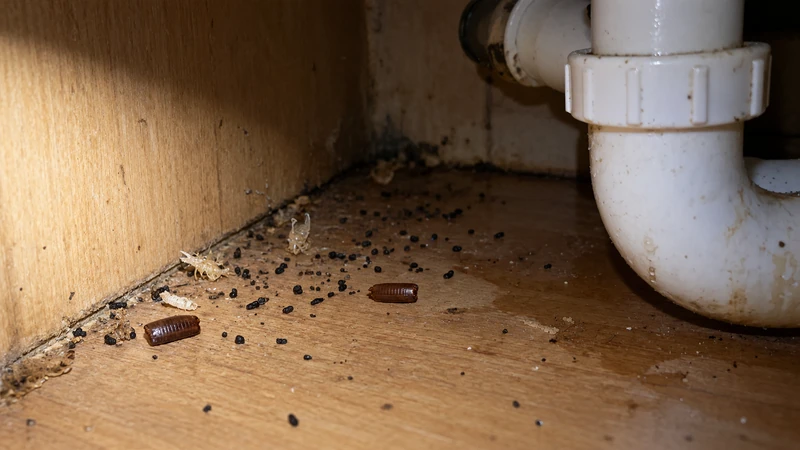
Forget the bug itself; what it leaves behind is more reliable. Each pest marks a home differently, and those traces point to the right treatment.
Signs And Evidence
- Pepper-like droppings, egg cases, and a musty odor near sink plumbing point straight to roaches.
- Shed larval skins and fuzzy worms along window sills or closets typically signal carpet beetles.
- Tiny round holes with fine powder beneath, called frass, mean wood-boring activity in exposed beams.
- Little black beetles inside food containers or stored food usually indicate a pantry pest instead.
Damage
Cockroaches contaminate food and food surfaces; according to the EPA, their droppings and shed skins can trigger asthma. Beetles hit property instead: fabric holes in clothing, or structural damage that eventually ends in lumber replacement.
5-Step ID Check + Comparison Table
Skip the panic; this at a glance routine separates a look-alike beetle from a true cockroach in under one minute.
The 5-Step ID Check
- Ignore colour first. Dark brown fools everyone. Long waving antennae, always moving, signal a roach; short, clubbed or beaded ones suggest a beetle instead.
- Trace the back. According to Texas A&M AgriLife Extension, beetle forewings harden into wing covers meeting in a straight line; roach wings overlap with a papery texture.
- Judge the armour. A beetle’s hard shell looks rigid, domed like a ladybug; a roach’s oval-shaped body sits flatter, leathery, with a smaller head tucked beneath.
- Startle it. Quick pests that run for cover when disturbed are usually roaches; most beetles stay slow-moving, or simply take flight toward nearby lights.
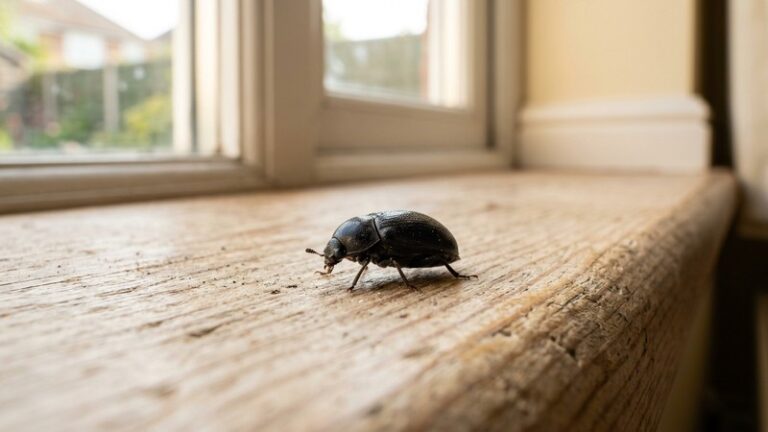
- Check the address. Roaches favour dark undisturbed areas under sinks and behind refrigerators; a lone beetle on a sunny window sill is typically an accidental visitor.
Side-By-Side Comparison Table
Still unsure after five checks? Match the key differences below before requesting targeted treatment quotes.
| Trait Checked | Cockroach Signs | Beetle Signs |
|---|---|---|
| Antennae Shape And Build | Thin, long, flexible feelers | Shorter, saw-toothed or curved |
| Wings And Outer Covering | Leathery; rarely fly indoors | Protective shield with grooves |
| Movement When Light Hits | Fast, sudden, hide instantly | Slower, clumsier, often airborne |
| Evidence Left Behind Indoors | Pepper-like droppings, egg cases | Exit holes, powdery dust |
| Typical Risk To Households | Bacteria, allergies, food poisoning | Fabric pests or nuisance |
German Cockroach
Much shorter than your thumb yet stubborn, the German cockroach rarely travels far from warm appliances. Penn State Extension describes adults as 1/2 to 5/8 inch, light brown, with two dark stripes just behind the head. Check the dishwasher motor, cabinets, and electrical outlets first.
A daytime sighting usually means the hiding spots are already crowded. Females carry the ootheca until it nearly hatches, so colonies multiply quickly beside food waste, starches, and sweets. Though winged, they simply run instead; clearly not all cockroaches can fly when spooked in kitchens.
American And Oriental Cockroaches
The American cockroach deposits purse-shaped capsules, and University of Florida IFAS records roughly 16 eggs inside each. Its red hue, long legs, and near 2 inches of length make it unmistakable around water heaters and service ducts, where warm months push it toward gliding flight.
The Oriental cockroach, the so-called water bug, prefers things cool and damp. Measuring 25-31 mm in glossy black, it creeps from gutters and decaying vegetation into crawl spaces and laundry rooms. Males wear stubby wings, females only pads; both scavenge decaying organic matter without flying.
Baby Roach Vs Beetle
A tiny speck darting near the sink isn’t always a harmless beetle; baby roaches usually reveal themselves through behavior first.
How Movement Gives Roach Nymphs Away
According to Penn State Extension, German cockroach nymphs resemble copies of the adult, smaller and wingless. At the earliest stage they measure a few millimeters, barely larger than a pinhead. Their dark bodies scatter in groups, and that quick burst separates them from solitary beetles.
- Beetles tend to plod in a straight line, while nymphs dart for cover.
- A hard, shell-like back with a center seam points to a beetle.
- Sightings behind the stove or dishwasher at night suggest a hidden roach harborage.
Where You Find Them Matters More Than Size
Location often settles the question before a magnifier does. Roach nymphs cluster where water and food meet, including bowls of pet food left overnight. Pantry beetles stay inside dry goods, while carpet beetle larvae graze on fabric, so each spot hints at a different pest.
- Flour, cereal, or rice with small holes usually means pantry beetles, not roaches.
- Pepper-like specks near damp corners point toward roaches and a growing population.
- Still unsure? Request a quote and get matched with a local pest professional.
Beetles That Look Like Cockroaches
Most cockroach lookalikes are harmless, and little black beetles in house corners usually prove it. Meet the beetles that look like roaches to an untrained eye.
Ground Beetles: The Porch-Light Sprinters
From a distance, ground beetles are an easy mistake: fast, dark, roach-like, with long legs. According to University of Minnesota Extension, they do not breed indoors. These predators hunt pest insects, drawn by outdoor lights on a summer night, wandering into kitchens or wall voids.
- A hard back and visible head separate them from cockroaches.
- Black or brown bodies gather beneath any bright porch light.
- Seeing dozens weekly? A licensed local pro can confirm identification.
Of all the lookalikes, ground beetles cause the most confusion because they are shiny, dark, and fast across a floor. According to University of Minnesota Extension, they live outdoors under rocks, leaf piles, and woodpiles, and they do not reproduce inside homes or damage anything.
A quick look at the antennae settles it: theirs are short and thread-like, while a roach carries whip-long feelers. The hard exoskeleton meets in a straight line down the back. Tightening door sweeps and switching porch lighting to yellow outdoor bulbs usually stops accidental visitors.
Click Beetles And June Beetles: Noise At The Window
Homeowners often report a slim roach that jumps. That confusion points to click beetles: long, narrow bodies, brown or black, which land on their back, flip upright with a loud click. June beetles differ, each a large brown bug, oval, thudding against a screened window.
- The body snaps at a hinge just behind the head.
- Dark click beetles wander indoors but do not nest there.
- June beetles chase lights, circling the porch light each evening.
Click Beetles
Click beetles are slim, tube-shaped, and brown, which is enough to startle anyone at midnight. Texas A&M AgriLife Extension notes they snap a spine on the underside to flip upright, producing an audible click. No cockroach does that, so the sound alone works as identification.
They wander indoors on summer nights, drawn by light near windows and entry doors, and they are harmless once inside. Their larvae, called wireworms, stay in soil and feed on plant roots. Releasing the beetle outside and repairing torn screens is all this visitor needs.
June Beetles
June beetles thump against porch screens in late spring, and their reddish-brown shell gets them mistaken for American roaches. Look at the build instead: a June bug is stout, rounder, and clumsy, with a domed back. Roaches are flat and built to slip into cracks.
Texas A&M AgriLife Extension explains that adults fly toward lights at night while their white grubs feed on turfgrass roots in gardens and lawns. So this beetle species is a yard issue, not a kitchen one. Finding one indoors rarely means anything is breeding there.
Pantry Beetles And Carpet Beetles: The Small Indoor Breeders
A quick glimpse of something small in the flour makes people think roaches, yet pantry beetles and Indian meal moths are likelier culprits. Carpet beetles are smaller still. Adults gather on window sills while their larvae, resembling fuzzy caterpillars, damage wool and other natural fibers.
- Check cereal, spices, and pet food for live insects first.
- Eggs hatching indoors mean these species, unlike ground beetles, stay.
- Inspect stored fabrics every season; larvae feed unseen for months.
Pantry Beetles
Pantry beetles are small, 2-3 mm, and brown, so people assume they found baby roaches. University of Kentucky Entomology lists flour, cereals, seeds, and pet food among the stored goods they infest. They usually arrive inside a package bought at the store, not through walls.
The fix is plain housekeeping. Throw out infested items, vacuum the shelves, and move everything else into airtight containers. A Grain Beetle slips into thin pantry packaging, yet it stays close to the food storage area. Roaches spread toward water, so location tells you plenty.
Carpet Beetles
Carpet beetles are oval, mottled, and barely 1/16th of an inch long, yet their bristly brown larvae get reported as roach nymphs constantly. University of Kentucky Entomology notes the adults eat pollen outdoors and often turn up on window sills trying to get back outside.
The larvae do the damage, feeding on feathers, furs, leather, and woollen fabrics stored in closets. Shed larval skins along baseboards are the usual evidence. They do not spread germs the way roaches can, but an ignored population will quietly ruin sweaters, rugs, and upholstery.
Wood-Boring Beetles And Water Bugs: Clues And Labels
A wood-boring beetle announces itself through exit holes and fine powder, rarely live bugs, and it spreads no germs. Water bugs are another story. That label gets attached to unfamiliar, large dark insects, yet most are American cockroaches or Oriental cockroaches, not lookalikes at all.
- The scientific distinction matters: true water bugs live in ponds.
- Photograph any roach-like bugs before treating; identification guides the fix.
- Unsure which you have? Request a local inspection quote today.
Wood-Boring Beetles
Wood-boring beetles are narrow, brown, and about the size of a roach nymph, so mix-ups happen. The difference is where they appear: near woodwork, floorboards, or furniture, not near drains. University of Kentucky Entomology describes powderpost beetles as small insects that reduce wood to powder.
Their signature is tiny round holes with fine powder, called frass, sifting out beneath. Roaches leave nothing like that. Activity can continue for years inside structural timbers, and borate products only protect bare, unfinished wood, so an inspection is worth arranging before expensive damage spreads.
Water Bugs
Water bug is a nickname, not a species. Across Texas, many people use it for the Oriental cockroach, a dark brown, slow-moving roach found in damp basements and floor drains. True water bugs are aquatic insects living in ponds, and they rarely enter a house.
So when someone reports a water bug under the sink, treat it as a roach until proven otherwise. Oriental roaches have a greasy sheen, long feelers, and a musty odor around pipes. A black beetle has neither, and a licensed local pro can confirm which.
Why Correct Identification Matters
Most homeowners assume every dark insect is a roach, yet beetles that look like cockroaches fool people daily. A mistaken identification wastes money on the wrong treatment. According to the EPA, cockroach allergens can trigger asthma, while most dark beetles usually remain harmless wanderers indoors.
Body structures and habits settle the cockroach vs beetle question quickly. Roaches spread germs and signal an infestation; cockroach lookalikes rarely do. If confusion lingers, reach out today, and we’ll connect you with a licensed local pest control professional who gets it correctly identified first.
Control And Prevention
Roach work starts with sanitation and moisture, not DIY sprays. Texas A&M AgriLife Extension favors gel baits over broadcast spraying. Wipe crumbs, use sealed containers, fix drainage, caulk foundation cracks, and run dehumidifiers until your hygrometer reads 45-50%. American or Oriental activity needs a pro.
Beetles demand a different playbook per species. Carpet beetle larvae respond to vacuuming and washing fabrics at 120°F. Ground beetles need exclusion: seal gaps around doors. A wood-boring beetle risks structural damage, so message us and we’ll quickly connect you with a licensed local specialist.
Cockroach Control
Store-bought sprays scatter roaches; they rarely finish them. According to the U.S. Environmental Protection Agency, lasting control starts with sanitation: clearing pest attractants like food waste from surfaces, drying every water source, and sealing openings. Afterwards, pro-grade baits and growth regulators suppress German cockroach populations.
Natural repellents such as bay leaves, garlic, or cucumber slices remain popular folk deterrents, yet University of Kentucky entomologists point to baits as the most effective household tool. Because this pest can reproduce quickly, a recurring service from licensed pest control services delivers preventative treatment.
Beetle Control
Beetle control begins with finding the source, not spraying. Texas A&M AgriLife Extension entomologists advise locating infested items first: inspect pantries, natural fabrics like wool and silk, and stored lumber. Discarding spoiled pantry food protects the remaining food supply, removing larvae and their food sources.
A single beetle usually wandered in through window cracks, door frames, or an entrance left open near bright lights, so sealing gaps often suffices. Repeated sightings or damage patterns in structural timber justify professional identification, since wood-boring beetles and carpet beetles need completely different responses.
When To Call A Professional
One German cockroach indoors justifies calling a professional immediately, while single insects like stray beetles rarely do. According to the EPA, cockroach allergen exposure can trigger asthma symptoms, a real worry around kids. If you’re unsure which you saw, identify it before choosing any treatment.
Hand the problem to a licensed pest control service when any of these signs appear:
- Repeated indoor activity: sightings over several nights suggest roaches reproduce rapidly inside your wall voids.
- Droppings like black pepper, smear marks, or egg cases point to an established cockroach infestation.
- Exit holes, powdery dust, or tapping sounds signal a wood-boring beetle that needs targeted dust.
- Beetles that look like roaches keep fooling you; send a clear photo to a technician.
- Store sprays keep failing, since heavy infestations need growth regulators and crack-and-crevice treatments, not guesswork.
FAQs
How Do I Tell a Roach From a Beetle?
Start with the back, not colour. A beetle’s stiff outer set of wings meets in a straight line, forming a shell-like cover. Roaches show a papery shell and wiry antenna near full body length. That giveaway survives any photo; one close look settles insect ID.
What If I Find a Cockroach?
One sighting rarely means one roach. Droppings like black pepper, egg cases, or shed skins confirm repeated activity; roaches multiply fast. According to the EPA, their allergens can trigger asthma. Call early: we connect you with licensed local pros before an infestation spreads through kitchens.
Are All Dark Brown Bugs in the House Cockroaches?
No. Plenty of dark brown visitors aren’t roaches. Tiny bugs that look like chia seeds, barely a pinhead wide, are often pantry beetles with a shell-like back, not baby roaches. An outdoor insect wandering indoors is a nuisance; German cockroach nymphs are a health risk.
Should I Worry About One Beetle?
Usually not. According to Texas A&M AgriLife Extension, June beetles fly to lights at night, so a single beetle near an entry door or garage is low concern. Worry when multiple insects accompany tiny holes in wood or wood damage; then request a local specialist.