
Roaches in Texas: 8 Types, Signs & How to Get Rid of Them
Quick Answer
Roaches in Texas are expected neighbors, not proof of a dirty house. Texas A&M AgriLife Extension counts about 30 cockroach species in the state, yet only around six species regularly reach homes. What matters is spotting an occasional visitor versus a growing infestation that’s breeding indoors.
- German cockroach: small tan roaches that breed fast inside.
- Year-round threat: heated homes shelter indoor populations through winter.
- Water, food, and shelter pull roaches in from outside.
- Right treatment follows identification, then steady prevention habits.
Spotting roaches in Texas is rarely the problem; the question is whether that sighting came from an outdoor visitor or a hidden indoor population. Heavy rain, extreme heat, and cooler fall nights push them indoors.
According to Texas A&M AgriLife Extension, thirty species of cockroaches live statewide, but few move inside. The German cockroach and brown-banded cockroach thrive in kitchens and bathrooms, so naming the species shapes the right response.
Are Cockroaches Common In Texas?
Yes, cockroaches are common in Texas, and a sighting surprises few longtime residents. The state’s warm, humid climate keeps them active nearly year-round, so spotting one is normal. What really deserves attention is whether you’re seeing a stray visitor or the start of an infestation.
Frequency shifts with location. The Gulf Coast and East Texas stay damp enough for outdoor species such as the reddish-brown roach locals call palmetto bugs to thrive in landscaping and culverts. Out near El Paso and the Texas Panhandle, dry air and colder nights thin them out, yet drought pushes survivors toward the kitchen, bathrooms, and spots with plumbing problems.
According to UC Statewide IPM, young roaches of mixed ages inside a home signal an active breeding population, while one big roach after rain usually just wandered in from outside. Once several sightings stack up, matching with a vetted provider for pest control in Texas beats grabbing another spray can.
Common Cockroach Species in Texas
Texas A&M AgriLife Extension points out that just five species cause most of the trouble inside Texas buildings. Learning their size, color, and markings tells you whether a roach drifted in from outdoor settings or is quietly breeding indoors near your appliances.
American Cockroach
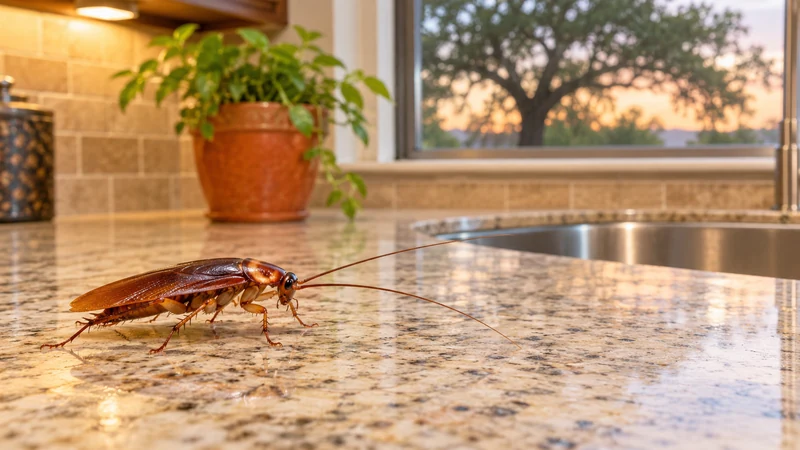
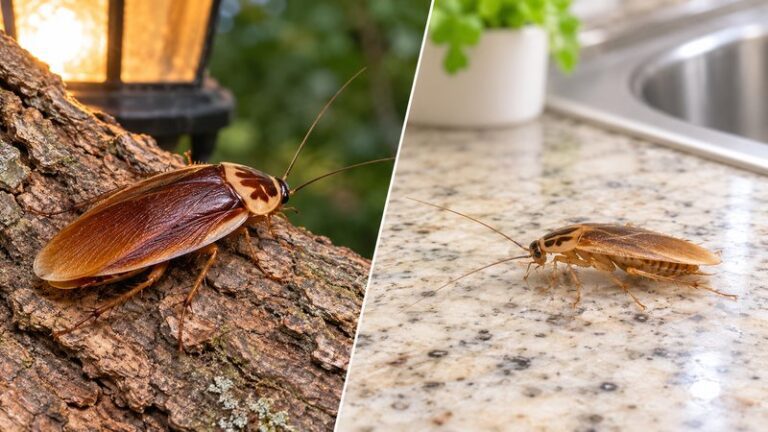
The large roach sprinting across a garage after storms is usually a guest, not a resident. Texas A&M calls the American cockroach the largest common species in the state. This reddish brown roach favors high humidity, hides under bark and leaf litter, and enters through sewer lines and drains when summer heat spikes.
- Size: Adults commonly reach 1.5 in or slightly longer.
- Markings: A pale border outlines the shield behind its head.
- Indoor Risk: Moderate, mostly on lower floors and in crawl spaces.
German Cockroach
Flip that logic for the German cockroach, where the smallest roach does the most damage. Texas A&M ranks it the most prevalent cockroach in Texas, living entirely indoors around kitchens, cabinets, and sinks. Females carry egg cases until hatching, so nymphs pile up fast, often riding in on grocery cartons or used appliances.
- Size: Just over 0.5 in, tan to light brown.
- Markings: Two dark stripes run lengthwise behind the head.
- Indoor Risk: High; daytime activity usually signals heavy crowding.
Asian Cockroach
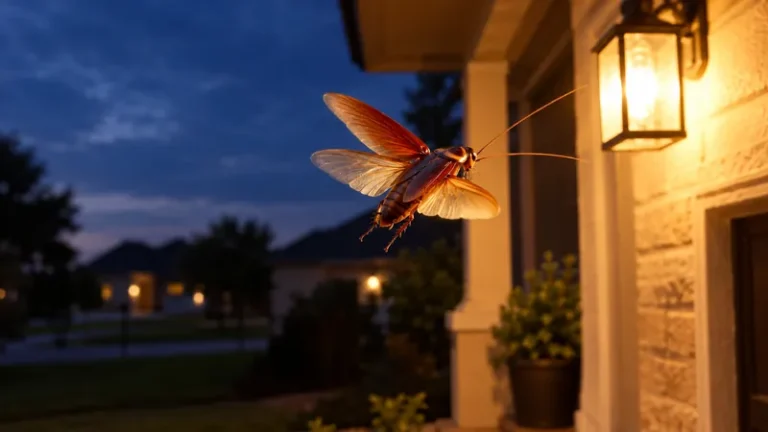
Here’s where identification gets tricky. According to Texas A&M, the Asian cockroach is practically identical in appearance to the German, yet its behavior is nothing alike. It lives in lawns, mulch, and shaded landscaping, then will fly toward porches and bright lights at dusk, slipping through open doors on warm humid evenings.
- Size: Roughly 0.5 in, a near twin of German.
- Markings: Same twin stripes, plus long wings built for flight.
- Indoor Risk: Low to moderate; drawn to irrigated yards, rarely nesting indoors.
Brown-Banded Cockroach
The brown-banded cockroach quietly breaks the “roaches need water” rule. It prefers warm, dry rooms high off the floor, including upper cabinets, closets, bedrooms, and the backs of furniture or electronics. Females glue egg cases onto hidden surfaces, so a colony can spread from room to room well before anyone sees an adult.
- Size: About half to five-eighths of an inch long.
- Markings: Two pale bands cross the wings and abdomen.
- Indoor Risk: Moderate, especially inside warm, dry heated winter homes.
Oriental Cockroach
The Oriental cockroach is the slow, cold-tolerant roach many people mistake for a beetle. It’s glossy, dark brown to nearly black, with a broad body and no ability to fly. Look in damp crawl spaces, sewers, and around floor drains, especially during cooler months when other species slow down.
- Size: About 1 in; females have only wing stubs.
- Markings: No bands or stripes; males show short wings.
- Indoor Risk: Moderate around plumbing leaks and standing water.
Smokybrown Cockroach
Porch lights on a hot humid summer night pull in a glossy, deep brown roach that many Texans mistake for an American one. It’s the smokybrown, measuring 1.25–1.5 in, its wings reaching past the abdomen. According to Texas A&M entomologists, it needs high humidity, so it flies readily toward damp, shaded cover.
- Habitat: Hollow trees, woodpiles, and leaf litter near homes.
- Entry Points: Roof gaps and vents leading into attics.
- Shelter: Trim branches, clear gutters, and thin deep mulch.
Field Cockroach
Seeing a German look-alike active by day and circling outdoor lights? Texas A&M AgriLife Extension calls that the field cockroach, an outdoor species of southeast and far-west Texas feeding on rotting plants under irrigated landscaping.
- Two Dark Stripes: Sit behind the head, with a darker face.
- Working Wings: Takes flight quickly when disturbed in mulch.
- Leaf Litter: Main hideout; indoor sightings usually mean strays.
Wood Cockroach
Settling the wood roach vs cockroach debate saves panic: Virginia Tech Extension says these native Parcoblatta species, living under bark and in woodpiles, die within days indoors because homes lack moisture, so they cannot infest.
- Full Wings: Only males fly; short-winged females stay grounded.
- Firewood: Carries hidden nymphs inside during fireplace season.
- American Roaches: Similar shape, but wood roaches stay smaller.
Texas Flying Cockroach
Ask most Austin or Fort Worth homeowners about flying roaches in Texas and they’ll describe so-called water bugs launching off patios on a hot summer night. Texas A&M AgriLife Extension notes several local species are drawn to lights, so in warmer months, porch bulbs near windows invite them indoors.
- Strong Fliers: Asian cockroach flies well on longer wings.
- Short Gliders: American roaches only fly short distances downward.
- Grounded Species: Oriental roaches can’t fly, staying near damp soil.
Species Summary Table
Before requesting a local quote, match the roach you caught against this quick reference; size and markings usually settle the ID faster than location alone.
| Species | Size | Color | Markings | Habitat | Indoor Risk |
|---|---|---|---|---|---|
| American | Up to 2 inches | Reddish-brown | Yellowish figure-eight mark | Drains, utility rooms | Moderate, after storms |
| German | 13–16 mm | Light tan | Two parallel stripes | Warm humid areas | High indoor risk |
| Asian | Nearly German-sized | Tan, slender build | Two dark stripes | Lawns, shady spots | Low indoor population |
| Brown-Banded | About 0.5 inches | Light brown | Twin pale bands | Warm dry spots | High, hard to control |
| Oriental | Up to 32 mm | Shiny, jet black | Plain, broad body | Cool damp areas | Moderate near drainage |
| Smokybrown | Up to 1.5 inches | Dark mahogany | Smooth, unpatterned | Tree holes, attics | Moderate via eaves gap |
When Are Cockroaches Most Active?
Cockroaches are most active at night, and their seasonal activity peaks run from late spring through summer, when warmer, wetter weather pushes populations up. According to Texas A&M AgriLife Extension, most species hide by day and forage after dark, so timing matters for any inspection.
- Dusk to evening: Some outdoor species take flight now, heading straight toward artificial light sources.
- Extreme heat: Triple-digit afternoons push roaches toward cooler, damper voids, so sightings often jump suddenly.
- Year-round: Established indoor species reproduce in any month, since steady thermostats never trigger a slowdown.
- Disturbance: Daytime roaches mean something flushed them out, or a serious infestation outgrew its cover.
A warm climate layered with a humid climate stretches the active season, so the time of year you begin monitoring shapes what you’ll find. When after-dark sightings keep climbing, we can connect you with trusted pest control in Haslet, TX.
Signs of a Cockroach Infestation
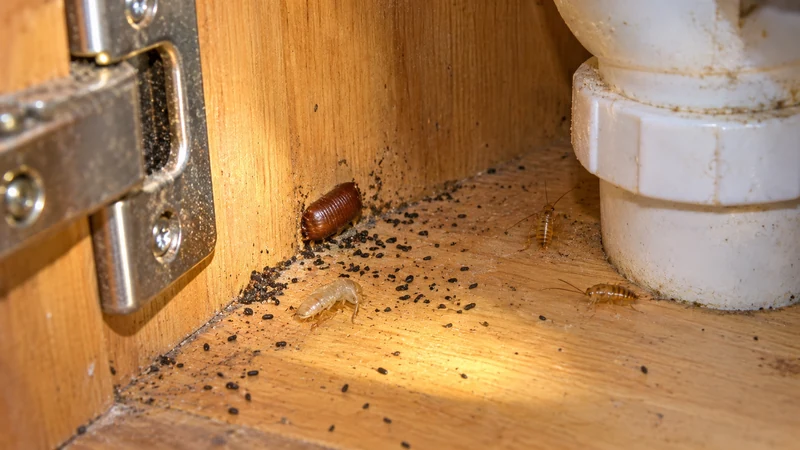
Most people in Texas homes panic over one roach, yet sightings rarely tell the full story. The evidence hides around cabinet hinges, appliance motors and other hiding spots, where a growing infestation leaves its trail.
- Repeated sightings: According to Texas A&M AgriLife Extension, roaches seen by day usually point to a large infestation.
- Mixed sizes: Tiny juveniles beside a winged adult signal several generations sharing tight spots.
- Egg cases: Brown capsules wedged into crevices, cardboard folds or picture frames mean breeding is underway.
- Shed skins: Pale, hollow casings left by growing nymphs pile up under sinks and inside electronics.
- Droppings: Pepper-like specks in hard-to-clean spaces, near upper cabinets and along wall gaps mark travel routes.
- Allergens: Unexplained sneezing can hint at roaches; the U.S. EPA links saliva and body fragments to asthma.
Outdoor Visitor vs. Indoor Infestation
Not every roach inside means trouble. Large outdoor species often wander in after heavy rain, slipping through garage gaps, damaged door sweeps or an open door, drawn by outdoor lights rather than seeking long-term shelter.
| Sign | Outdoor Visitor | Indoor Infestation |
|---|---|---|
| Timing | One roach at night, usually during hot summer months | Frequent sightings in daylight, even in winter |
| Location | Near floor drains, patios, or a second-story window | Spread across several rooms, kitchens and closets |
| Life Stages | Lone large adults only | Constant indoor breeding with small juveniles |
| Debris | Little to none | Visible debris, smears, and growing casings |
A current infestation rarely fixes itself, especially in neighboring units with shared plumbing. When clues stack up, connecting with a licensed pest control expert through a referral service beats guessing and speeds up tailored treatment.
Why Cockroaches Should Not Be Ignored
Roaches have outlasted dinosaurs by millions of years, so a few home sightings rarely stay “just a few.” One female that breeds fast can turn small problems into widespread infestations within a season, carrying bacteria and triggering allergies quietly, long before most homeowners even notice.
- Contaminated Surfaces: Roaches crawl from drains onto counters and microwaves, leaving germs behind each night.
- Asthma Triggers: According to the EPA, roach droppings and shed skins can trigger asthma attacks.
- Rapid Breeding: A single capsule hides dozens of eggs, and nymphs mature into adults quickly.
- Hidden Damage: Roaches chew cardboard, nest inside wall gaps, and leave a lingering musty odor.
Sprays offer temporary relief, but DIY fixes rarely reach nests hidden inside Texas homes. Licensed pest control services bring real expertise, and we’ll quickly connect you with a trusted local professional before the problem spreads.
How to Get Rid of Cockroaches
The visible roaches are rarely the problem; the eggs, hiding spots, and travel routes behind your walls are. According to Texas A&M AgriLife Extension, sprays alone seldom fix established infestations, so treatment must dig deeper.
DIY vs. Professional
Sticky traps and gel baits handle light activity, but a German infestation that breeds fast outpaces most homeowners. That gap is where professional cockroach control pays off, because technicians rotate products and track entry points.
| Factor | DIY | Professional |
|---|---|---|
| Best Fit | A few scattered kitchen sightings | Spread-out hardest pests like German roaches |
| Inspection | Flashlight check under sinks | Thorough inspection of vents and plumbing access |
| Products | Retail gels, dusts, and sprays | Rotated baits plus insect growth regulators |
| Egg Cases | Hidden oothecae often survive | Treats cracks and hidden surfaces directly |
| Cost Over Time | Cheap upfront, repeat purchases add up | Higher upfront fee, faster and longer-lasting results |
Choosing the Right Response
Your response should match the species, not your frustration. A lone American cockroach drifting in from sewers after a storm differs from many cockroaches in a clean house, which signals an established breeding colony indoors.
- Sealing entry points: Caulk small gaps around pipes and utility lines to block outdoor invaders.
- Fix leaks under sinks and run dehumidifiers, since roaches survive weeks without food but not water.
- Sealed containers and lidded trash cans starve colonies, making every bait placement far more attractive.
- Pepper-like droppings that return after two DIY rounds mean it’s time to compare licensed local pros.
How to Prevent Cockroaches in Texas Homes
Texas heat and humidity give roaches a near-endless season, so keeping them out costs far less than evicting them. Texas A&M AgriLife Extension backs Integrated Pest Management: starve them, block them, then monitor the corners.
- Fix leaks before scrubbing counters; water sources like leaking pipes and sweating floor drains sustain roaches longer than stray crumbs.
- Seal entry points with caulk around plumbing openings, then weatherstrip doors; a garage door lacking a seal welcomes outdoor species.
- Rework landscaping: pull mulch beds from foundations, trim roof branches, clear gutters; smokybrown and Asian cockroach colonies often hide there.
- Inspect deliveries before unpacking; German cockroach egg cases ride inside grocery bags, cardboard boxes, and used appliances straight into kitchens.
- Seal food in containers, rinse pet bowls nightly, empty garbage before bed, and cut clutter that offers shelter beside meals.
- Place sticky traps under sinks and along wall gaps; University of Kentucky entomologists use catches as a simple observation guide.
- Compare licensed technicians when repeated sightings persist; our referral network connects Texas homeowners with IPM pros, not endless store-bought sprays.
Is It Normal to See Cockroaches in Texas?
Yes, seeing cockroaches in Texas is perfectly normal in both city homes and rural homes. Mild winters keep them active year-round, and according to Texas A&M AgriLife Extension, they can infest even a clean home.
What Attracts Cockroaches in Texas?
Water, food, and dark shelter attract cockroaches in Texas. Texas A&M AgriLife entomologist Molly Keck notes they move indoors chasing moisture, so leaky faucets, grease on stoves, crumbs, and pet feeding areas draw them fast.
What Time of Year Do Cockroaches Come Out?
Cockroaches are most active from warm spring through early fall, with summer activity peaks. Outdoor activity climbs in April and slows after October, though heavy rain or drought drives them indoors, even during cold months.
Why Are There Suddenly So Many Cockroaches in My House?
A sudden surge usually means outdoor roaches were driven inside or a hidden indoor population outgrew its space. After a storm or floods, sewer roaches travel through plumbing, while small indoor species multiply inside walls.
One Comment