
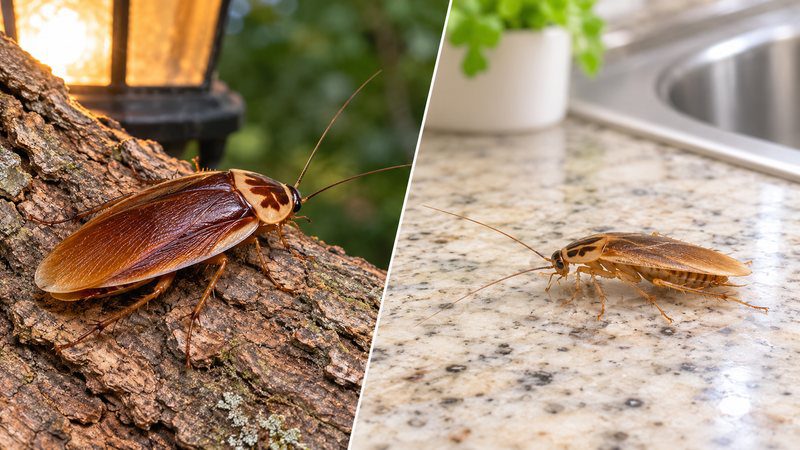
Wood Roach vs Cockroach: How to Tell If It’s Harmless
Quick Answer
A wood roach on the patio in June is a lost visitor; an indoor species like the German cockroach means real trouble.
- Identification: wood roaches have cream edges on the pronotum; German roaches show two dark stripes behind the head.
- Behavior: wood roaches move slowly and don’t flee, while indoor roaches run from light and dart into cracks.
- Breeding: Penn State Extension confirms wood roaches can’t breed inside; they dry out in 48–72 hrs, unlike German roaches.
- Health Risk: wood roaches are harmless outdoor decomposers; German roaches spread Salmonella, allergens, and childhood asthma triggers.
Spot small roaches in the kitchen all year? Call (512) 646-0117 to get matched with professional help.
That chestnut-brown roach buzzing around your porch lights on a June night is probably not the one to worry about. The ½ inch striped intruder hiding behind appliances is. Telling them apart decides almost everything.
According to Penn State Extension, Parcoblatta pensylvanica lives outdoors under loose bark and leaf litter. Its adult males fly toward lights during mating season, wander inside by accident, then usually die from dehydration within days.
The German cockroach (Blattella germanica) is the opposite story: it multiplies year-round indoors and carries 20+ bacteria types. If roaches keep appearing in kitchens or bathrooms, suspect indoor breeding and get a professional inspection early.
How To Tell Wood Roaches And Cockroaches Apart (Identification)
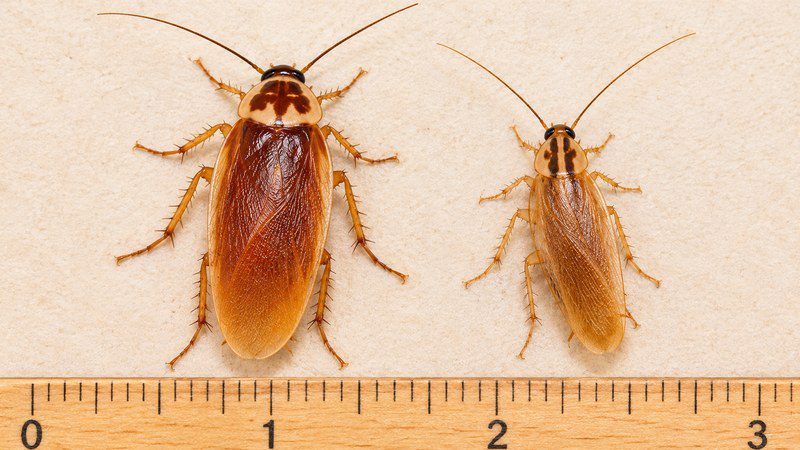
Homeowners panic at any brown insect near the porch, yet a harmless wood roach and an infesting species differ in ways you can confirm quickly.
Size And Shape
Grab a ruler first. An adult wood roach body measures close to 1 in, flattened and oval. A German roach stays under ¾ in, so anything that size near the sink deserves a second look.
Color And Markings
According to Penn State Extension, wood roaches wear chestnut brown with pale wing edges and a cream-rimmed thorax. German roaches carry two dark stripes behind the head, while an Oriental cockroach shows solid coloring throughout.
Wings And Flight
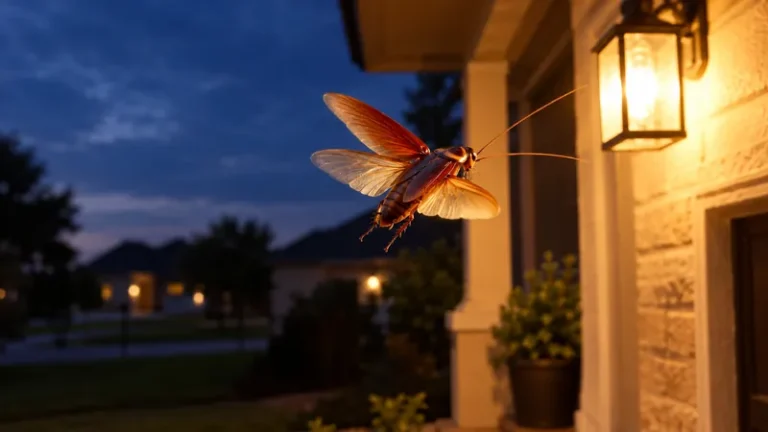
Only adult males use their wings, which extend past the body, and they fly at dusk toward bulbs. Females carry short wings and cannot fly. German roaches have full wings yet almost always sprint instead.
Behavior And Movement
Flip on a kitchen light and watch. German roaches are nocturnal and scatter instantly, but wood roaches stay slow, wander openly during the day, and don’t run from light, looking strongly drawn to it instead.
Where They Live
Wood roaches belong under bark, in wood piles, and inside decaying leaf litter that stays damp; dry indoor air shortens their survival. German roaches settle into cabinets near food, breeding wherever crumbs and warmth meet.
Behavior And Habitat
Habitat is the fastest tell: one roach belongs to the woods, the other quietly moves into your kitchen and stays.
Wood Roach Behavior And Habitat
As a native species, the Parcoblatta wood roach lives under logs, bark and forest leaf litter, feeding on decaying organic matter in damp outdoor spots. According to Penn State Extension, males turn into strong fliers during mating season, while females, with stubby wings, cannot fly.
- Peak activity hits around late May, when males fly toward lights on warm summer evenings.
- Stacked firewood and wood piles shelter them, which is how most come indoors by accident.
- Homes are too dry, so strays will not breed indoors and die quickly from dehydration.
Cockroach Behavior And Habitat
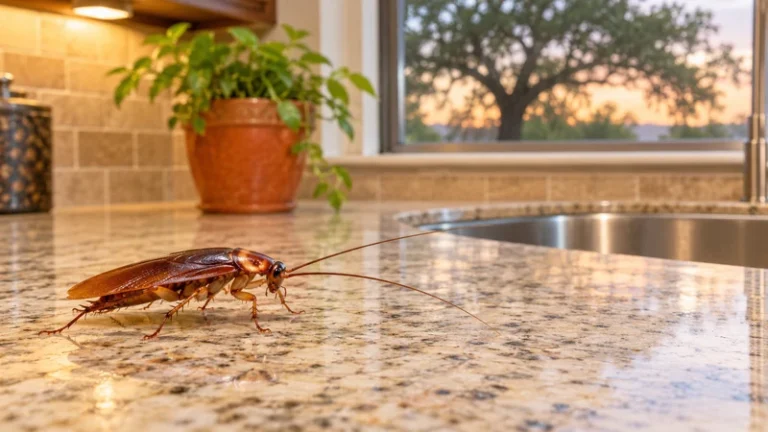
German cockroaches are built for indoor survival. They’re nocturnal, fast, and the whole bunch runs from light the moment a switch flips. Texas A&M AgriLife Extension points to kitchens, the warm dishwasher motor and a humid bathroom as prime spots to harbor and breed indoors.
- A single German cockroach can lead to thousands within a year, spreading droppings behind appliances.
- American roaches, often called water bugs, prefer sewers, basements and drains, much like Oriental roaches.
- A wood roach doesn’t flee, but these scatter instantly; daytime activity often warrants professional control.
Can Wood Roaches Breed Indoors? (Life Cycle)
Almost never. According to Penn State Extension, the Pennsylvania wood cockroach rarely survives indoors, because it needs outdoor moisture to mate and lay eggs. Strays that wander in usually die within days, so an indoor breeding population signals another species.
Wood Roach Life Cycle
Each life stage unfolds outdoors among damp wood debris, leaf litter and decaying plant matter.
Eggs
Once mating ends, females tuck egg cases under logs and loose bark, where high moisture shields each capsule through the hot dry summer months.
Nymphs
Hatchlings emerge as wingless nymphs that feed on organic-rich debris, molting slowly and repeatedly, overwintering in protected habitat before reaching adulthood the following year.
Adults
Males develop long wings for mating flights in late May–June, while females keep short non-functional wings and stay near damp shelter, ready to breed.
Why They Rarely Breed Indoors
Household humidity is the barrier. According to University of Kentucky Entomology, wood cockroaches dehydrate in dry, heated rooms, and one wood roach inside usually dies in 48–72 hrs. Without damp firewood or rotting wood, females can’t multiply inside homes, however many males fly toward lights.
These signs of indoor breeding (egg cases, droppings, multiple small striped roaches and sightings all year) point to German or brown-banded cockroaches instead. That pattern warrants a licensed pro, and we can connect you locally.
Health Risks And Damage
One is a seasonal nuisance; the other brings real, lingering health concerns into your home.
Wood Roaches
According to Penn State Extension, wood roaches are harmless outdoor insects carrying no disease and causing zero structural harm. Strays indoors usually die quickly from dryness, so a simple broom handles them; they’re not dangerous.
Cockroaches
According to the EPA, cockroach droppings and shed skins are major asthma triggers. The American cockroach tracks bacteria across counters, helping spread disease. Because these pests breed fast near food and water, call a pro.
Classification
Both insects belong to order Blattodea, yet their family lines split where household risk begins.
Wood Roach
Wood roaches belong to the genus Parcoblatta, and the Pennsylvania wood cockroach is its best-known species. According to Penn State Extension, it thrives outdoors, breaking down rotting leaf debris as part of a healthy ecosystem.
Cockroach
Pest cockroaches mostly belong to genera Blattella and Periplaneta, including German and American species that breed indoors year-round. According to the EPA, their droppings and shed skins carry allergens, making them more than a nuisance.
When Do Wood Roaches Show Up?
Late spring into early summer is peak season, when winged males fly toward night lights.
- According to Penn State Extension, males seeking a mate swarm patio lights.
- Pool lights and security lights near wooded areas mean more activity nightly.
- Winter sightings often trace to holiday greenery; nymphs overwinter until next spring.
How Wood Roaches Get Inside
Wood roaches rarely target a house deliberately; most slip indoors by accident on warm May–June evening flights.
- Flying males, per Penn State Extension, zero in on bright lights and security lights.
- Gaps around doors and gaps around windows let wanderers crawl straight in.
- Logs stored near the foundation smuggle hidden roaches inside with each armload.
- Clogged rain gutters and cedar shake roofs shelter roaches beside attic gaps.
Control, Removal And Prevention
Most wood roach visitors need eviction, not treatment; true cockroaches demand a different, stricter plan.
Wood Roach Removal
- One stray? Sweep it up or vacuum it; spraying is not needed.
- According to Penn State Extension, wood roaches rarely reproduce indoors in dry homes.
- These strays are not pests indoors; there’s no need to treat aggressively.
Cockroach Control
- An American cockroach signals hidden colonies breeding in warm, damp wall voids.
- Droppings like coffee grounds or pepper, a musty smell, and egg cases.
- Those signs need professional pest control; licensed baiting stops nymphs before they mature.
Prevention Tips
- Seal entry points like foundation cracks, utility openings, and gaps under doors.
- Add door sweeps, fix screens, and store firewood 20+ ft from walls.
- Roaches follow light; swap porch lights for yellow LED bug lights in May–June.
When You Need Professional Help (Signs Of Indoor Breeding)
One wood roach rarely matters; indoor breeding leaves different clues, and those deserve genuine worry.
- An egg case wedged behind appliances means females lay eggs indoors now.
- Empty oothecae beside tiny nymphs and adults mean eggs hatch inside your walls.
- Roaches staying active year-round, past the summer window, signal an indoor population.
- Healthy colonies hide during the day; roaches active in daylight signal overcrowding.
Per Penn State Extension, wood roaches rarely establish indoors, so breeding signs call for professional baiting.
FAQs
How Can I Tell A Wood Roach From A Regular Cockroach?
Check the wing edges. Penn State Extension notes wood roaches carry pale edges along the prothorax and wings, while German cockroaches show two dark stripes. Females have very short wings, and males fly toward light.
Are Wood Roaches Dangerous In My House?
No, they’re a nuisance pest. Texas A&M AgriLife experts report no evidence of wood roaches spreading disease or contaminating food the way German cockroaches do. They cause no damage, so you can put them outside.
Do Wood Roaches Multiply Inside Homes?
Rarely. According to the University of Kentucky, dry indoor air means wood roaches can’t feed or grow, and most die within days. Their life cycle stays outdoors. Roaches seen all year suggest another breeding species.
Why Do I Only See Them In Late Spring And Early Summer?
That’s mating season. Penn State Extension explains males fly at night during warm months, chasing bright white lights and slipping through open doors. Switching to yellow LED bug lights cuts sightings until breeding winds down.
2 Comments