How to Get Rid of Spiders in Texas (That Actually Work)
Quick Answer
- Knock down spider webs regularly using cobweb dusters or brooms, and seal entry points like cracks, gaps, and utility lines to block spiders from re-entering.
- Pyrethroid insecticides like bifenthrin and cyfluthrin applied to corners, baseboards, and storage areas offer strong residual control against active hunting spiders.
- Sticky traps placed along baseboards help monitor and control ground dwelling spiders, especially in garages, attics, and closets where activity spikes.
- Reduce insects — the primary food source for spiders — by fixing moisture problems, eliminating standing water, and switching to sodium vapor bulbs outdoors.
Texas homes deal with spider invasions year-round, and knowing the right control approach makes all the difference. From Black Widow threats to harmless cellar spiders, each species demands a targeted response. Professional pest control, smart prevention, and consistent inspection habits together form a complete defense — protecting your family, pets, and home from unwanted crawlers.
Remove Spider Webs
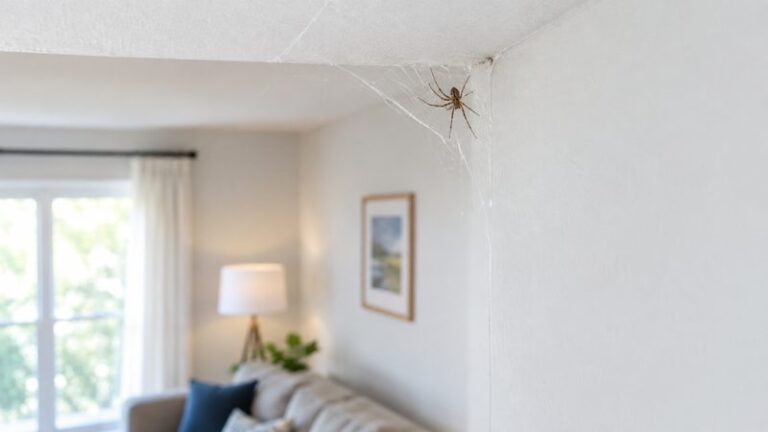
Knocking down webs around corners, window frames, and exterior eaves disrupts active spider activity without chemicals. According to the National Pest Management Association, consistent web removal discourages spiders from returning to same locations, signaling that conditions aren’t favorable for webbing, shelter, or food collection points.
Ignoring ceiling corners, porch lights, and outdoor furniture means webs keep multiplying. Use a flashlight to inspect cabinets, light fixtures, and sheds during your sweep. Removing webbing early eliminates egg sac anchoring spots and reduces infestation before it escalates throughout your structure.
Chemical Sprays
Pyrethroid insecticides — including bifenthrin, cyfluthrin, and deltamethrin — are among the most effective chemical treatments for spider populations in Texas. Apply along baseboards, wall cracks, and pipe penetrations where crawlers hide. According to Texas A&M AgriLife Extension, targeted insecticides outperform broadcast DIY sprays significantly.
Insecticidal sprays alone show limited repellency without addressing entry points or insect populations. Residual dusts and non-repellent dust formulations reach voids and inaccessible areas where spiders thrive. Store-bought sprays often prove ineffective against recurring spider populations because they fail to reduce insects attracting new arachnids indoors.
Use Professional Pest Control
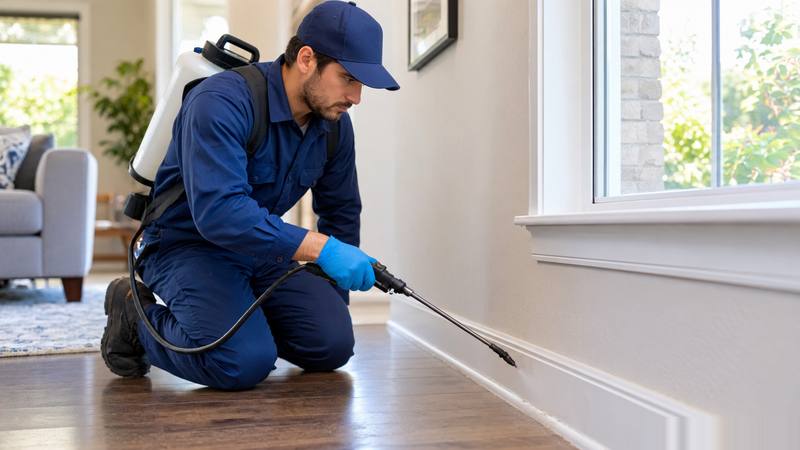
Professional pest control addresses recurring infestations by combining insecticides, traps, and preventative measures that homeowners rarely access. Experts reduce insects that attract spiders, seal entry points, and install sticky traps near garages and storage rooms — delivering ongoing protection that DIY methods simply cannot maintain year-round.
Licensed spider elimination specialists also treat both interior and exterior areas with residual chemical treatments, safely for children and pets. According to the Environmental Protection Agency, trained technicians eliminate conditions that cause spider activity to return — making professional service the most consistent, effective, long-term method for Texas homeowners.
Seeing Spiders at Home?
Get rid of spiders for good — book your free inspection.
Fast, no-obligation quote from trusted local pest control pros.
Sealing Entry Points
Most spider invasions don’t start with an infestation — they start with a gap. Cracks in the structure, open pipe and wire penetrations, and unscreened weepholes give spiders direct indoor access. According to the University of California IPM Program, excluding entry zones reduces residence-based spider activity more reliably than any spray alone.
Filling those openings with sealant and packing wall void areas with copper mesh eliminates the pathways spiders use to move from outdoor landscaping directly into living zones. Pairing this with plastic storage bins fitted with sealing lids and tape over seams on stored boxes removes both travel routes and interior hiding places simultaneously.
Organized Storage Areas
Cluttered storage zones are silent invitations — spiders find undisturbed, out of the way places ideal for nesting and hide.
- Switch cardboard boxes to plastic storage bins with sealing lids; this eliminates hidden wall void areas where ground dwelling spiders typically establish themselves undetected.
- Tape all seams and boxes shut firmly, since even minor gaps become access points for crawlers seeking warm, cozy spots inside your residence.
- According to the National Pest Management Association, routine decluttering directly reduces spider populations by removing quiet areas they use to hide and lay spider egg sacs.
- Sticky traps placed along baseboards work as passive monitoring tools — revealing activity levels and catching active hunters before infestations escalate beyond control.
Consistently maintaining organized storage is one of the most underrated yet effective long-term steps toward spider control in any Texas home.
Monitoring and Inspection
- Conduct routine inspections along baseboards, wall voids, and storage areas where ground-dwelling spiders tend to hide undisturbed.
- Monitor dark corners of attics, closets, and garages for fresh webs, egg sacs, and crawler activity indicating active infestations.
- According to the University of California’s Integrated Pest Management Program, identifying spider species during inspection helps determine whether they are venomous or non-venomous before selecting a control method.
- Sticky traps and glue boards placed along entry points and pipe or wire penetrations serve as both a monitor tool and early-detection method.
- Inspect outdoor access points, weepholes, and vegetation overhangs that touch the structure — these are the most active spider pathways into your home.
Use Spider Traps
Spiders rarely wander into open spaces without a reason — they follow insects, their primary food source. Placing sticky traps near baseboards and ground dwelling zones intercepts crawlers before they hide deeper. According to Pest World, glueboards placed along edges consistently outperform aerosol-only approaches.
Roach traps aren’t just for roaches — their vacuum-like design can suck up wandering spiders and bugs simultaneously, targeting two fronts at once. Position them inside storage areas, attics, and closets where ground dwelling spiders prowl undisturbed. This method proves surprisingly effective even without chemical treatments.
Control Outdoor Lighting
Outdoor lights silently attract moths, flies, mosquitoes, and beetles — essentially building a meal delivery system for spiders. Active feeders returning nightly to warm zones near your home exploit this pattern ruthlessly. Switching to yellow-toned or sodium vapor bulbs, as recommended by the University of Florida IFAS Extension, disrupts this recurring cycle immediately.
Insects congregating near exterior lights create conditions that keep spiders indoors-bound and cozy. Reducing insect activity around entry points means spiders lose their primary food source and have no reason to leave quiet areas behind your walls. Treating these zones year-round prevents returning populations from attracting new spider populations.
Landscaping Control
Overgrown shrubs, thick grass, and dense mats of ground cover give funnel weaver spiders — including Agelenopsis and Hololena species — ideal shelter near your foundation. Late summer through early fall, these beneficial predators shift from outdoor zones toward buildings and corners of buildings, following prey migration patterns indoors.
Landscaping discipline directly impacts moisture problems — standing water and damp areas near the foundation fuel insect populations, which sustain spiders long-term. Repair drainage issues, trim back landscaping, and eliminate hiding places to reduce recurring pest protection needs. Fewer insects present means fewer insects for spiders to feed on — it’s that direct.
Why Do Spiders Keep Coming Back?
Spiders return because your home keeps offering exactly what they need — food, shelter, and easy access. If insects are present, a spider sees a meal nearby. According to Texas A&M AgriLife Extension, conditions like moisture problems and standing water in damp areas silently attract both insects and spiders indoors.
Eliminating recurring spider activity requires understanding that these arachnids aren’t random visitors — they’re responding to reasons your space gives them to stay. A warm spot, clutter, or unchecked insect populations tells every spider this is a cozy, reliable territory. Once those triggers are eliminated, returning becomes pointless for them.
Do DIY Sprays Really Work?
Most homeowners reach for insecticide spray brands without checking whether the formula suits spiders specifically. Standard insecticidal sprays often carry high repellency, which causes spiders to spread rather than die — pushing them deeper into interior walls. Pyrethroid insecticides like bifenthrin, cyfluthrin, and deltamethrin are more effective when applied correctly to corners and storage areas.
According to the National Pest Management Association, foggers are hazardous to children and pets and remain largely ineffective against spider populations. Natural insecticide sprays using high-quality natural ingredients protect your family’s health and safety but need consistent reapplication. For active hunting spiders, non-repellent dust formulations and residual dusts in voids offer better long-term control without reestablishment.
Remove Spider Egg Sacs Promptly
Spider webs act as both a meal ticket and nursery — remove them regularly using cobweb dusters, brooms, or vacuums before fresh webs signal that this location is still active. Each egg sac a female deposits can release hundreds of spiders, making killing and controlling populations exponentially harder. According to pest control experts, early removal is the most overlooked long-term solution.
Clean attics, closets, garages, and storage rooms where spiders hide and reproduce undisturbed. Suck up visible crawlers, webbing, insects, and egg sacs with a vacuum to eliminate existing infestations before they move indoors permanently. A professional company can inspect protected areas and apply preventative measures where recurring sac activity keeps appearing near baseboards and wall cracks.
Reduce the Insects Spiders Feed On
Spiders do not randomly settle — they follow food sources. Texas homes that have insects present become unintentional hunting grounds. According to the National Pest Management Association, controlling ant populations and other crawling pests directly disrupts spider colonization patterns far more effectively than targeting spiders themselves.
Veteran pest professionals in Texas have consistently observed that when recurring spider activity persists, an underlying bug infestation is almost always driving it. Eliminate the meal ticket, eliminate the spider. Addressing other pests is not secondary — it is the foundational strategy most homeowners overlook entirely.
Cats as Spider Repellent
Biological instincts make domestic cats one of the most underrated forms of biological control inside Texas residences. Cats actively hunt and disrupt spiders, particularly ground-dwelling species that prey on crawling insects. According to Texas A&M AgriLife Extension, natural predators — including household pets — reduce spider settlement behavior significantly in homes.
What most people miss is that a cat does not just kill the spider — its scent and movement patterns alone alter spider activity zones. Spiders, being sensitive arachnids, avoid areas where predator presence is consistently detected. This makes cats a passive, continuous deterrent operating without chemical exposure.
Use Roach Traps
Glue boards — commonly sold as roach or rodent traps — serve a dual-purpose control function that most Texas homeowners underestimate. Placed along baseboards and in corners, these sticky traps intercept active hunting spiders that patrol floors at night. According to Purdue University Extension, glueboards are among the most effective passive monitoring tools for spider populations indoors.
Beyond controlling target pests, roach traps reveal infestation intensity, species type, and movement corridors. Positioned inside storage rooms, garages, attics, and closets, they capture ground dwelling spiders without chemical exposure — making them a practical, low-risk method for consistent long-term control inside Texas structures.
Types of Spiders in Texas
Black Widow Spiders
Black widows rank among Texas’s most venomous spiders, identified by their jet-black body and signature red hourglass marking on the abdomen. According to the University of Texas Extension, females grow up to 1.5 inches and bite defensively when disturbed — requiring immediate medical attention for vulnerable individuals including children and elderly.
These beneficial yet dangerous arachnids typically claim enclosed spaces like garages, woodpiles, and wall void areas as territory. Unlike roaming hunters, they construct irregular messy webs close to the ground and remain in one place for extended periods, making targeted insecticide sprays or professional spider control the most effective response strategy.
Brown Widow Spider
Brown widows — a close relative of black widows — display tan-to-brown coloring with an orange or yellow hourglass, making visual identification trickier inside homes and outdoor living space. According to Texas A&M AgriLife Extension, brown widows produce distinctively spiky egg sacs that differentiate them from other cobweb spiders within the Theridiidae spp. family classification.
Their venom carries cytotoxic properties but typically causes localized pain rather than systemic reactions. Brown widows favor dark corners, kitchens, bathrooms, fencing gaps, and stored boxes — hiding in quiet places rarely disturbed. Early monitoring with glue boards around storage areas helps detect spider activity before increasing infestations develop.
Brown Recluse Spiders
Brown recluse spiders — Loxosceles reclusa — carry a necrosis-inducing venom that distinguishes them as Texas’s most medically significant species. Identified by a violin-shaped marking on the cephalothorax and two rows of four eyes arranged in a semicircle, they’re frequently mistaken for funnel weaver spiders or sac spiders by untrained observers.
According to the National Pest Management Association, brown recluse spiders prefer attics, closets, crawl spaces, and wall cracks — active hunters that wander at night rather than relying on sticky threads. Their bite site can develop serious tissue damage weeks later, making professional pest control and residual dusts in inaccessible areas the most reliable long-term control approach.
Cellar Spiders
Cellar spiders, often dismissed as harmless ceiling dwellers, are actually Texas‘s most misunderstood arachnids. According to the University of Florida’s Entomology Department, these long-legged species thrive in enclosed spaces like garages, basements, and crawl spaces — rarely bite, yet their tangled webs signal increasing moisture problems worth addressing.
What most homeowners overlook: cellar spider activity isn’t random. Their webbing clusters near kitchens and bathrooms because prey insects congregate near water sources. Removing spider webs with cobweb dusters while eliminating underlying conditions that attract them gives far more effective long-term results than reactive spraying alone.
Household Spiders in Texas
Household spiders in Texas aren’t a single species — they’re an ecological category. According to the Texas A&M AgriLife Extension, the common brown house spider selects wall void areas, window frames, and storage areas where insects are reliably present. Their presence often marks a pre-existing pest imbalance inside your structure.
What makes house spiders difficult to eliminate is behavioral: females deposit eggs in stored boxes and closets, ensuring the next generation hides before you notice. Disrupting reproduction requires targeting attics, closets, and garages — not just visible webs — while reducing the insect food chain that sustains spider populations long-term.
Funnel Weaver Spiders
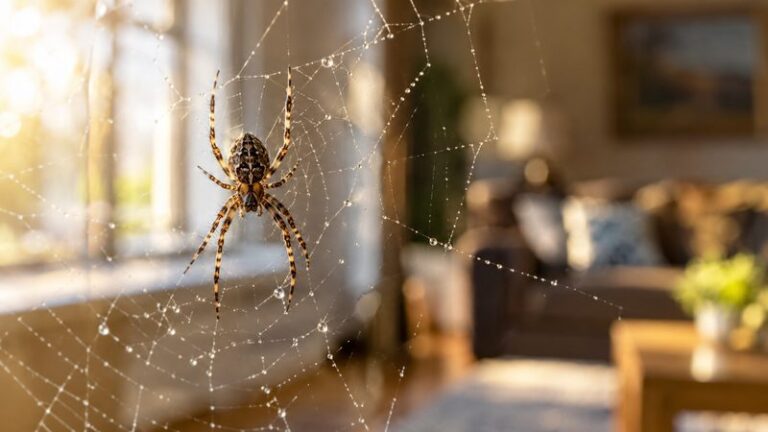
Funnel weaver spiders build distinctive flat, sheet-like webs with a tubular hide retreat — a design that functions as both snare and shelter. According to Texas A&M’s integrated pest management program, these brown ground-level architects are active hunters once prey touches the web surface, making outdoor vegetation and landscaping their preferred habitat.
Monitor their webbing patterns near foundation edges and electrical boxes: concentrated funnels near wall void areas or protected areas indicate broader insect pressure driving spider activity. Because they snare prey rather than wander, sealing structural gaps and managing exterior insects disrupts their food source far more efficiently than direct chemical application.
Hobo Spiders
Hobo spiders (Eratigena agrestis) build funnel-shaped webs in dark, undisturbed corners of Texas homes — garages, crawl spaces, and storage rooms being their preferred hideouts. According to the University of California Agriculture & Natural Resources, hobo spiders are non-venomous to a clinically significant degree, yet their bites can cause localized irritation.
What makes hobo spiders persistent is their behavior: they hunt at night, moving across floors rather than staying in webs. Sealing wire penetrations, weepholes, and foundation gaps with copper mesh dramatically reduces their ability to enter your residence — a practical step most homeowners overlook entirely.
Sac Spiders
The yellow sac spider (Cheiracanthium inclusum) is among the most underestimated indoor threats in Texas. Unlike species that stay in one place, sac spiders roam corners of ceilings and walls, building small silk sacs as daytime shelters. Their venom causes minor cytotoxin reactions — rarely severe, but uncomfortable enough to demand attention.
Insecticidal sprays using lambda-cyhalothrin or esfenvalerate applied along interior baseboards and exterior walls offer strong residual protection. Microencapsulated formulations and wettable powders tend to outperform standard aerosol flushing agents against sac spiders because the slow-release chemistry disrupts reestablishment patterns effectively.
Wolf Spider Texas
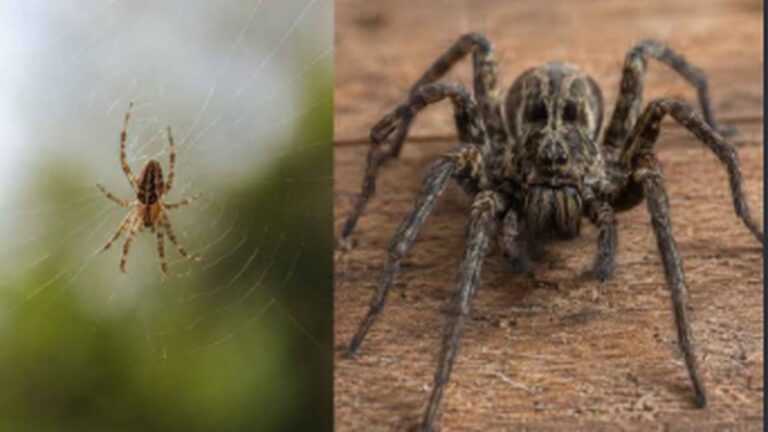
The wolf spider is one of the most common species Texas homeowners encounter. Wolf spiders (Lycosidae spp.) are ground-level predators that don’t spin webs — they hunt prey actively, which makes conventional spider traps less effective than expected. Texas species can be small to medium sized or impressively large, often causing alarm due to their bristly legs and fast movement across outdoor surfaces.
Vegetation and landscaping management matters enormously here — prune shrubs, trim tree branches that touch the structure, and clear overhangs to eliminate access points. Reducing outdoor lighting by switching to sodium vapor bulbs limits the prey insects wolf spiders attract toward your building, cutting their food supply at the source.
Suggested Thresholds
Spider infestations don’t follow a fixed rule — but pest professionals recognize certain thresholds before recommending long-term control action. According to the University of Texas Extension, spotting more than three dangerous species like brown recluse or black widow indoors within a week signals a recurring problem needing intervention beyond simple DIY steps.
Monitoring frequency matters more than most homeowners realize. When spider populations visibly spike within storage rooms or foundation zones, that’s a threshold crossed. Consistent glove-protected inspections of landscaping, irrigation boxes, and crawl spaces help track activity before it becomes a full infestation requiring professional spider elimination methods.
When Is the Best Time to Spray for Spiders?
When is the best time to spray for spiders in Texas? Late summer through early fall is the peak window — this is when spider populations are at their highest and actively migrating toward structures. Applying pyrethroid insecticides along baseboards, entry points, and exterior walls during this period delivers the strongest residual protection before temperatures drop and spiders seek indoor shelter.
Biological Control Measures
A cat is arguably one of the most underrated biological tools — their instinct for hunting and dispatching spiders makes them an effective natural predator in low-level situations. Penn State Extension confirms that encouraging beneficial predators like funnel weaver spiders outdoors can actually suppress pest spider activity by competing for the same prey insects.
Reducing the insects spiders feed on is a biological strategy rooted in disrupting the food chain. Fewer ants, fewer prey — fewer spiders. Recurring pest protection targeting aquatic insect sources near irrigation zones and dense outdoor vegetation creates conditions where spider activity naturally declines without chemical application.
Mechanical Control Measures
Mechanical control starts where spiders enter: doors, gaps near utility lines, and small openings around the structure. Sealing these with weather stripping or caulk physically blocks both insects and spiders. According to Pest World (NPMA), exclusion is among the most effective ways to achieve long-term prevention — especially when combined with spider traps.
Spider / sticky traps work on a simple principle — a live spider or crawling pest walks across the surface and gets caught. Positioning roach traps alongside spider repellant stations targets two fronts simultaneously. For egg sacs found in a web corner, physically remove, seal inside a plastic bag, and place directly in outdoor trash to promptly eliminate the next generation.
Frequently Asked Questions
What’s the Fastest Way to Get Rid of Spiders?
Sticky traps placed along baseboards catch wandering spiders faster than most methods. According to the University of California IPM Program, combining insecticidal sprays at entry points with vacuuming webs delivers immediate reduction. Insecticides targeting spider populations work best when applied consistently. Speed depends on addressing the underlying reason — eliminating prey insects removes the food source driving activity.
Why Do Spiders Keep Coming Back?
Spiders return because your home offers undisturbed shelter, steady food, and easy access. Ants and other prey crawling through gaps give them reason to mate and settle into a preferred spot. Every reliable food source sustains recurring spider activity. If spiders aren’t disturbed regularly through cleaning or inspection, they claim corners permanently. Interrupting this cycle is what actually stops reinfestation.
Should I Remove Spider Webs?
Fresh webs signal active presence — ignore them and spiders return to the same location repeatedly. According to the National Pest Management Association, using brooms and vacuums regularly to suck up webs and crawlers disrupts nesting patterns significantly. A clean entry — especially near the doormat — removes the comfortable environment spiders seek. This simple habit helps prevent new spiders moving in by eliminating food traces and silk anchors.
Does Pest Control Help with Spiders?
Yes — hiring professionals transforms a challenging process into a consistent, long-term plan. Qualified technicians use specialized equipment and tools to inspect for attracting spiders conditions, treat spider webs, address recurring problem zones, and target pests throughout your outdoor living space and home. Unlike temporary relief from sprays, professional pest inspections identify the underlying reason spiders return inside, protecting your family, pets, and overall health through proven control method strategies.