How Long Do Jumping Spiders Live? Lifespan Explained
Quick Answer
- On average, a jumping spider lifespan runs six months to two years, though care and living conditions shift this range noticeably.
- Females typically live longer than males, who often decline shortly after reproduction, sometimes lost to cannibalism.
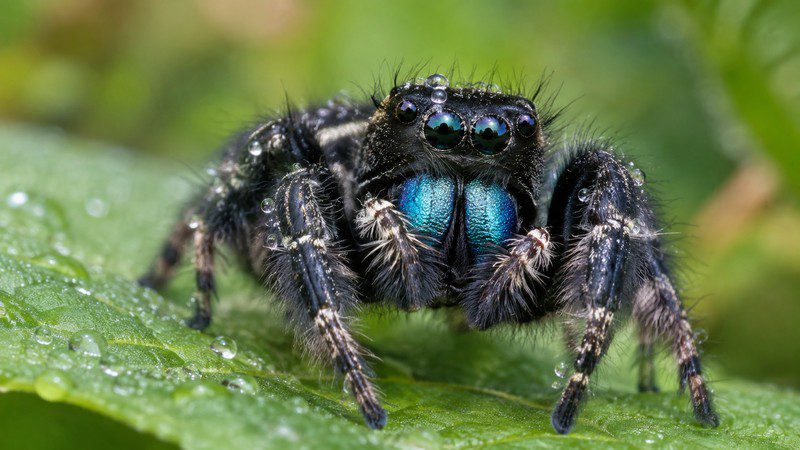
- The bold jumping spider (Phidippus audax) is a probable species reaching three years in captivity under stable temperature conditions.
- Climate and colder seasons push spiders dormant, while species, sex, and individual health all impact longevity.
The lifespan of these tiny hunters varies more than most people expect. According to the Australian Museum, the Red-Backed Jumping Spider and Johnson’s Jumping Spider typically span 1 to 2 years, though a male often lives a short one year, differing across each family member.
How Long Do Jumping Spiders Live?
Most keepers underestimate longevity here. According to the Klamath Network, a jumping spider typically lives one to three years total, though females live longer than males. Environmental health, humidity, and consistent feedings heavily influence whether individuals reach their genuine adulthood potential.
Counterintuitively, captive species often outlast wild counterparts. The Phidippus regius frequently survives beyond a year under well-maintained conditions. Steady temperature control and proper prey access let these clever jumpers thrive far past typical expectations.
Seeing Spiders at Home?
Get rid of spiders for good — book your free inspection.
Fast, no-obligation quote from trusted local pest control pros.
Do Female Jumping Spiders Really Live Longer Than Males?
Across countless observations, one pattern holds remarkably steady: females consistently outlive males, often by a wide margin. Where a female might push toward two or three years, her male counterpart frequently fades after a single season. The reason isn’t random—it’s biology working exactly as intended.
Males pour nearly everything into courtship and mating, exhausting their reserves through elaborate displays and risky pursuits. Once reproduction concludes, their bodies decline sharply, and some never survive the encounter at all, lost to cannibalism during or after mating. Females, by contrast, conserve energy for guarding eggs and stretching their days far longer. This single divergence explains most of the lifespan gap keepers notice between the sexes.
How Captivity Reshapes A Jumping Spider’s Lifespan
Break down the wild versus captive comparison, and a clear picture emerges: protected conditions extend life dramatically. In the wild, a jumper faces constant threats—weather swings, competing predators, and the simple math that most spiderlings never reach adulthood. Knowing what animals eat spiders makes the outdoor odds obvious: survival is the exception, not the rule.
Captivity flips those odds. With steady feedings, controlled humidity, and no lurking predators, a well-kept Phidippus regius routinely surpasses a year, and hardy species stretch further still. The trade-off is responsibility: a captive spider depends entirely on stable temperature and proper prey access. Remove those, and even a sheltered jumper slides back toward wild-level lifespans, proving that environment—not just genetics—writes the final chapter.
The Average Jumping Spider Life Cycle
Every jumping spider passes through distinct stages before reaching maturity, each shaped by survival odds.
Egg
It all begins when the female jumping spiders produce and deposit eggs after successful mating. According to the American Arachnological Society, clutch sizes vary widely by species, and the mother’s condition heavily influences viability. These eggs remain vulnerable at this earliest point, tucked away for protection until conditions favor development, which is why placement matters far more than most keepers realize.
Egg Sac
Once deposited, the eggs are wrapped inside a silken egg sac, a protective bundle the mother often guards fiercely. According to National Geographic, this silk structure shields the developing young from predators and moisture loss. The female may reposition it or stand watch nearby. Temperature and humidity around the sac quietly dictate how quickly the contents progress toward the next threshold of life.
Spiderlings
After incubation, tiny spiderlings emerge, sometimes clustering briefly before dispersing. These slings are miniature versions of adults, already equipped with functional vision and hunting instinct. They begin taking tiny prey almost immediately, often flightless fruit flies or springtails. According to keepers, survival rates climb sharply once a sling manages its first few successful feedings and completes early molts without complication.
Adult
Reaching adulthood marks the final stage, where mature spiders focus on reproduction. Males and females diverge in appearance and behavior, and lifespan narrows considerably from here, closing the cycle that began with a single guarded egg.
What Factors Shorten A Jumping Spider’s Lifespan?
Several overlooked variables can cut a jumping spider’s time short, sometimes dramatically.
- Predators & Environmental Threats: Even inside a home, danger lurks. In the wild, small insects these spiders normally hunt can flip roles—larger pests and other arthropods prey on them instead. It helps to know what animals eat spiders, since predation is a leading cause of early death outdoors. According to the University of Florida’s IFAS Extension, males rarely live longer than one season because they die soon after mating, exhausting their reserves during courtship and mating rituals. Captivity removes many threats, yet stress from an unsuitable environment, wrong humidity, or poor lighting silently drains vitality. A stressed spider that suppresses appetite enters decline fast, and repeated failed feedings compound the problem across its short arc from spiderling to adult.
- Health & Molting Complications: The riskiest moments arrive during molting. A jumper trapped in its final exoskeleton may not reach adulthood. Dehydration matters too—without proper hydration and regular misting, a spider weakens quickly between meals. Because spiders are cold blooded, ambient temperature directly governs how fast they metabolize and how well they recover between molts.
How Temperature And Climate Steer Longevity
Because jumping spiders are cold blooded, they can’t self-regulate warmth—their surroundings set the pace of everything. In practical terms, a spider kept too cold slows to a crawl, while excessive heat burns through its reserves too fast. Both extremes shave time off the clock.
Seasonal shifts drive this reality outdoors. As colder seasons arrive, many jumpers turn dormant, riding out winter in a silk retreat with metabolism dialed low. This slowdown can actually stretch their calendar lifespan, but it’s a gamble—a hard freeze or an ill-timed thaw ends the wait abruptly. For keepers, the lesson is direct: hold a steady, moderate temperature year-round and you sidestep the boom-and-bust cycle wild spiders endure, giving your jumper its best shot at the upper end of its range.
A Quick Note On How We’ve Come To Understand Spider Lifespans
Our grasp of how long these arachnids live has sharpened considerably over the years. Early accounts leaned on brief field sightings, which badly underestimated longevity—people simply didn’t track the same spider long enough. As captive keeping grew popular, hobbyists and researchers began recording full life arcs, revealing that species like the bold jumping spider (Phidippus audax) could reach three years under stable care.
That shift changed the conversation entirely. Institutions like the Klamath Network and university extensions now document lifespans with real consistency, and the once-common myth that these spiders “only live a few months” has steadily faded. Curiosity even carried them beyond Earth—the famed Spidernaut and Nefertiti travelled with NASA, and studying their behavior in microgravity added yet another layer to how we understand these resilient, long-misjudged hunters. If you’re ever weighing the difference between a harmless jumper and a species worth worrying about, it’s worth learning whether Are black & white striped spiders poisonous before assuming the worst. And if indoor spider activity turns persistent, professional spider extermination remains the safer route.