Hobo Spider vs Wolf Spider: How to Tell Them Apart
Quick Answer
- — Watch the eye pattern: hobo spiders show two nearly straight rows, wolf spiders flash headlight eyes.
- — Size splits them fast — hobo spiders run 8-15 mm, while a Carolina wolf spider hits 22-35 mm.
- — Hobo spiders build funnel webs; wolf spiders skip silk entirely, relying on active hunting across North America.
- — Look for clear banding and arrow-shaped patterns on wolf spiders; hobos wear muted brown coloring instead.
- — Both haunt the Pacific Northwest, yet experts confirm true separation needs reproductive structures under a microscope.
Telling one spider species apart starts with a surprise: their hunting method reveals more than body size. According to Utah State University Extension, wolf spiders roam as active hunters, chasing prey, while hobos weave funnel webs quietly indoors.
Description
The reliable difference between hobo spiders and wolf spiders starts with coloration and body structure. According to pest authorities, hobos belong to family Agelenidae, the funnel-web spiders, showing plumose setae—fine clear hairs giving a feather-like appearance across their legs and frame.
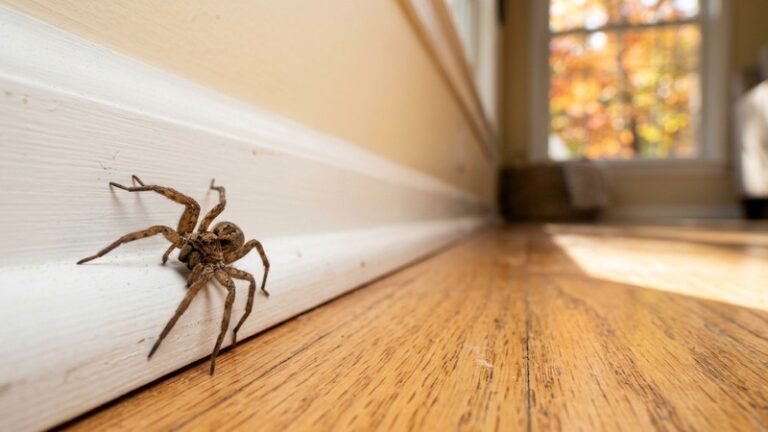
Wolf spiders present entirely different characteristics, carrying thick black hairs rather than delicate plumose setae. Their eyes dominate identification, since two large forward-facing eyes resemble headlights. Male appendages matter too, as male pedipalps resemble boxing gloves, aiding spider anatomy review under strong lighting.
Eye Pattern

Checking the eye arrangement is honestly the most reliable difference you’ll find. Wolf spiders carry eight eyes in three rows, and those two large forward-facing headlight eyes genuinely reflect light back—a trick I’ve used outdoors at night to spot them fast.
According to arachnologists at Washington State University, hobo spiders show a completely different eye pattern. Their eyes sit in two nearly straight rows, lacking the oversized forward pair. This subtle contrast, viewable under a hand lens, remains the clearest way to distinguish these two look-alikes.
Webs vs Hunting
Here’s what most people miss: wolf spiders are pure active hunters. They chase and ambush their prey across the ground surface, relying on speed rather than silk. According to the University of California IPM program, they do not build webs to trap food at all.
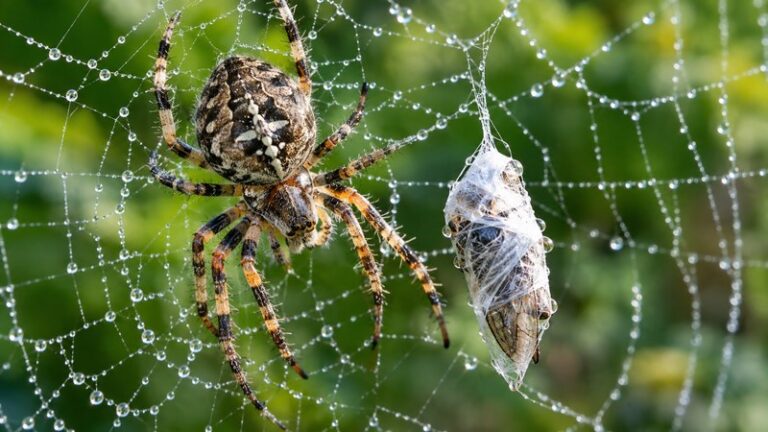
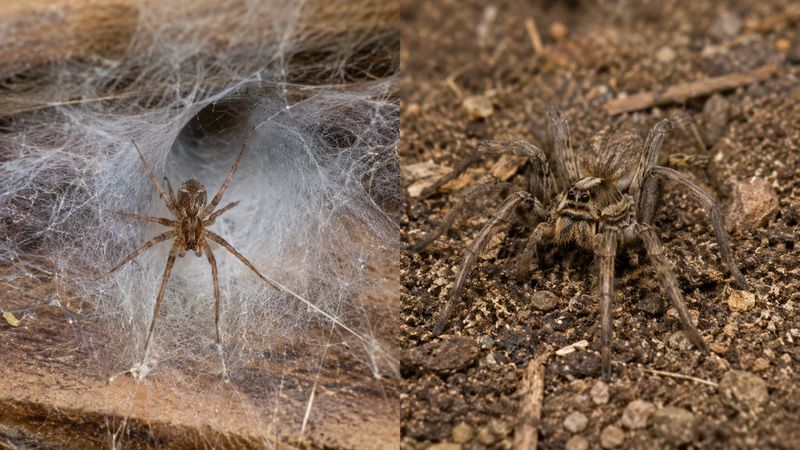
Hobo spiders take the opposite route entirely. They spin funnel webs—a distinctive funnel-shaped web that channels victims toward a hidden retreat. Unlike the funnel weaver spider relatives, this funnel-web spider family member waits, sensing web vibrations, staying reactive rather than roaming for prey-capture webs.
Seasonal Patterns
According to Washington State University entomologists, late summer into early fall marks when wolf spiders reach full maturity, prompting males to abandon shelter and roam widely searching for mates. This wandering explains sudden household sightings, as seasonal patterns align tightly with each species reproductive urgency and behavior.
Regional spider activity peaks noticeably during this window, though wolf spiders stay visible March through October across most territories. Their overlapping life cycles create predictable movement, since cooler nights push maturing individuals indoors while breeding drives restless males toward exposed, higher-traffic areas seeking receptive partners.
Bite Concerns
Homeowners often panic here, but reality is calmer. Wolf spider bites trigger only minor temporary effects—brief pain, localized redness, occasional mild swelling. According to the University of California IPM program, documented cases show no medically significant systemic effects, so treating one like a brown recluse wildly overstates the actual threat.
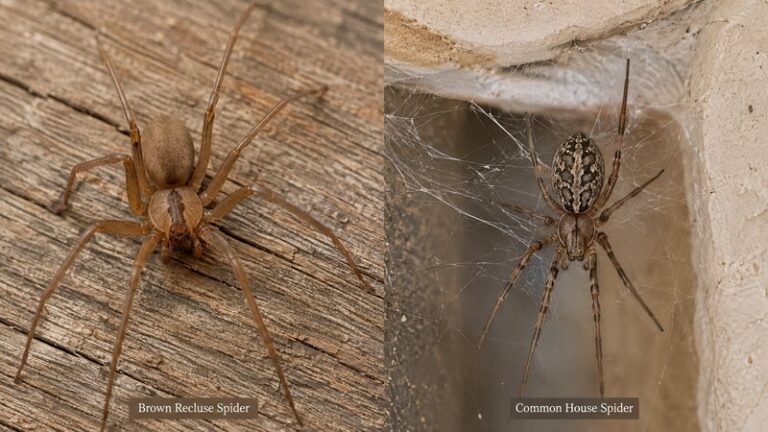
Behavior matters more than venom. Neither species is genuinely aggressive; both prefer to flee rather than bite when cornered. In a Wolf spider vs brown recluse comparison, the recluse warrants caution, yet wolf encounters stay unremarkable—defensive nips happen only when a spider gets pressed against skin directly.
Seeing Spiders at Home?
Get rid of spiders for good — book your free inspection.
Fast, no-obligation quote from trusted local pest control pros.
Prevention
Keeping these arachnids out starts outdoors. According to the CDC, reducing moisture issues and clearing woodpiles, dense plants, and leaf litter removes shelter. Sealing foundation cracks and dimming outdoor lights cuts the prey insects drawing hobo spiders and wolf spiders toward your home.
Indoors, vigilance matters most. Shake out clothing, shoes, bedding, and blankets left on the floor, since wandering males hide there. Check bed skirts, laundry baskets, and children’s toys. Vacuuming corners and reducing hiding spots near basements and crawl spaces discourages wandering spiders from settling.
Location Narrows It Down Fast
Where you spot a spider tells you plenty. Hobo spiders stay established in the Pacific Northwest and northern Rocky Mountain states, weaving funnel webs near foundations and woodpiles. Wolf spiders, including the Wolf spider Texas homeowners meet, roam far wider across North America.
According to the University of California IPM program, habitat context filters your suspects quickly. Finding a spider darting across bare soil, grass, or leaf litter without a web signals active hunters like wolf spiders, while funnel-shaped webs tucked in corners point toward hobo spider habitats instead.
Speed And Movement
Wolf spiders are relentless active hunters, using their thick hairy legs to chase and ambush prey across open floors, walls, and outdoor surfaces. When disturbed, they dart away with startling speed, a trait the funnel-dwelling cousin simply lacks in comparison entirely.
According to Washington State University entomologists, the hobo spider relies on its funnel weaver design rather than pace, waiting near the small hole at the bottom of the funnel. Though quick over silk threads, it can’t climb smooth surfaces like porcelain, plastic, or slick painted walls easily.
Look-Alikes
The funnel weaver and grass spider trip up most people first. According to pest experts, the hobo spider shares a brown cephalothorax and chevron yellow markings, so misidentifications happen constantly across the family Agelenidae near shared funnel webs outdoors.
A house spider vs wolf spider mix-up is common too, since domestic house spiders and the giant house spider overlap in habitat. The wolf spiders, though, reveal thick hairy legs, active hunting style, and quick bursts when disturbed, unlike quieter web-tenders lurking in corners.
FAQs
How Can I Tell The Difference Between A Hobo Spider And Wolf Spider?
Location narrows identification fast. In the Pacific Northwest and northern Rocky Mountain states, hobo spiders dominate, while wolf spiders appear across North America. Checking your region against these common ranges quickly separates one large brown spider from another.
The reliable difference hides in the eye pattern. Wolf spiders show two nearly straight rows with prominent outer eyes, whereas hobos display a three-row eye pattern. Under a strong hand lens, examine body length and markings—hobo spiders carry faint markings against a grey background.
Do Wolf Spiders Build Webs?
Wolf spiders don’t build webs for catching food. Instead, these hunters chase prey directly across bare soil, grass, and leaf litter. According to the University of California IPM program, they retreat into burrows with turret entrances, hunting from sheltered areas rather than trapped silk structures.
Hobo spiders behave oppositely, constructing funnel-shaped webs near foundations, woodpiles, and ground level low spots. Their flat sheet of silk, not sticky like orb weavers, funnels prey insects toward a tube. Wandering males roam indoors seeking mates during late summer.
Are Wolf Spider Bites Dangerous?
Wolf spider bites rarely warrant alarm. Expect short-term pain, redness, and mild swelling that fades quickly. Per the CDC, no documented cases link these venomous spider species to serious health effects or lasting tissue damage in otherwise healthy people.
These spiders run rather than confront threats, biting only when trapped against skin. Despite their aggressive reputation and intimidating size, actual spider bites remain rare. Clean any wound, apply topical antiseptic, then monitor for secondary infections, consulting a doctor if symptoms worsen.
What Should I Do If I Find A Large Spider In My House?
First, resist the urge to squash it. Try to catch the spider for identification, since a clear mystery bite story means little without the actual spider bites evidence. Slide a cup over it, avoiding any bite in defense.
Most wandering spiders you spot indoors are harmless wolf spiders that run rather than attack. According to the CDC, few venomous spider species pose real serious health effects. If worried, seal it in clothing-free containers and consult a doctor about symptoms.
When Are Spiders Most Active?
Spider activity climbs sharply during late summer and early fall, when warmer months push a noticeable buildup indoors. According to Utah State University Extension, hobo spiders reach maturity around this window, with males actively roaming to find mates across wooded areas.
The Carolina wolf spider stays busy from March through October, then turns dormant through winter. This peak season, roughly August–October, drives the seasonal influx into homes as mated females deposit egg sacs before the male spiders die off.
Why Do I Have So Many Spiders Around My House?
Most infestations trace back to ideal conditions your property quietly offers. Outdoor lights attract flying insects, which become insect prey, drawing hunting spiders indoors. Moisture from damp spots near your foundation, plus woodpiles and leaf litter, creates perfect spider habitat around your home.
According to University extension entomologists, clutter and debris offer secluded places where spiders hide. Cracks around windows and doors, crawl spaces, and crevices become entry points. Wandering males seeking females, combined with abundant prey insects and tree coverage, sustain populations through peak season.
How Do Professionals Treat For Spiders?
Effective professional spider control begins with monitoring. Technicians deploy sticky traps along baseboards and hot-spots, identifying web-building spiders versus hunting spiders. Removing webs and egg sacs disrupts reproduction, while a thorough perimeter treatment targets the exterior perimeter where wolf spiders commonly travel across the ground surface.
According to pest management authorities, chemical control uses pyrethroid/silicate dust formulation inside crawl spaces, plus capsule suspensions or wettable powder formulations outdoors during mid-May to mid-June. Spider exclusion through silicon caulking, weather stripping, door sweeps, and window screens delivers lasting cultural control for homeowners.