

How to Get Rid of Beetles in Your House (5 Proven Steps)
Quick answer
Beetle control at home starts with accurate identification, since stored product beetles, carpet beetles, and wood-boring beetles each need a separate plan. According to Texas A&M AgriLife Extension, removing their food sources ends most infestations.
- Discard Infested Food – Toss contaminated flour, rice, and dried fruit, wipe shelves, then store groceries in airtight containers.
- Vacuum Deep Crevices – Clear carpets, baseboards, and cracks, removing hidden eggs and larvae before they can breed again.
- Wash Fabrics Hot – Run blankets, clothing, and woolens through hot water, or freeze small items to kill larvae.
- Seal Entry Points – Caulk foundation cracks, gaps around windows, and doors so outdoor beetles can’t overwinter inside walls.
- Call a Professional – For wood-destroying beetles or severe infestations, a licensed inspection pinpoints the species and correct treatment.
In North Texas, the first sign is small: rust-colored specks crawling through grains in the pantry, or June beetles buzzing indoors at dusk. That’s why many homeowners suddenly search how to get rid of beetles.
Grain beetles slip into food storage, while wood-loving species chase moisture into structural timber and wooden furniture. Some are destructive household pests; lady beetles are helpful. What you identify decides how you protect pantry staples.
According to the Smithsonian Institution, beetles exceed 300,000 species worldwide in varied sizes, colors, and shapes. Below, you’ll sort rounded from long and slender insects, learn practical fixes, and know when a local business helps.
How To Identify Beetles
Spotting little black beetles in house corners rarely means trouble on its own. The real clue is the body shape, the larva nearby, and which household items they keep visiting.
Physical Features
Forget color first. According to Texas A&M AgriLife Extension, true beetles carry hardened front wings that meet in a straight seam down the back, a trait spiders and centipedes never share. Most household species stay oval, while larger beetles like June bugs or click beetles usually wander indoors by accident.
- Count six legs; bark beetles and powderpost beetles show short, clubbed antennae near the head.
- A pupa or egg cluster tells you the adult is breeding nearby, not passing through.
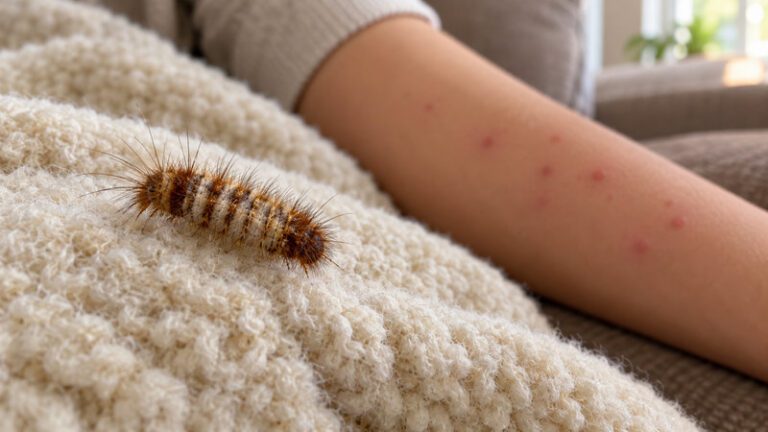
- Fuzzy, banded carpet beetle larvae resemble caterpillars, not beetles, so homeowners make a wrong ID.
Common Household Beetle Types
Indoor species split neatly by appetite, so knowing what each one chews narrows identification faster than any magnifying glass could.
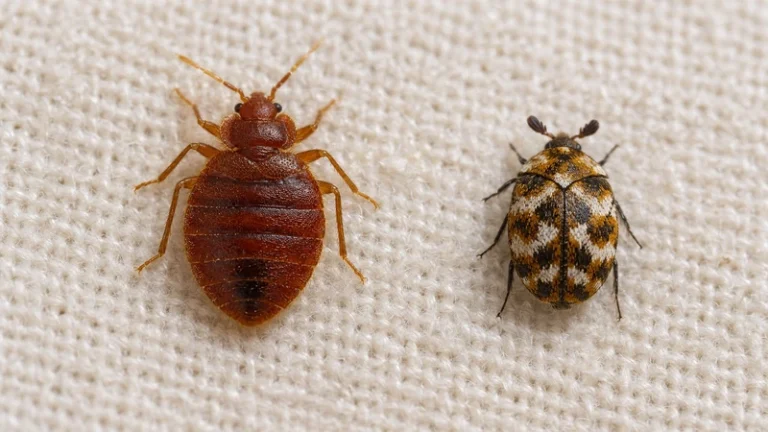
- Carpet Beetles: Mottled, round bugs whose larvae feed on wool, fur, feathers and natural fibers, leaving shed skins in drawers.
- Cigarette Beetles: Reddish-brown and humped, they bore through spices, pet food and dry pasta, leaving pinhole holes in sealed packaging.
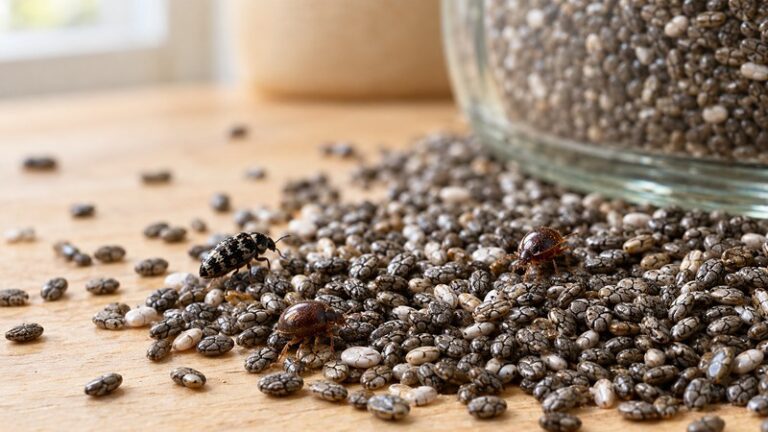
- Confused Flour Beetles: Slim and rust-colored, these pantry regulars burrow into stored grains and flour, usually arriving inside infested products.
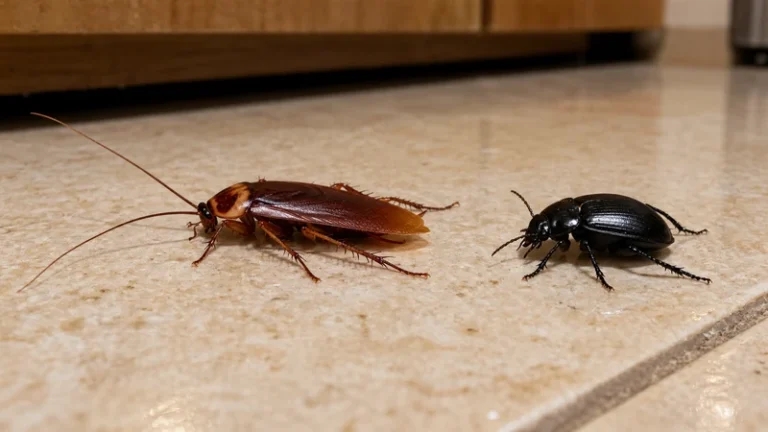
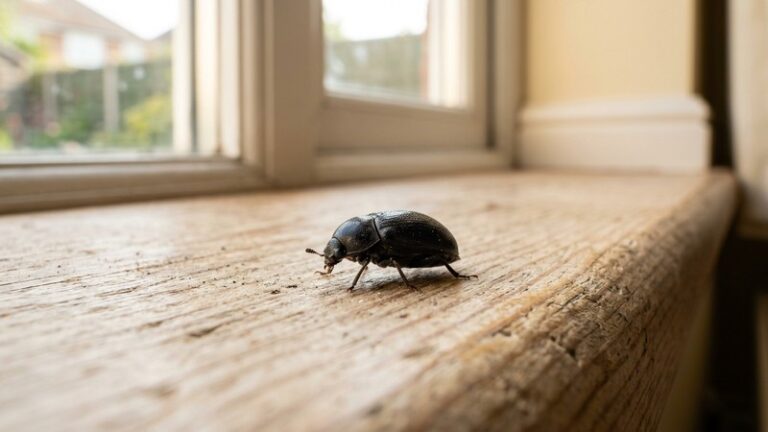
- Ground Beetles: Glossy and quick, they’re the little black beetles in house hallways that alarm people, yet rarely infest anything.
Signs Of A Beetle Problem
- Peppery droppings and fine sawdust beneath hardwoods point to wood-boring activity, not casual surface wanderers.
- Seeing one or two bugs near windows can still mean larvae hide in unnoticed spots.
- An itchy rash may come from larval hairs, a reaction known as carpet beetle dermatitis.
- If pheromone traps fill weekly during monitoring, professional help confirms the species before full infestation.
If I See One Beetle, Are There More?
Often, yes. A single beetle indoors usually means a breeding source sits nearby. According to Texas A&M AgriLife Extension, locating that infested material, not swatting adults, is what stops them.
- Pantry clusters: shiny reddish-brown beetles near flour or sugar often mean larvae are feeding inside.
- Spider-like shapes: a shiny spider beetle usually points to forgotten grain, debris, or rodent nests.
- Damp-corner sightings: the plaster beetle, roughly 1/10 inch, feeds on mold, flagging hidden moisture problems.
Beetle Life Cycle
According to Penn State Extension, every Coleoptera member completes four-stage metamorphosis, and knowing each stage reveals where infestations quietly start.
- Egg: Females tuck tiny eggs into cracks and flour, so each flour beetle hatches beside food.
- Larva: Yellowish-white, sometimes carrot-shaped grubs use chewing mouthparts nonstop; this feeding stage causes most household damage.
- Pupa: Inside a motionless casing, the grub rebuilds itself, forming hardened elytra and folded back wings.
- Adult: Adults fly toward lights, mate, and restart everything; June beetle grubs then hatch among grass roots.
What Beetles Eat
Find the food and you find the beetle: pantry stores, tree leaves, and book bindings each draw a different species.
- Flour, Bread, Beans: flour beetles and grain beetles infest opened bags, even inside production facilities.
- Dried Meats: the redlegged ham beetle bores into cured ham, cheese, and stored pet kibble.
- Sugars and Oils: dried fruit beetle adults seek fermenting fruit, while warehouse beetle larvae chew nuts and seeds.
- Living Trees: elm leaf beetles skeletonize foliage, and USDA APHIS says emerald ash borer larvae tunnel under bark.
How Did I Get Beetles?
Most beetles hitch a ride indoors on groceries, firewood, or secondhand furniture, while others crawl through gaps seeking warmth, food, or shelter as seasons change.
- Pantry Packages: The brown American spider beetle, about 1/8 inch, hides in pet food bags.
- Firewood Stacks: Logs carried inside can harbor bark beetles, which emerge once indoor heat wakes them.
- Fall Overwintering: Per Colorado State University Extension, elm leaf beetle adults slip indoors through siding cracks.
- Porch Lights: Strong fliers chase bright bulbs at night, then squeeze under worn door sweeps.
Problems & Damage Beetles Cause
Beetle damage builds quietly indoors, across decor, closets and pantries, until three problem groups surface at once: wood destroyers, fabric beetles and food-product beetles that contaminate what your family eats.
Damage To Fabrics, Furniture And Wood
According to University of Kentucky entomologists, carpet beetle larvae target animal fibers like wool, silk, feathers and leather, so clothes, linens and upholstered furnishings become a food source. With wood, powderpost beetles can work through flooring, framing and furniture for years while new generations reinfest the same structure almost unnoticed.
- Natural fibers in stored fabric and wool rugs show irregular holes, not moth-style webbing.
- Flour-like frass falling from pinholes in hardwood lumber signals active wood-borers inside, not old damage.
- Larder beetle larvae bore into cabinet trim and wallboard to pupate, mimicking true wood-borer activity.
Contamination Of Stored Food

Contamination matters more than volume. According to Texas A&M AgriLife Extension, the drugstore beetle and cigarette beetle chew through sealed packaged goods, while females lay eggs inside spices, pet food, medication and tobacco. One forgotten pantry bag can seed whole kitchens, leaving larvae, skins and droppings in nearby packaged foods.
Health Concerns For Your Family
Few beetles bite. Shed carpet beetle larval hairs trigger skin irritation some people mistake for bed bug bites, and according to Penn State Extension, swarming ladybugs release defensive secretions with a sharp odor that stains walls and can provoke allergies.
- Swallowing larvae or skins in contaminated cereal is rarely toxic, though it can upset stomachs.
- Moisture that draws beetles also feeds mold, raising respiratory risks for kids and allergy sufferers.
Beneficial Beetles
North America holds plenty of helpful species from the largest insect order, beetles that protect garden plants and farm crops.
- Lady Beetles curb aphids; a single red, oval adult eats thousands of small insects yearly.
- Ground Beetles hunt slugs and cutworms; these flat, poor fliers patrol garden beds after dusk.
- Soldier Beetles pollinate blooms; University of Minnesota Extension calls these narrow, yellow garden aphid-eaters beneficial.
Skip spraying; try physical removal: cup them gently and release outdoors instead of killing them.
How To Get Rid Of Beetles
The most effective beetle removal works in reverse: find where they breed, then match the fix. According to Texas A&M AgriLife Extension, you get better control when you combine methods.
Non-Chemical Removal
Start with natural repellents and natural remedies. They handle light infestations without exposing kids, pets, or indoor plants to chemicals.
- Vacuum And Steam: Vacuum furniture seams and baseboards, then toss the sealed vacuum bag outdoors. Follow with a steam clean, since heat destroys eggs that suction leaves behind.
- Freeze Or Bake: University of Kentucky entomologists recommend four days at 0°F, or a 30-minute bake at 130°F, to kill grain beetles. Seal leftovers in a glass jar.
- Glue Traps And Lures: Set insect traps coated with strong glue in high-activity areas. Pheromone lures pull beetles from hiding, revealing where the infestation started.
- Peppermint Oil Spray: Add 10–15 drops of peppermint oil, cedar oil, or citronella oil to 8 oz of water, then spray entryway seams. The scent fades, so reapplication matters.
- Diatomaceous Earth: This powder, made from fossilized algae, scratches the beetle exoskeleton and kills through dehydration. Dust it thinly along entryways, where it stays dry.
Natural Remedies & Repellents
Gentle natural repellents won’t erase an established colony, but they shift conditions so beetles stop treating your house as shelter.
- Dehumidifiers – Drop basement humidity below 50 percent; moisture control discourages wood-boring and mold-feeding beetles.
- Neem Oil – According to the National Pesticide Information Center, neem disrupts feeding and slows development speed.
- Peppermint Oil – Dab cotton balls near door screens; peppermint ranks among the milder natural deterrents.
- Boric Acid – Dust cracks and wall voids, never counters or pantry interiors holding open groceries.
- Jar Traps – A baited jar helps catch stragglers in small infestations; relocate them outdoors.
Chemical Treatments
When non-chemical options stall, insecticides step in. Read label instructions and warnings first to protect your household and nearby pollinators.
- Pyrethrin Sprays: Pyrethrin is extracted from chrysanthemums. It is fast-acting and paralyzes the nervous system. The National Pesticide Information Center notes its low human toxicity, though residue fades quickly.
- Synthetic Pyrethroids: Permethrin, bifenthrin, and cyfluthrin leave a residual effect lasting weeks. Use granular formulas for ground pests and liquid bark sprays against wood-boring pests.
- Neem Oil Solution: Blend neem oil, liquid soap, and water. Direct contact can still harm bees and aquatic life, so avoid blooming plants and ponds.
Insecticides
Before buying chemical products, match formula to beetle; a spray stopping ground beetles never reaches lyctid larvae hidden inside wood.
- Pyrethroid Perimeter Sprays: Bifenthrin bands around foundations and entry points intercept adults arriving at night.
- Borate Wood Treatments: Applied to unfinished wooden furniture, borates kill emerging anobiid and bostrichid beetles.
- Insect Growth Regulators: Methoprene or hydroprene stalls complete metamorphosis, so larvae never mature into adults.
- Insecticidal Dusts: Silica gel puffed into wall voids reaches food-product beetles sheltering behind pantry shelves.
According to the EPA, the label is law; never spray directly on food or grains.
When To Call A Professional
Call a professional service early, not as a last resort, when population size outpaces DIY or recognizing damage gets tricky. Trained pros apply IPM, using insect growth regulators that keep larvae from becoming adults and targeting breeding sites to block reinfestation. We’ll match you with a licensed pro near you.
Professional Treatment
When beetle traps and scrubbing stall, a licensed technician reads the problem differently, tracing food supply, harborage, and entry points.
- Inspect and Identify – appearance and behavior separate a sawtoothed grain beetle from furniture beetles.
- Trace the Source – pros check firewood, potted plants, and packages, common hitchhiking routes indoors.
- Treat Infested Wood – University of Kentucky entomologists note borate sprays or fumigation suit stubborn wood-borers.
- Seal Entryways – gaps around doors and vents get closed, and sanitation advice stops repeat damage.
Book a professional once beetles return to North Texas pantries, closets, or attics despite cleanup.
Targeted Control By Beetle Type
One spray never fits every invader; matching treatment to the species saves money, time, and frustration before a nuisance spreads.
Carpet Beetles
These fabric-infesting beetles devour wool, feathers, human hair, and animal products; their bristly larvae can cause skin irritation. University of Kentucky entomologists favor thorough vacuuming under furniture, hot-laundering old fabrics, and a declutter pass first.
Pantry Beetles
Toss infested flour, paprika, candy, and tobacco before confused flour beetles or saw-toothed grain beetles spread. Texas A&M AgriLife Extension advises airtight containers; afterward, rotate stock using first-in first-out habits so food never sits forgotten.
Powderpost Beetles
Pinholes and flour-fine dust on wooden items, bamboo, or furniture signal larvae tunneling inside. According to Penn State Extension, varnished surfaces resist egg-laying, while active infestations demand professional execution: borate sprays or fumigation, not guesswork.
Asian Lady Beetles
Gardeners value these lady beetles for eating aphids and mealybugs, yet hundreds swarm sunny siding once late summer fades. To prevent that nuisance, Iowa State Extension recommends sealing gaps, patching window screens, and vacuuming clusters.
How To Prevent Beetles
Prevention starts outside your walls, because most homes pick up beetles through gaps, glowing porches, and pantry food left unguarded.
- Seal gaps before fall: caulk window frames so a cluster seeking winter shelter stays outdoors.
- Swap to yellow lights: bright white lights attract night-flying beetles right up to your entryway.
- Go airtight: University of Minnesota Extension recommends sealed containers for cereal and nuts, starving grain beetles.
- Keep grass short: pruning garden plants back from siding leaves beetles fewer shaded hiding spots.
- Inspect secondhand furniture: check wooden items, books, and silk pieces before they cross your threshold.
How Serious Are Beetles?
Here’s the conclusion most homeowners don’t expect: the beetle on your windowsill is often already dying. Many accidental invaders can’t find moisture indoors, and dehydration finishes them within days, long before they cause real trouble.
So seriousness has little to do with size. A lady beetle near ¼ inch rarely causes real harm, while a tan drugstore beetle barely visible at 1/10–1/8 inch can quietly ruin an entire pantry shelf.
Before judging the threat, confirm it’s actually a beetle. True beetles carry hard, shell-like front wings that meet in one straight line down the back, plus visible antennae and a distinct thorax behind the head.
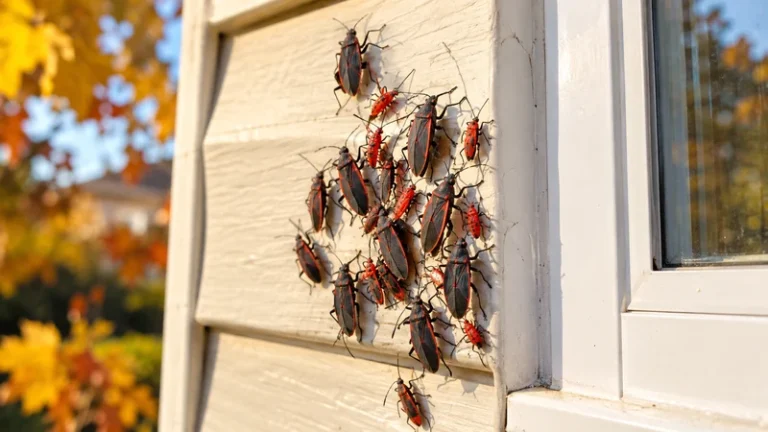
Boxelder bugs fail that test; their wings overlap instead. Are boxelder bugs harmful? According to University of Minnesota Extension, they’re mainly a nuisance, rarely biting and causing no structural damage, though their droppings may stain.
Scale explains why panic misleads people. Entomologists estimate 250,000+ species of beetles worldwide, with 25,000+ species across North America, yet only a small fraction ever bothers houses, and fewer still threaten food, fabric, or framing.
Pantry beetles carry the most common risk. The sawtoothed grain beetle, identified by six saw-like projections along each side of its thorax, slips into poorly sealed packages and contaminates flour, cereal, and dried pet food fast.
Carpet beetle larvae are the sneakier problem. University extension entomologists note their bristly hairs can cause itchy rashes often mistaken for bed bug bites, and nightly itching alone can seriously disrupt a whole family’s sleep.
Wood-boring species raise the stakes. Powderpost beetles, roughly 1/8–¼ inch long, reinfest the same lumber generation after generation, and untreated floors, beams, or antique furniture can absorb that damage over decades before anyone finally notices.
Outdoors, the Asian longhorned beetle is the genuinely serious case. According to USDA APHIS, this invasive pest bores into healthy hardwoods like maples, killing trees, which is why sightings should be reported rather than ignored.
Compared with cockroaches, most beetles carry little disease risk, so education beats panic. Keep storage areas clean, identify the species, and if damage appears, we’ll connect you with a licensed local professional for an inspection.
3 Comments