Can Ants Swim? Yes — Here’s How They Survive Water
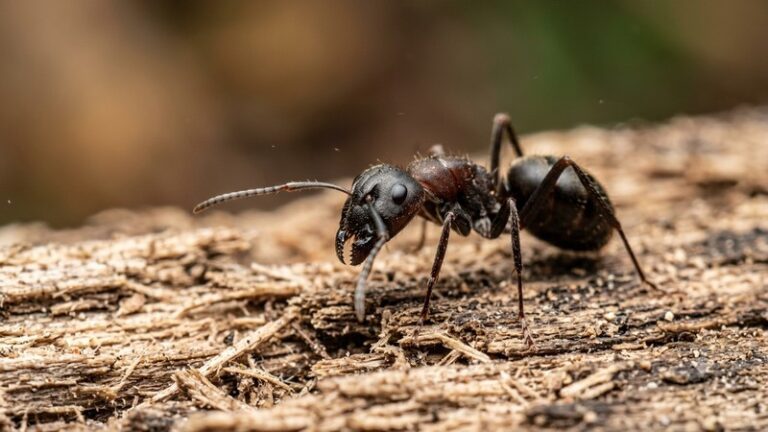
According to entomologists, certain ant species display remarkable swimming abilities when they encounter water. Their anatomy and behavior reveal fascinating evolutionary adaptations, letting six legs propel their lightweight bodies across any surface.
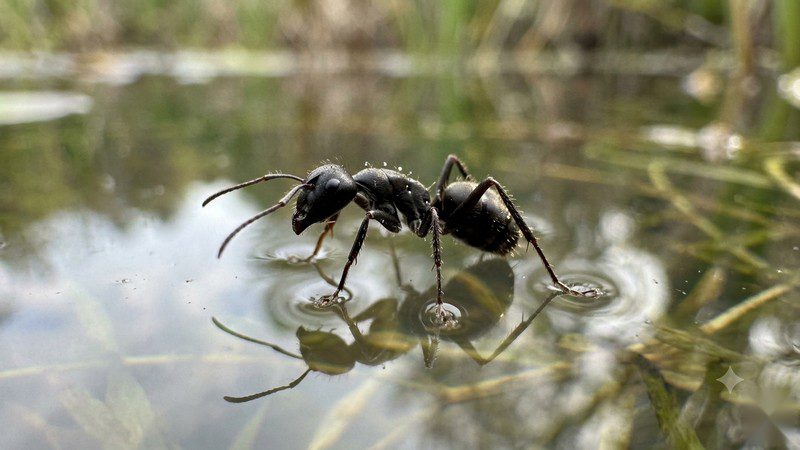
Their hydrophobic exoskeletons stay buoyant because surface tension keeps them afloat. Some perform a dog paddle-like motion, while fire ants link together, forming floating rafts that stay afloat during floods—a unique way to survive.
Can Ants Swim?
Most people assume ants simply sink, but that’s a misconception. Numerous ant species are surprisingly excellent swimmers, while others merely struggle and float. According to entomologist Evan G. Gora, Ph.D., certain ants use paddle-like leg motions to travel through water, actively adjusting movements and steering toward land.
Do Different Species Of Ants Swim?
Yes, swimming ability varies dramatically from one ant to the next. Take the Mangrove ant, a truly aquatic specialist that thrives in tidal zones where saltwater floods its nesting chambers daily. According to Texas A&M AgriLife entomologists, these ants seal their colonies against intrusion, then emerge to navigate flooded terrestrial territory with a controlled doggy paddle, using their water-repellant exoskeletons to repel water and stay mobile across the water’s surface tension.
Weaver ants and certain jungle foragers manipulate movement differently. One uses coordinated legs to push through calm water, while another leans on buoyancy and its ability to trap air bubbles, riding pockets of tiny air bubbles for energy conservation during unexpected crossings.
Other species fare poorly. Some arid-dwelling ants exhaust quickly in turbulent water, lacking the strong swimming species advantage, so they float passively rather than actively swimming toward shore, conserving whatever reserves remain.
Ultimately, swamp and rainforest ants evolved genuine survival tactics, while urban and dry-climate species never developed comparable aquatic adaptations, their habitats shaping the degree to which each can swim.
Which Ants Cannot Swim But Float?
Not every ant conquers water through motion. According to Texas A&M AgriLife research, pavement ants exhaust their energy limitations quickly, their small size forcing reliance on floating instead. Leafcutter ants likewise avoid water, staying wet yet buoyant, drifting rather than genuinely swimming across surfaces.
Ant Physiology and Water Survival
According to Texas A&M AgriLife entomologists, an ant’s terrestrial design hides surprising aquatic tricks. Their water-repellant exoskeletons repel water, while legs trap air bubbles against the body. This buoyancy, paired with survival tactics, sustains them across extended periods underwater.
Can ants drown?
Yes, ants can drown, though their bodies delay this outcome remarkably. Their respiratory system relies on spiracles, small breathing pores lining their bodies, rather than lungs. These tiny holes connect to a network of tubes that pull in oxygen directly. A waxy exoskeleton coating repels moisture, so when submerged, ants close spiracles, effectively holding their breath and surviving underwater far longer than expected.
This defense collapses under specific pressure. Violent rainfall and rushing floodwater generate turbulence that physically overwhelms the waxy barrier, forcing liquid past sealed pores. Sustained submersion drains stored oxygen from the internal tubes, and once gas exchange halts entirely, the adaptation fails and water floods the respiratory channels.
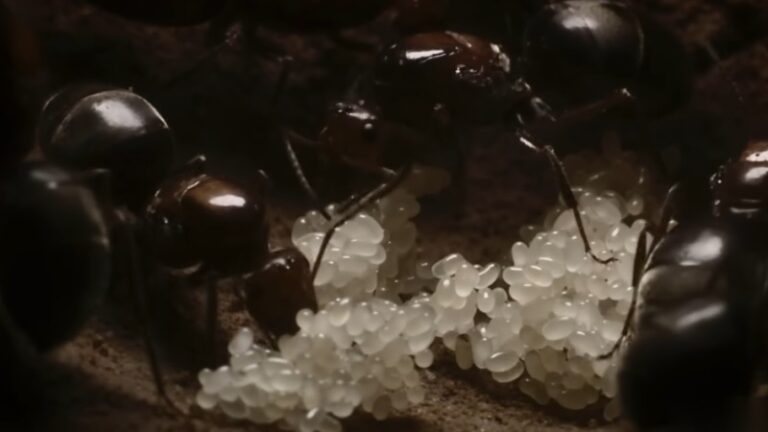
At the colony scale, ants combat rising water through rapid nest evacuation, sealing lower tunnels, and relocating brood upward toward drier chambers, buying critical time against total flooding.
How Long Can Ants Hold Their Breath?
According to entomologists, certain ants don’t rely on constant airflow to survive underwater. Depending on the species, they can persist for several hours—and some reportedly endure up to 14 days by closing spiracles, sealing off breathing pores until oxygen conditions improve dramatically around them again.
Effectiveness Of Flooding Ant Hills
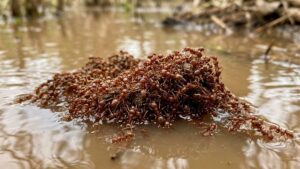
According to Texas A&M AgriLife Extension, drowning ants rarely succeeds at eliminating infestations. Fire ants survive flooding by forming rafts, sparing the queen and thousands of members. Individual workers die, yet minimal impact touches the colony population overall.
How to Prevent an Ant Infestation
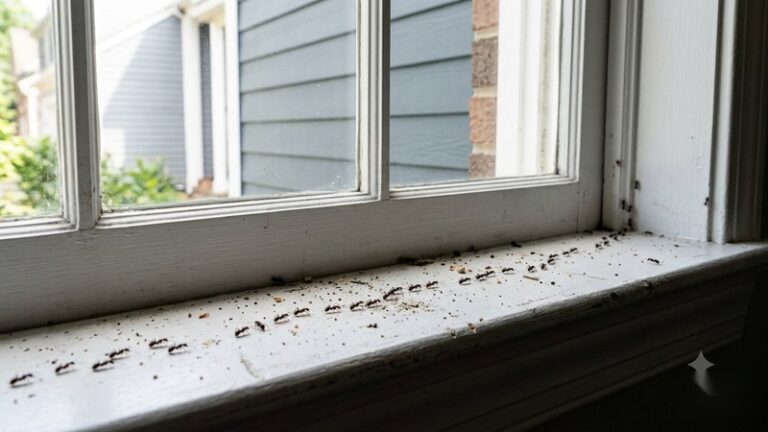
Long-term ant control begins by dismantling their invisible highways and reinforcing your home’s outer defenses before colonies settle in.
- Scent Sabotage: Wipe suspected pathways with diluted vinegar or peppermint oil to disrupt scent trails, erasing the chemical breadcrumbs foragers rely on for navigation.
- Perimeter Discipline: Store firewood elevated and distant, swap organic mulch for gravel near foundations, and clear leaf debris that shelters scouting worker ants.
- Barrier Repair: Replace brittle weatherstripping and patch torn window screens promptly, closing the overlooked gaps that function as silent entry points.
- Humidity Control: Run dehumidifiers in damp crawlspaces and attics, since lingering moisture quietly invites nesting and reappearing ants in kitchen sink zones.
- Feeding Zone Hygiene: Rotate pet bowl washing schedules and never leave kibble overnight, denying easy food sources to opportunistic colonies.
According to Texas A&M AgriLife Extension, disrupting pheromone communication is far more effective than reactive spraying.
What To Do If You Have An Ant Infestation
Stopping an active invasion demands an immediate, calculated response that dismantles the colony’s foothold before it entrenches.
- Scrub Active Zones: Wash trafficked surfaces with soapy water or enzymatic cleaners to physically strip away the chemical pheromone signals guiding workers toward food.
- Apply Slow Dusts: Puff food-grade Diatomaceous Earth into wall voids, cracks, and crevices, letting this natural mineral quietly dehydrate foragers over days.
- Build Physical Barriers: Ring pet bowls and pantries with chalk or talcum powder, creating non-toxic lines that disrupt movement without harming individual ants.
- Map Emergence Points: Track and document exactly where ants surface, building an internal reference that pinpoints hidden nesting corridors behind walls.
- Consult Professionals: Hire licensed local pest control experts to deploy non-repellent transfer insecticides that foragers carry back, achieving true eliminate colonies results.
Recommended Ant Control Methods
Advanced eradication and layered defense strategies deliver effective, lasting ant control for any property.
- Perimeter Residual Application: Apply non-repellent liquid treatment methods around the outer home’s boundary for slow, transferable elimination.
- Growth Regulator Disruption: Comprehensive IGRs interrupt the colony’s breeding cycle, halting persistent infestations at the source colony.
- Botanical Repellent Barriers: Deploy specialized essential oil concentrates as protective entry points blocking ant activity.
- Sub-Slab Void Injection: Target deeply nested colonies through sub-slab injections reaching hidden nests underground.
When To Call A Professional
According to Texas A&M AgriLife, persistent trails signal a deeper problem than visible ants suggest. When DIY methods and commercial ant baits fail against hidden colonies, professional pest control services become essential. Severe infestations with recurring moisture problems demand targeted approaches that eliminate entire colonies properly.
Still Fighting Ants?
Get rid of ants for good — book your free inspection.
Fast, no-obligation quote from trusted local pest control pros.
More Facts About Ants
The Decades-Long Reign Of A Single Queen
According to Texas A&M AgriLife Extension, a queen can survive for years, sometimes decades, quietly directing colony navigation and reproduction. Meanwhile, worker ants rarely last beyond a season, a stark degree of contrast in longevity.
Listening Through The Ground Beneath Their Feet
Ants possess no ears, yet they sense turbulent water, footsteps, and rivals through specialized organs in their legs and knees. This vibration-based survival system lets a lone ant detect approaching threats instantly, reading subtle tremors across any contained area long before danger arrives.
FAQs
Can Ants Swim In Soapy Water?
Soapy water disrupts surface tension, so ants lose their ability to trap air bubbles against their bodies. According to entomologists at Texas A&M AgriLife, this breaks the water conditions ants normally exploit, accelerating drowning as their survival tactics fail underwater.
Can Ants Swim In Water?
Many ants genuinely swim, using a dog paddle motion to float and reach shore. Their foraging ability and remarkable work ethic push them across turbulent water, though effectiveness may vary by species. Some dive, trapping tiny air bubbles for extended periods.
How Long Can Ants Hold Their Breath?
Endurance underwater is startling. According to UC IPM researchers, duration of submersion lets some ants survive underwater far longer than expected—certain species reportedly hold their breath between 24 hours and 14 days, depending on temperature and metabolic conditions.
Should You Not Squish Ants?
Squishing sometimes backfires. Crushed ants release alarm pheromones signaling nearby colonies, potentially intensifying activity. Penn State Extension notes that mechanical smashing rarely reaches hidden colonies, leaving underlying issues unresolved while established trails simply reroute around the flattened casualties within hours.
Is Drowning Ants A Way To Get Rid Of Them?
Flooding disappoints. Water rarely eliminates ant colonies because survival adaptations let them withstand flooding. Ants relocate, and excessive moisture may attract other pests. Though some ants drown, colonies do not easily collapse—making flooding an unreliable control method overall.
What Are The Best Practices For Ant Control?
Effective ant management blends strategies: seal entry points, fill cracks and crevices to prevent ants, and maintain cleanliness by clearing food residues that attract ants. Deploy baits and traps to target and eliminate colonies, or consult professionals for comprehensive solutions.