Which Ants Have Stingers? Types That Sting & Bite
TL;DR
— Not all ants sting; true stingers are modified egg-laying organs in female ants, while biting ants rely on mandibles and formic acid rather than injecting venom through needle-like appendages.
— Fire ants and harvester ants deliver excruciating pain and white pustules, whereas carpenter ants cause only mild swelling, showing sharp differences in potency across ant species.
— Dangerous species favor arid regions, southern US ranges, and defended nests; their swarming behavior and territorial defense contrast with harmless, persistent nuisance pests like little black ants.
— Most defensive stings resolve with an ice pack and antihistamines, but allergic reactions demand medical attention, and stubborn infestations warrant professional pest control services.
Most people assume every ant can sting, but reality differs sharply. Of over 13,000+ known ant species worldwide, only a minority across certain subfamilies actually possess functional stingers capable of penetrating skin.
According to entomologist Justin Schmidt, these ant stingers are modified ovipositors—female reproductive anatomy repurposed as venom-injection structures. Located at the tip of the abdomen, they deliver defensive venoms through an evolutionary transformation turning egg-laying tools into remarkable weapons.
Ant Biology
Across nearly 1,000 species, ants developed remarkable specialized anatomical structures. According to the Smithsonian, these insects evolved venom-delivery weapons positioned at their abdomens, transforming ordinary defensive behavior into precise mechanisms honed over roughly one hundred million years of evolution.
What fascinates entomologists is anatomical variation between an ant species and its relatives. Different ant venoms serve distinct purposes, some causing minor irritation while others deliver genuine envenomation, functioning as each colony’s chemical arsenal against predators and rival insects competing nearby.
Not every ant carries these tools; biting ants rely on mandibles rather than stings. Recognizing this caution matters for anyone practicing ant control, since researchers at universities recommend learning to identify unfamiliar colonies before assuming aggressive intent. For a closer look at how species differ in defense, see our guide on Red ants vs fire ants.
Fire Ants

Most people underestimate these insects until a swarm erupts. Fire ants deliver a sting that burns like nothing else, and their coordinated aggression makes them a genuine hazard across yards and fields.
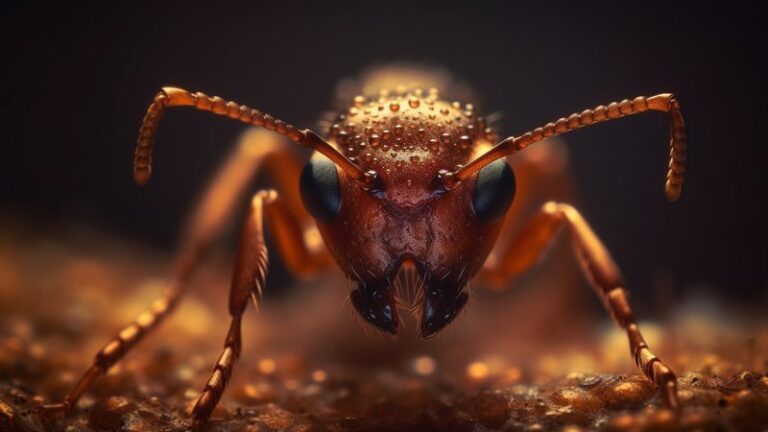
Description: These reddish-brown ants measure 2-6mm long, with a darker abdomen, distinct node segmentation, and powerful mandibles built for gripping skin before the stinger strikes.
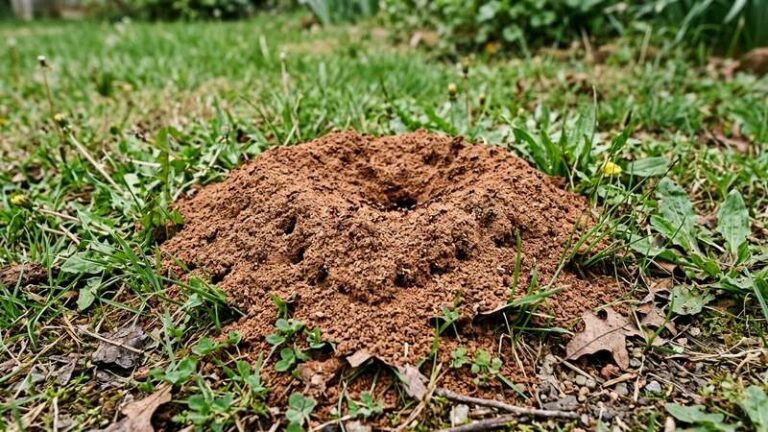
Range: Widespread across the southern US, they thrive in warm climates, building conspicuous mound nests in lawns, fields, and disturbed soil wherever sun-warmed ground is available.
Behavior: When their nest is disturbed, workers pour out in a swarming attack, latching on with mandibles and stinging repeatedly in aggressive, coordinated waves that overwhelm any perceived intruder quickly.
Sting: Each sting injects venom causing burning pain, then trademark white pustules within a day. According to Justin Schmidt’s research, allergic reactions occasionally escalate toward dangerous anaphylaxis in sensitized individuals.
Harvester Ants
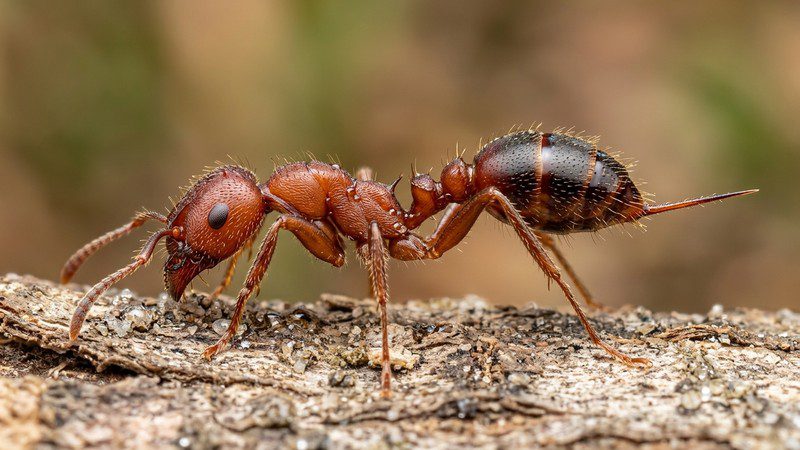
Description: According to the USDA, harvester ants (Pogonomyrmex) are large ants, roughly 1/4 inch, with square heads, robust mandibles, and reddish to dark bodies built for seed-gathering and stubborn defense.
Range: Widespread across the arid US, these foraging specialists claim dry territories, clearing vegetation around nests while patrolling broods and defending resources through relentless coordinated ground activity.
Behavior: Once threatened or disturbed, workers turn aggressive, swarming any intruder; Pogonomyrmex readily defend their colony, biting first, then curling abdomens to thrust their stinger.
Sting: Their sting delivers intense pain and noticeable swelling through injected venom; entomologists rank the burning pain among the most memorable stings, causing larger swelling than most species.
Carpenter Ants
Curious how these ants operate? According to Texas A&M AgriLife Extension, carpenter ants excavate wood without eating it, hollowing galleries that quietly compromise structural timber over time inside damp homes.
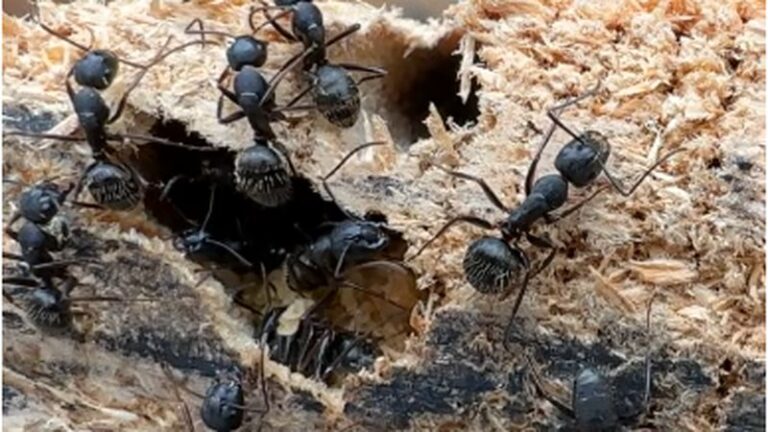
Description: Among the largest household ants, carpenter workers measure roughly half an inch, showing dark bodies, occasionally reddish tones, with a single node and rounded, evenly-arched thorax segment.
Range: Widespread across the United States, these ants favor moisture-damaged wood, gravitating toward decayed structures, tree stumps, wall voids, and humid framing where colonies establish satellite nesting sites.
Behavior: When threatened or disturbed, carpenter ants defend aggressively, snapping powerful mandibles while spraying formic acid, biting intruders and colony predators to protect broods, resources, and excavated territories.
Sting: Lacking a functional stinger, carpenter ants rely on biting; a bite produces single large red welts, painful pressure, occasional formic acid burning, and lingering localized irritation afterward.
Little Black Ants
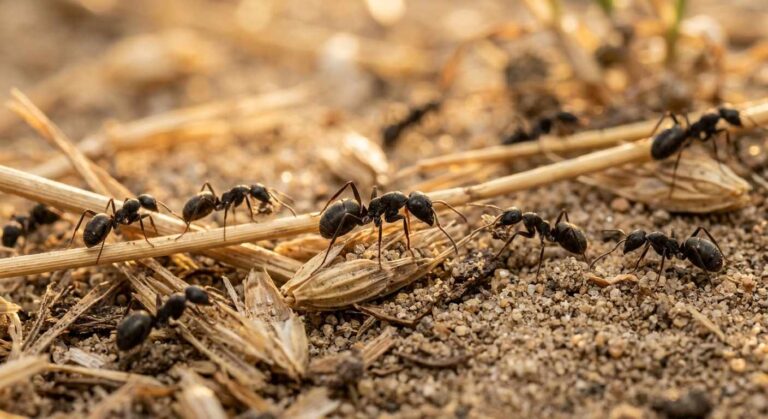
Description: Tiny and slender, little black ant workers measure roughly 1.5mm, appearing completely black with abdomens slightly proportioned. According to Texas A&M AgriLife Extension, their glossy uniform coloration distinguishes these unobtrusive household foragers instantly.
Range: Distributed widely across the US, these adaptable insects nest beneath pavement, woodwork, and indoor voids. Purdue Entomology notes they thrive both outdoors under stones and comfortably within residential wall cavities year-round nationwide.
Behavior: Rarely aggressive, colonies stay unbothered until disturbed directly. When their nests face intrusion, active foragers mobilize defensively, though these mild-mannered insects generally retreat rather than confront any looming perceived threats nearby.
Sting: Though technically equipped, their sting proves negligible against human skin. Colonies deliver small red spots producing minor itching only. Most people barely register contact, since the venom lacks meaningful potency entirely.
Stinging Ants
According to entomologist Justin Schmidt, whose hymenopteran pain scale ranks 1 to 4, the fire ants dominate the southern United States. These aggressive medically significant pests swarm when disturbed, anchor onto skin, then keep stinging repeatedly.
Their piperidine alkaloids and alkaloid-based venom trigger intense burning pain, pustule formation, and allergic reactions in sensitized individuals. The red imported fire ants (Solenopsis invicta), being invasive, attack en masse whenever colonies feel threatened across invaded regions.
Biting Ants
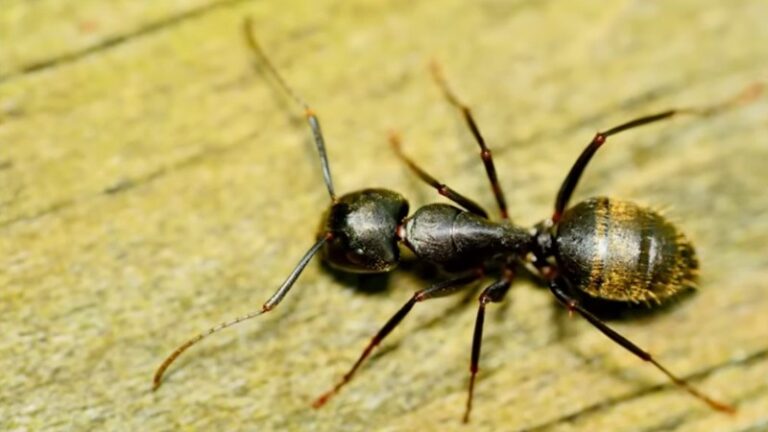
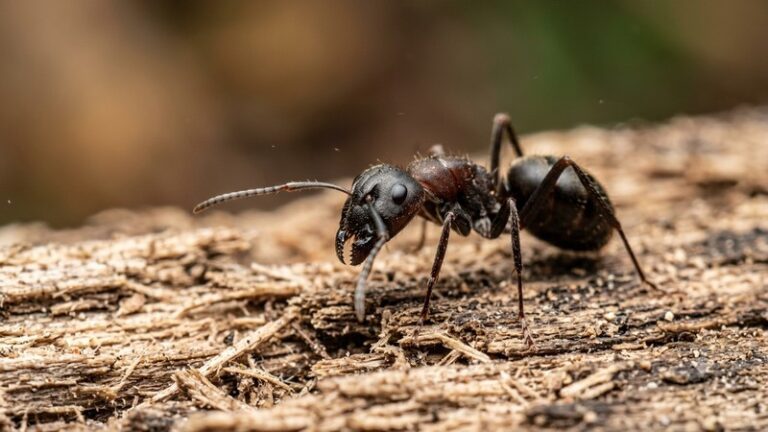
Carpenter ants, roughly 0.25in long with a dark, hairy abdomen, deliver painful bites using strong mouthparts when threatened inside infested wood. Not venomous themselves, these large ants spray formic acid, injected through wounds causing burning sensation.
Field ants similarly bite, then spray formic acid into each bite wound, producing redness, swelling, and lasting burning sensation. Meanwhile, little black ants possess tiny mouthparts, causing only slight irritation, itching, and mild, not very painful nips when disturbed.
Annoying Ants
Not every household invader packs a painful punch—some just wear out their welcome.
Odorous House Ants
Description: Tiny, dark brown to black bodies roughly 1/16 inch, with an unevenly shaped thorax and a hidden node. According to entomologists, crushing one releases a rotten-coconut smell.
Range: Found across the entire US, nesting under floors, inside wall voids, beneath mulch, and near warm pipes indoors.
Behavior: They forage for food relentlessly, trailing toward sweets and moisture. Colonies bite rarely, causing only minor irritation—more of a nuisance than a threat.
Control: Per the University of California IPM program, eliminate moisture, seal entry points, and use slow-acting bait so workers carry toxicant back to satellite nests.
Pharaoh Ants
Description: Extremely small, about 1/16 inch, pale yellow to light brown with a darker abdomen. Their tiny translucent frame makes them easy to overlook indoors.
Range: A global tropical species now thriving inside heated buildings everywhere, especially hospitals, kitchens, and apartment blocks throughout the US.
Behavior: These ants don’t sting people but spread rapidly by budding. Michigan State University Extension notes they can mechanically carry pathogens across surfaces.
Control: Never spray—it triggers colony splitting. Entomologists recommend protein and sugar baits placed along trails so foraging ants distribute it to hidden queens.
Which Types Of Stinging Ants Are The Most Dangerous?
According to entomologists at the Smithsonian, bullet ants claim the most painful insect sting, delivering waves of pain through poneratoxin, a peptide disrupting sodium channels. Their reddish-black, large bodies inhabit Central and South American rainforests, staying not aggressive unless nests threatened.
Australia’s bull ants combine powerful mandibles with potent stingers, causing anaphylactic deaths rivaling bees and wasps. Meanwhile, jack jumper ants trigger severe allergic reactions across Tasmania, where immunotherapy treatments address anaphylaxis affecting roughly 3% of the Tasmanian population.
Additional Stinging Ant Species
Beyond the notorious troublemakers, several ant species carry a functional sting worth respecting. According to entomologists at Texas A&M AgriLife, many overlooked ants possess venom glands capable of delivering irritating venom and genuine pain when threatened.
What surprises most homeowners is how these lesser-known stinging ants defend their colony through coordinated anatomical action, curling abdomens forward to thrust stylets that pierce the skin, injecting toxic compounds during any perceived territorial intrusion. Homeowners often confuse these with Citronella ants, whose defensive Citronella ants bite behavior differs in both scent and sting.
Pavement Ants
According to the University of Minnesota Extension, pavement ants measure roughly 2.4-3.3mm long, nesting beneath sidewalks and slabs. Though generally mild-mannered, disturbed workers will bite and deploy a weak sting during rival colony skirmishes.
Their stinger rarely troubles humans, yet mass attacks between competing nests reveal genuine aggression. According to PestWorld, their venom causes minor discomfort, making them more annoying intruders than a serious safety concern indoors.
Argentine Ants
Argentine ants rank among the most aggressive invasive ants, forming massive colony sizes that overwhelm rival ant colonies entirely. According to UC Riverside researchers, these workers rely on powerful mandibles rather than potent venom to dominate territories.
While their bite delivers only slight irritation and minor itching, their sheer numbers create swarming pressure. According to the USDA, their ecological success and global distribution stem from cooperative foraging behavior, not painful stings.
Field Ants
Field ant bites produce red swollen bites accompanied by a mild burning sensation, since these insects spray formic acid rather than inject venom through a traditional stinger. According to Penn State Extension, reactions stay harmless.
Larger than many relatives, field ants use strong mouthparts to grip before releasing acid onto skin. According to entomologists field guides, disturbing their nests triggers defensive biting, though serious reactions remain genuinely uncommon in most people.
Symptoms of Ant Bites
When an ant decides to bite or sting, your skin reacts fast. Most people notice a sharp pinch first, then a red welt blooming outward. The discomfort varies wildly by species, ranging from barely noticeable to genuinely alarming.
Not every encounter feels identical, because each ant’s venom carries different toxic compounds. Some deliver a piercing sting through hollow stylet channels, while others rely on powerful mandibles and formic acid to cause irritation and lingering pain.
Fire Ant Bites: A clamps onto skin grip precedes injects venom, leaving itchy bumps and sterile pustules with fierce burning sensations across affected red areas.
Carpenter Ant Bites: These large ants deliver painful bites using mandibles, then spray formic acid into the wound, producing irritation though they’re not venomous creatures.
Harvester Ant Bites: Expect intense pain with swelling and redness; the sting feel produces goosebumps, sweating, plus allergic reactions that peak within 20 to 30 minutes.
Little Black Ant Bites: With tiny mouthparts, these mild encounters feel not very painful, causing minor itching when disturbed near homes while they forage for food.
Field Ant Bites: These large ants create a bite wound and spray formic acid, generating a burning sensation alongside redness and swelling that feels quite painful.
According to Mayo Clinic guidance, most reactions stay localized inflammation with welts, but repeated mass attacks from swarming species can escalate quickly, especially when cumulative venom doses accumulate across dozens of wounds.
Are Ant Bites Dangerous?
For most healthy adults, the honest answer trends toward no. According to entomologists at Texas A&M AgriLife, typical ant sting events produce temporary pain, inflammation, and burning pain that fades within days without lasting harm or complications whatsoever.
However, sensitized individuals face serious reactions including anaphylaxis, and warning signs of severe reactions demand urgent attention. Watch for anaphylactic deaths risk factors: swelling beyond the site, breathing difficulty, dizziness, and the fatal allergic reactions that follow mass attacks or venom allergies.
How To Prevent Ant Bites
When outdoors, tuck clothing and check ground before sitting, since disturbed nests trigger defensive responses. According to the CDC, avoiding fire ants and their mounds sharply lowers your risk of painful stings entirely.
Wear closed shoes and socks near swarming mounds, because agitated fire ants deliver clustered stings rapidly across exposed skin, and sensitive individuals may face allergic reactions requiring caution.
Seal home entry points and eliminate pet food, grease, and sugar-based baits attractants, discouraging foraging behavior; the Mayo Clinic notes minimizing exposure prevents most repeated stings effectively indoors.
Apply repellent before hikes through desert ecosystems, avoiding harvester ants with aggressive temperaments; their venom peaks over eight hours, so prevention genuinely beats waiting through prolonged discomfort.
How To Treat Ant Bites
Wash affected skin immediately with soap, reducing infected risk; the Mayo Clinic recommends cool compresses to calm redness, swelling, and persistent itching after contact.
Resist scratching white pustules from fire ant bites, since scratched clusters worsen; leave red swollen spots alone, letting mild irritation and blister formation settle naturally down.
Apply hydrocortisone or antihistamine for intense pain and larger swelling from harvester ant bites; according to WebMD, these ease itchy, irritated reactions within days.
Seek medical attention urgently for difficulty breathing, dizziness, nausea, or swelling of face or throat, because severe reactions and venom allergies signal dangerous allergic reactions developing.
When To Talk To A Professional
When ants become nuisance invaders, self-treatment often fails against massive colony sizes. According to the EPA, persistent infestations near appliances or hot water lines signal deeper structural issues that only trained ant control specialists can properly locate and eliminate.
If fire ants or harvester ants trigger allergic reactions, swelling, or breathing trouble, seek medical attention immediately. Professionals recommend expert intervention when sensitive individuals experience repeated stings, since painful stings may escalate toward emergency room visits without swift response.
Still Fighting Ants?
Get rid of ants for good — book your free inspection.
Fast, no-obligation quote from trusted local pest control pros.
FAQs
Which Ant Has The Deadliest Sting?
The Maricopa harvester ant (Pogonomyrmex maricopa) claims the most toxic venom among insects. Its LD50 sits near 0.12 milligrams per kilogram in mice, meaning roughly 12 stings could theoretically fell a 2 kg rodent. Fortunately, felling a full-grown human demands hundreds to thousands of stings.
Is It Okay If Ants Bite You?
Most ant bites are not dangerous, typically causing minor irritation, itching, or brief mild irritation. However, fire ants and harvester ants can inject venom troubling sensitive individuals. According to the Mayo Clinic, watch for infected clusters or reactions warranting medical attention, especially after repeated stings.
Are Ant Stings Worse Than Bee Stings?
Comparing a honey bee sting against ant venom depends heavily on species. Ants like harvesters score high on the hymenopteran pain scale, some rivaling yellowjackets or paper wasps. According to entomologist Justin Schmidt, certain ant stings genuinely eclipse ordinary bee discomfort in raw intensity.