What Eats Spiders? 11 Animals & Insects (List)
Quick Answer
- Many carnivores including birds, frogs, and lizards actively capture spiders as steady prey.
- Predatory insects like spider wasps and centipedes paralyze their eight-legged victim before feeding.
- Even fellow arachnids and scorpions overpower and kill smaller spiders without hesitation.
- According to pest experts, these predators naturally reduce spider population across gardens and farms.
Ever wondered what keeps spider numbers in check? Plenty of predators hunt them. Fish, toads, lizards, birds, scorpions, monkeys, and even humans feast on these eight-legged creatures. Spider wasps, centipedes, tarantula hawks, bats, shrews, snakes, and other spiders join this diverse group too.
Seeing Spiders at Home?
Get rid of spiders for good — book your free inspection.
Fast, no-obligation quote from trusted local pest control pros.
The Background On Spiders
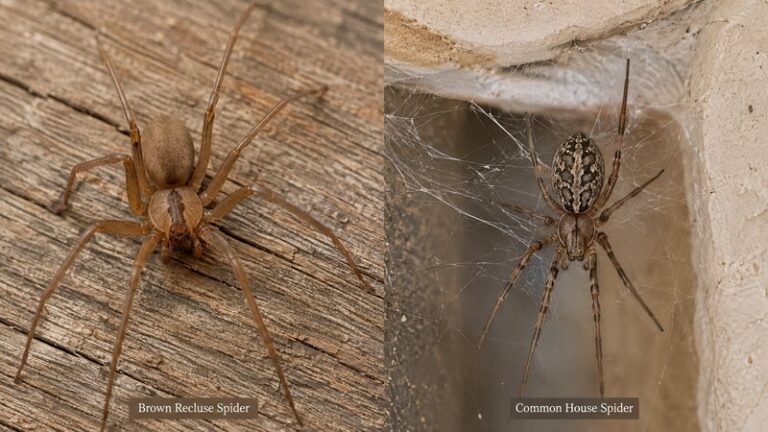
Most people don’t realize that spiders aren’t insects at all—a common misconception worth clearing up early. Within the vast animal kingdom, these creatures belong among the arthropods, sitting inside the Arachnids class rather than Insecta. Their taxonomic classification hinges on one detail.
That detail is leg count. Arachnids carry eight legs, while true bugs walk on six legs—a distinction According to Britannica that anchors proper taxonomic classification. Understanding where spiders fit within the animal kingdom reshapes how we view these misunderstood arthropods, separating fact from persistent misconception entirely.
What Eats Spiders?
Plenty of creatures treat spiders as prey, and the list is longer than most people expect. According to the University of Georgia’s Whit Gibbons, lizards, birds, and even fish actively feed on tiny spiders, keeping populations balanced across countless natural habitats worldwide today.
Toads, scorpions, and centipedes join the hunt too, each an arachnid or amphibian specialist. A curious question I hear often is whether spiders eat carrion, so will spiders eat dead bugs? Yes, hungry web-builders scavenge trapped, lifeless insects readily.
Monkeys in tropical zones, opportunistic humans in Cambodia, and predatory wasps all view eight-legged critters as protein. From tarantula hawks to spider wasps, these hunters sting, paralyze, and haul their catch, proving nearly everything eventually preys upon spiders.
Fish
According to marine biology sources, certain fish species opportunistically consume spiders that fall onto water surfaces. When arachnids tumble from overhanging vegetation, hungry swimmers below treat this unexpected meal as easy protein, striking swiftly before the struggling creature manages any escape attempt.
Anglers frequently observe this behavior firsthand near shaded banks where spiders dwell. Voracious feeders like bass and trout rank among the more ruthless predators targeting drifting arachnids, snapping them up whenever these eight-legged snacks breach the tension separating land from underwater feeding territory below.
Toads
According to the University of Michigan’s herpetology resources, toads rank among the most opportunistic animals that consume spiders whenever the chance appears. As nocturnal carnivorous hunters, they sit patiently near farmlands and gardens, snapping up eight-legged prey with lightning-fast tongues during their evening feeding routines.
What makes toads genuinely valuable is their appetite for spiders considered harmless yet unwanted around homes. Among roughly 45,000 species of arachnids, plenty fall victim to these amphibians. Their contribution helps limit crop destruction, keeping the natural food chain balanced across quiet backyard ecosystems everywhere season after season.
Lizards
Across the United States, many reptiles treat spiders as reliable prey. Geckos, anoles, and skinks actively hunt eight-legged targets around homes and gardens, using quick reflexes to snatch small creatures before webs can trap them or fangs can strike back.
According to National Geographic wildlife researchers, lizards rely on sharp vision and rapid tongue movement to catch spiders hiding in cracks, under barks, or along soil. Their appetite makes them valuable pest control allies, quietly reducing arachnid populations across yards and residential properties year-round.
Birds
Many birds treat spiders as reliable food throughout the food chain, especially given the spider’s small size. Frogs, toads, and other small animals compete for the same meals, yet birds remain among the most persistent hunters across gardens and open farmlands alike.
According to the University of Florida entomology resources, carnivorous feeding behavior spans 45,000 species of spiders worldwide, and birds exploit this abundance. Unlike the herbivorous spider Bagheera kiplingi from Central America feeding on acacia shrubs, most spiders become prey rather than predators here.
Tarantula Hawks
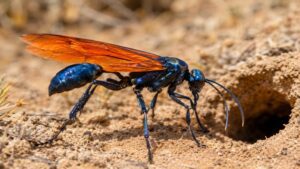
Tarantula hawk wasps rank among the most efficient hunters in the insect world. These solitary creatures live alone, and the female wasps actively burrow while hunting spiders. According to Arizona State University researchers, their severe sting ranks incredibly high on pain scales worldwide.
The female spider wasp targets the huntsman spider as nutritious food for developing offspring. Once paralyzed, the young feed while the male spider wasp avoids hunting entirely. According to National Geographic, this survival strategy keeps high population numbers remarkably stable across desert regions.
Spider Wasps
Spider wasps are among nature’s most specialized hunting predators, targeting spiders with surgical precision. Unlike picky eaters, these hunters actively pursue their eight-legged quarry, delivering a paralyzing sting before dragging the immobilized victim away, then they chomp into their prey.
According to Texas A&M AgriLife entomologists, these wasps rarely chomp randomly; instead each provisions a single paralyzed host for its developing larva. This behavior distinguishes them from opportunistic feeders, showing that even spiders face threats far smaller yet remarkably deadlier than themselves.
Centipedes
Most people assume spiders sit safely above soil-dwelling hunters, but centipedes flip that logic entirely. According to pest ecology researchers, these fast predators treat house spiders, cellar spiders, and even garden spiders as routine prey, striking with venom before the eight-legged invaders can flee toward escape.
Curiously, centipedes act as an accidental pest control ally inside any household. They hunt through soil, rocks, and dark corners, using motion detection to pounce on smaller spider targets. Their fangs-like forcipules inject poison, subduing venomous spiders and reshaping local population shifts quietly overnight.
Scorpions
According to arachnologist experts at the University of California, scorpions rank among the most efficient spider predators in arid ecosystems. These venomous hunters ambush their eight-legged relatives after dark, delivering paralyzing venom through their tail stinger before consuming the immobilized prey entirely.
What surprises many enthusiasts is how scorpions target both smaller spiders and larger species. Their fangs-like chelicerae grip the body, while powerful digestive acid breaks down the protein sources inside, letting these nocturnal arthropods devour competitors sharing the same territory.
Monkeys
Certain animals display surprising dietary habits, and primates rank among the more opportunistic spiders eaters across tropical regions. According to National Geographic, capuchins and macaques forage actively, treating arachnids as protein-rich snacks. Their nimble fingers extract hidden prey from bark crevices with remarkable dexterity daily.
Beyond casual foraging, some primates approach spiders methodically, checking foliage where birds rarely venture. Wildlife biologists note that troop-based hunting spreads this behavior socially among younger members, who imitate elders. This learned skill positions monkeys as consistent, if underappreciated, predators within complex forest ecosystems.
Other Spiders
Among a spider’s most dangerous predators are fellow arachnids. Many spiders hunt their own kind, treating smaller relatives as prey. When cornered, an outmatched arachnid must run or face death, since these life-threatening encounters rarely favor the weaker one against larger hunters.
Animals including birds, reptiles, and amphibians compete for the same meals, yet other spiders remain relentless killers. According to arachnologist expert consensus, cannibalism is common. How long do jumping spiders live? Roughly a year, which shapes their aggressive survival instinct to fight or flee.
Humans
According to pest control authorities, humans rank among the most consistent predators of spiders worldwide. Whether through deliberate extermination or accidental crushing, our interactions rarely favor these arachnids. For arachnophobes, encountering one indoors becomes an immediate life-threatening challenge demanding swift removal.
Interestingly, some cultures treat spiders as delicacies, frying them for protein. This contrasts sharply with other spiders and natural predators that hunt purely for sustenance. Our motivations blend fear, curiosity, and appetite, making human behavior toward arachnids uniquely unpredictable across different regions globally.
How Do Spiders Protect Themselves?
Escape And Hide
Spiders rely on remarkable adaptations when danger approaches. Many spiders are poisonous, using venom to deter attackers, while species from Uloboridae, Horalkaidae, and Liphistiidae families depend on stealth. Their black, gray, and brown coloring helps them blend against trees, soil, and rocks seamlessly.
According to Australian Museum arachnologists, spider-hunting predators struggle against well-camouflaged prey that stays stationary to blend in. When a predator strikes, spiders release silk threads and fall from significant heights, quickly escaping the pursuing predators below, avoiding painful bite encounters, and reaching safer ground fast.
According to Texas A&M AgriLife Extension, most spiders flee before they fight. Many hide in tight cracks, drop from webs, or exploit rapid movement to vanish. Their small legs carry them into shadows fast, letting them target safety long before any attack ever lands.
Poison Predators
Some spiders rely on venom to survive threats. They inject it through fangs strong enough to puncture tissue, sometimes even human skin. Certain venomous spiders subdue a target quickly, while female black widow spiders deliver a lethal dose that discourages larger predators from pressing an attack.
Camouflage
Blending in is quiet genius. Crab spiders shift color to match petals, ambushing a mosquito or roach unseen. This camouflage helps active hunting spiders stalk crickets, grasshoppers, and silverfish, while the disguise simultaneously shields them from birds, lizards, and frogs scanning for an easy meal.
Clever Defense System
Spiders engineer surprising tricks. Some use silk trip-lines as alarms, while the long-legged cellar spider vibrates wildly to blur its outline. According to National Geographic, certain species mimic ant species chemically, exploiting clever adaptations that turn everyday beneficial biology into a layered survival strategy.
When All Else Fails, Call the Expert Exterminator
When natural spider predator activity falls short indoors, professional help becomes essential. While birds, lizards, and centipedes manage outdoor populations, they rarely reach hidden burrows inside walls. According to pest control experts, persistent infestations signal deeper issues that store-bought sprays simply cannot eradicate effectively.
You might wonder, do spiders eat bed bugs? Sometimes yes, though relying on them backfires quickly. Trained exterminators identify whether you face venomous spider threats or secondary pests, then apply targeted professional spider control treatments across colonies, cracks, and entry points that ordinary homeowners consistently overlook completely.