Does Vinegar Kill Spiders? Yes, But Only on Contact
Quick Answer
- Yes, but narrowly: acetic acid in vinegar can kill spiders on direct contact, though it’s hardly a reliable method.
- The acidity attacks spider physiology through dehydration and possible nervous system stress, but only high concentration sprays prove lethal.
- Entomologists note limited research; diluted vinegar acts more as a mild deterrent or repellent than a spider killer.
- Spray a 1:1 ratio of white vinegar and water along entry points; severe cases need professional pest control.
Vinegar earns a reputation as a spider killer, yet the science tells a narrower story. According to university extension entomologists, acetic acid can prove fatal only on direct contact, while its scent works more as a natural deterrent. In practice, consistent results remain rare, so weigh the evidence before relying on it for pest control.
Does Vinegar Kill Spiders? (Verdict)
Yes, but only when the spray lands directly on the spider. According to the National Pesticide Information Center, acetic acid is vinegar’s active ingredient; higher acidity typically kills smaller species on immediate contact. Larger spiders often survive, making the reliable-killer claim an old wives’ tale.
Treat it as a natural remedy that helps repel and deter arachnids, not an eradication tool. A diluted vinegar solution avoids harmful chemicals, yet its limited effectiveness means precise spraying misses hidden egg sacs. Use it as a preventive barrier; serious spider control needs professionals.
Why Vinegar Works (Effect of Acetic Acid)
Here is the surprising part: the sharp smell is not what kills. People ask, do spiders hate water? Plain water beads off their waxy cuticle, their natural defense mechanism. Acetic acid is different; on direct contact it strips that protective layer, dehydrating and damaging tissue.
The odor still matters. Spiders taste and smell through sensory hairs on their legs, so vinegar-soaked surfaces feel hostile. According to the U.S. EPA, acetic acid is a registered pesticide ingredient, yet household vinegar holds only about 5%, and a diluted mixture loses its bite.
Vinegar As A Repellent Vs. A Killer
Vinegar gets credited with two jobs, repelling and killing, and confusing them is why homeowners spray, wait, then find fresh webs a full week later.
Vinegar As A Repellent
Spiders read their world through sensory hairs on their legs, so a sharp acetic odor along a baseboard is an unpleasant signal, not a threat. They get deterred, not harmed. The catch: the scent evaporates within hours, meaning regular application decides whether the effect lasts.
- Wipe a diluted solution of equal parts vinegar and water along window frames and door sills.
- Soak cotton balls or fill small dishes, then tuck them into corners where webs keep reappearing.
- Scent barriers fade fast, so refresh them every few days, especially near floors with heavy airflow.
Vinegar As A Killer
Killing requires direct contact. A spray bottle of undiluted vinegar can overwhelm a small spider, yet only when it lands on the body. Grocery store vinegar sits near 5% acidity, so concentration limits how effective it is, and hidden spiders or egg sacs escape untouched.
- Apple cider vinegar adds no killing power over white; the types of vinegar differ mainly in smell.
- According to UC IPM, vacuuming beats spraying, and vinegar’s drawbacks include surface damage on marble.
- Kill-on-contact sprays ignore crumbs, ants, and other food sources that keep drawing new spiders indoors.
What Type Of Vinegar Kills Spiders?
White distilled vinegar is the smartest pick to get rid of spiders on contact, while cleaning vinegar hits harder and apple cider vinegar plays backup.
White Distilled Vinegar
Most success stories involving natural remedies start with plain white vinegar. Its advantages: cheap, colorless, and stain-free. According to the FDA, anything labeled vinegar should contain at least 4% acetic acid. Sprayed directly, it kills smaller spiders on contact and keeps a clean home tidy.
- Mix in peppermint drops; essential oils noticeably soften vinegar’s sharp, sour smell.
- Avoid spraying pet bedding; small precautions keep your home a safe place.
Apple Cider Vinegar
Apple cider vinegar carries similar acidity, but its fermented aroma draws fruit flies, which feed spiders. Infusing it with orange peels or lemon peels helps; the National Pesticide Information Center notes limonene from citrus fruits appears in some registered insecticides, making citrus a smarter pairing.
- Its fruity scents fade fast; layer natural scents near doors and windows.
- Never mist potted herbs like basil; acetic acid scorches tender leaves quickly.
Cleaning Vinegar
Cleaning vinegar is the strongest of the three; Heinz labels its version at 6% acidity, roughly 20% stronger than table vinegar. That extra bite suits garages and basements for year-round perimeter sprays. Adding eucalyptus or lavender tames the fumes, but keep it away from plants.
- Skip marble and granite; these precautions protect surfaces in a clean home.
- A tidy basement helps get rid of spiders longer than spraying alone.
How To Use Vinegar To Get Rid Of Spiders
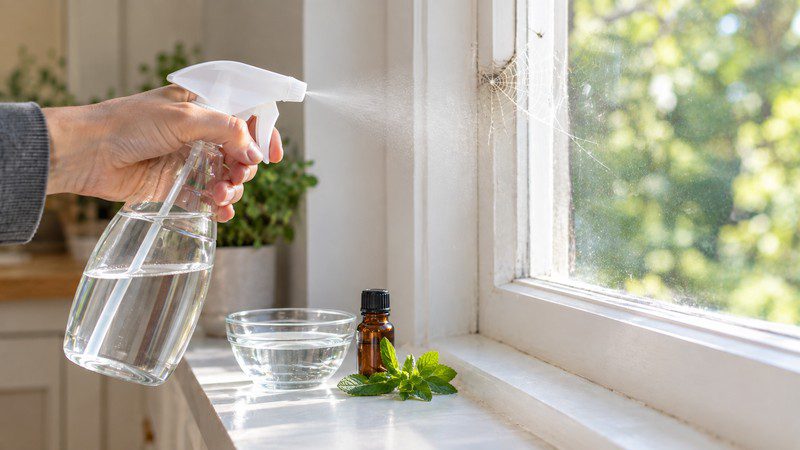
Spraying a spider directly is the least useful move, because vinegar mostly works to repel rather than kill. Start instead with a natural spray solution of equal parts water and apple cider vinegar, then mist gaps, window frames, and hiding spots where old webs reappear.
Before you spray marble or limestone, test surfaces in a small area first, because acid etches stone. Reapply weekly in basements, attics, and low-traffic areas, adding ten drops of peppermint oil to soften the strong smell. The NPMA recommends sealing entry points alongside any spray.
Safety Precautions and Drawbacks
The biggest risk with vinegar isn’t to spiders; it’s to your countertops. According to the Natural Stone Institute, acidic solutions etch marble, limestone, and travertine, leaving dull marks that polishing rarely fixes. Grout, waxed hardwood, and sealed surfaces can suffer damage too, so spot-test first.
Being readily available and marketed as a safe alternative doesn’t erase vinegar’s disadvantages. Poison Control warns mixing acids with bleach releases chlorine gas. Keep sprays away from pets and plants. Vinegar only kills on contact, so recurring issues or unidentified spiders deserve a professional inspection.
Seeing Spiders at Home?
Get rid of spiders for good — book your free inspection.
Fast, no-obligation quote from trusted local pest control pros.
Pros And Cons
Vinegar delivers a cheap, contact-level knockdown on spiders, but its acidic punch fades quickly, which shapes every benefit and drawback.
Pros
- Contact Kill Power: Household vinegar’s 5% acetic acid can overwhelm small spiders when sprayed directly.
- Low Upfront Cost: A gallon of white vinegar undercuts retail sprays and lasts for months.
- Gentler Around Households: Diluted vinegar leaves no synthetic residue on baseboards where kids and pets roam.
- Scent-Based Deterrent: Its sharp odor may discourage spiders from settling along treated windowsills and door frames.
Cons
- Fades Within Hours: Once the liquid dries, the smell dissipates and wandering spiders return uninterrupted.
- Egg Sacs Survive: Silk casings shield developing spiderlings, so one spray rarely stops the next generation.
- Stone Surface Etching: According to the Natural Stone Institute, vinegar can etch marble and limestone.
- Root Causes Untouched: Texas A&M AgriLife Extension stresses sealing entry points and reducing clutter, which vinegar never addresses.
What Attracts Spiders
If you keep asking, “Why are there so many spiders in my house?” look at your flies and ants first. According to Texas A&M AgriLife Extension, spiders follow food, so every insect infestation quietly invites these eight-legged creatures indoors, turning your homes into hunting grounds.
Shelter matters as much. Cooling nights push unwelcome guests from outdoors through cracks and crevices toward dark areas: closets, cabinets, corners, and the space underneath furniture like your sofa or bed. Fresh webs there usually signal hidden pest populations feeding them, not random spider activity.
Other Methods to Get Rid of Spiders
People chase the spider, yet lasting results come from starving it. According to Texas A&M AgriLife Extension, spiders follow household insects, so cutting that food supply matters most. Seal cracks along the exterior, remove nesting shelter, keep storage clutter-free, and sweep cobwebs once a month.
Sticky traps placed behind furniture reveal which species you actually have, and peppermint oil serves as a natural, non-toxic deterrent. Chemical pesticides help, but only alongside preventive measures. Venomous spiders, large infestations, or a sudden rise in sightings signal time for a monthly pest control program.
When to Call a Professional
Vinegar fails the moment you reapply it every few days and still find webs in closets and cabinets. According to Texas A&M AgriLife Extension, brown recluse and black widow spiders are dangerous residents, and a household item was never designed to kill spiders behind walls.
Call a pro when a bite causes lingering discomfort or egg sacs signal pest infestations. Homeowners ask, when is the best time to spray for spiders? Most technicians favor early spring and fall, when activity peaks. We connect you with local experts offering longer-lasting protection.