
Carpet Beetle Bites: Symptoms, Causes & Treatment
Quick Answer
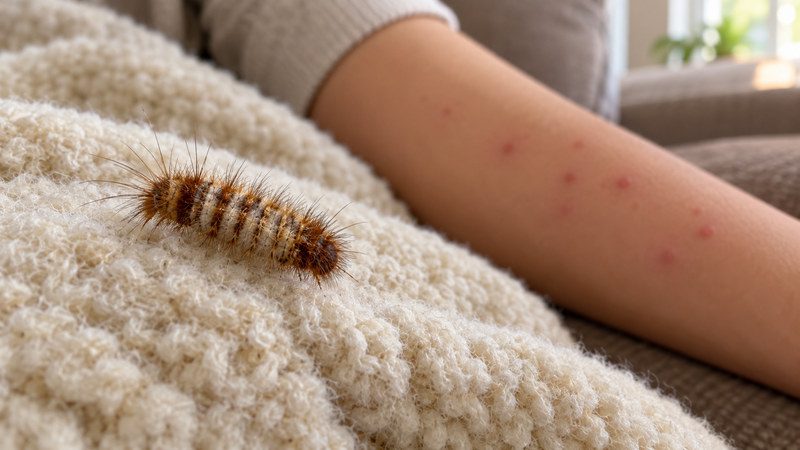
Adults don’t bite, and carpet beetle larvae never pierce skin. So-called carpet beetle bites are allergic reactions to their spear-shaped hairs (hastisetae), causing itchy red bumps, small blisters, or a rash often mistaken for bites.
- According to a CDC-published study, this skin dermatitis often gets misread as bed bug bites.
- Larval hairs detach, float in the air, and trigger eye allergy, nose allergy, or asthma attacks.
- Delayed reactions can surface hours after exposure, so contact usually goes unnoticed until welts appear.
- Relief combines symptom-based treatment with thorough cleaning, since only removing the household pests stops flare-ups.
That red, prickly patch showing up after a night on the couch rarely means adult carpet beetles went hunting. These tiny dermestid beetles don’t bite, and their mouthparts can’t puncture skin the way true arthropod bites do. The real trouble belongs to the larvae crawling through upholstery and stored blankets.
According to the Cleveland Clinic, the culprit is those bristle-like hairs, which trigger allergic contact dermatitis in susceptible people. Friction from sheets or a favorite sweater presses the coarse hairs against the body, producing skin reactions closely resembling papular urticaria. Stray fragments reaching airways add irritation to mucous membranes.
Because the rash remains an under-recognized cause of itching in humans, many families spend weeks treating pets for fleas instead. Spotting an allergic reaction early, then connecting with a vetted local pro, breaks that cycle before hidden colonies quietly multiply.
Do Carpet Beetles Bite?
No, carpet beetles don’t bite. Yet the tiny invader from the Dermestidae family leaves sensitive people with itchy skin reactions that look like bite marks.
Adult carpet beetles sip outdoor pollen and nectar, while larvae chew fabric, never flesh, and neither stage draws blood. According to Penn State Extension, dermatologists have documented these reactions since 1948, and the culprits are larval hairs from genera like Anthrenus and Dermestes. Patients typically report feeling bitten, yet the intense itching often arrives as a delayed reaction hours afterward.
That itch sends many homeowners hunting for bed bugs or flea bites first. A 2021 study in the CDC journal Emerging Infectious Diseases traced the lesions to larval hairs lodged in skin, not bites, and noted reactions differed between family members. A larval rash usually looks scattered, with single bumps rather than tight, uniform clusters.
- Bite marks require piercing mouthparts, and carpet beetles carry chewing jaws built only for fibers.
- Rhinitis, sneezing, and itchy eyes can accompany the rash once shed hairs drift airborne indoors.
- Welts that keep returning after cleaning often signal a hidden infestation worth a professional inspection.
What Are Carpet Beetles? (Identification, Species & Life Stages)
Most people never notice carpet beetles until chewed fabrics turn up in closets. These fabric pests are small, quiet, and easy to overlook, which explains why they settle in so comfortably.
Identification
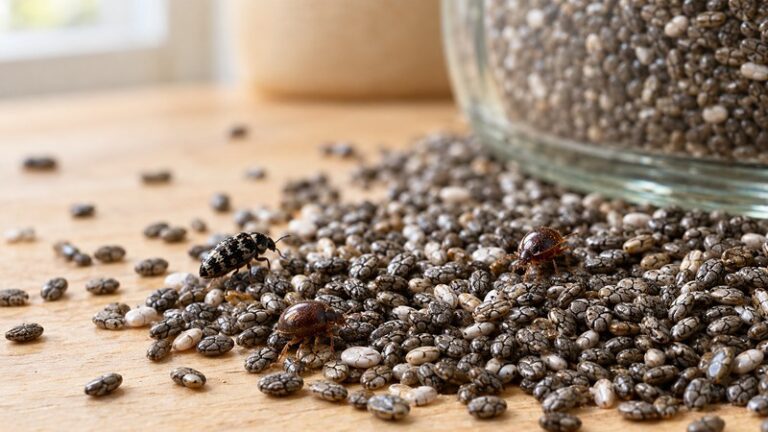
Searching for bugs that look like chia seeds? Carpet beetle adults are a strong match. According to the University of California’s IPM program, they measure about 1/16 to 1/8 inch, rounded and oval. These tiny beetles often show mottled patterns of white, brown, and yellow scales, fly readily, and gather on windowsills.
- Larvae look nothing like their parents: fuzzy, tan, and wrapped in bristly larval hairs that shed easily.
- Papery shed larval skins in fabric folds confirm activity; a vetted local exterminator can verify species.
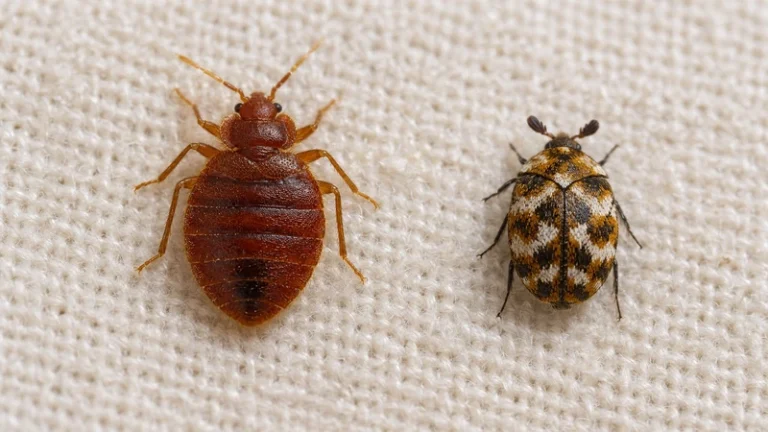
- Unlike flat, reddish-brown bed bugs, carpet beetles are domed and drift toward windows, not mattress seams.
Common Species
Three species account for most household cases in the U.S., and each leaves slightly different clues around your home.
- Varied carpet beetle (Anthrenus verbasci): one of the most common indoor species; its larvae feed on wool, feathers, dead insects, and pet hair collecting under furniture.
- Black carpet beetle (Attagenus unicolor): solid black adults, carrot-shaped larvae with a long tail tuft, often found raiding stored pantry items, grains, and flour.
- Furniture carpet beetle (Anthrenus flavipes): yellow-and-white flecked adults whose larvae often target upholstery, leather, silk, fur, and rugs left undisturbed in dark corners.
Life Stages
Every carpet beetle passes through four stages, and the costly damage happens almost entirely during one of them, not the flying adult.
- Eggs: depending on species, one female deposits dozens to 100+ eggs; look for small white eggs in lint and furniture cracks.
- Larvae: the destructive phase, lasting months to years while they molt repeatedly and leave exoskeletons behind in wool clothing and bedding.
- Pupae: the larva rests inside its last shed skin, transforming quietly over roughly one to three weeks before emerging.
- Adults: they feed on pollen outdoors and often hitch a ride inside on cut flowers or slip through open doors.
Are Carpet Beetles Harmful?
Carpet beetles never bite, which is why their harm gets missed. The real problem comes from larvae, whose shed skins and hairs trigger skin trouble in sensitive people while causing lasting damage across your home.
The Harm Comes From Hairs, Not Bites
According to Penn State Extension, dermatologists have reported carpet beetle dermatitis since 1948. Highly allergenic hairs cause inflammation, redness, and itchy welts after contact, and a CDC journal notes such lesions are mistaken for bites.
- Type 1 allergy triggers an immediate reaction; Type 4 responses can appear within 72 hours.
- Inhaling a heavy allergen load of hairs may irritate lungs, warns University of Arkansas Extension.
- People with higher sensitivity often notice red bumps on exposed limbs, the face, and neck.
The Quiet Damage Hiding in Your Closets
University of Kentucky entomologists explain that larvae target animal byproducts like wool, felt, feathers, and leather. Left unchecked, growing infestations chew irregular holes through clothing, rugs, and curtains, while 100% synthetic fabrics usually escape untouched.
- Check closets, under rugs, and dark corners, where larvae feed for months before anyone notices.
- Utah State University Extension notes larvae can infest food, and swallowed hairs may irritate throats.
- Spotting signs early limits repairs; a local pest professional can confirm activity before damage spreads.
Carpet Beetle Rash: Symptoms & Appearance
Most people blaming a mystery bite are looking at the wrong culprit. According to Penn State Extension, carpet beetle larval hairs trigger an acquired allergic reaction, and the resulting rash-like irritation often convinces sufferers something chewed them overnight when nothing did.
Symptoms
Reactions vary with sensitivity and exposure, so two people sharing the same infested couch rarely experience identical skin reactions or timing.
- Itchy red welts that feel far worse than they look, especially when you’re trying to sleep.
- Immediate reactions within hours in sensitive people, while others notice nothing until repeated contact builds up.
- Occasional pustules or tiny blisters forming over raised bumps, especially where scratching breaks the skin.
- Flares resembling acute eczema in people already prone to dermatitis, with red, inflamed, sometimes weeping patches.
- Bumps that recur each time you pull on stored wool or lie on infested bedding again.
Appearance
A dermatology review published in Cutis notes that larval hairs produce raised, hive-like or swollen papules that are easily mistaken for arthropod bites. Unlike bed bug bites, which often line up along exposed skin, these bumps scatter randomly and tend to gather where clothing rubs, such as waistbands, collars and cuffs.
Compared with welts from mosquitoes, which fade quickly, these marks can linger for days and keep returning while the source stays hidden. A dermatologist reviewing your exposure history, including stored wool or secondhand upholstery, can usually connect the pattern faster than guesswork.
What Causes Them?
Here’s the twist most people miss: no beetle ever pierces your skin. Every carpet beetle rash traces back to shed larval hairs, not a bite.
- When disturbed, worm-like larvae fan out hairs as a defense, much like porcupine quills, and those spear-tipped barbs lodge in skin.
- Their chitin structure is foreign to the immune system. According to Penn State Extension, larval blood can provoke this acquired allergy too.
- Airflow spreads them; a CDC journal report tied 35 papules on one child to an AC system above her bed.
- Exposure concentrates on skin-contact items: linens, bedding, mattresses and stuffed animals, where feeding larvae quietly shed hairs for months.
Not everyone reacts. The CDC report found one household member may stay symptom-free while another develops raised bumps and irritation. Those with an allergy history often show immediate reactions; others build sensitivity, producing delayed reactions.
Why Larval Hairs Cause Allergic Reactions
Here’s what surprises people: the hairs can’t pierce skin. According to a 2024 review in the dermatology journal Cutis, these spear-tipped hastisetae are mostly chitin, and that compound, not a bite, is the true cause.
- Disturbed larvae raise abdomen plates and fan these hairs like quills, shedding them into bedding.
- Skin contact leaves scattered pus bumps, while airborne hairs bring wheezing, coughing, conjunctivitis, and an itchy nose.
- Rarer cases involve allergic alveolitis, vasculitis, or ear inflammation, fading within 3 months after cleanup.
Why does one family member react while others don’t? Sensitization varies. Immediate symptoms show up on a skin-prick test or blood IgE test, whereas delayed rashes surface through patch testing, which pinpoints what causes them.
Carpet Beetles vs. Bed Bugs
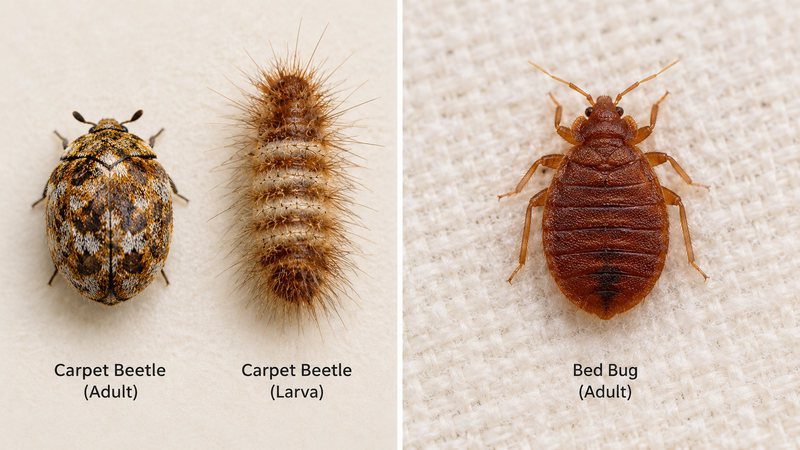
Most people blaming bites on bed bugs never see a single blood-feeder. The red marks on their arms often trace back to small oval insects living near baseboards instead. Sorting the two early spares money, lost sleep, and needless panic.
| Feature | Carpet Beetles | Bed Bugs |
|---|---|---|
| Do they bite people? | No; bristly larval hairs irritate skin | Yes, they pierce skin to drink blood |
| Adult size and shape | Round, fuzzy adults measuring just 2–3 mm | Flat, reddish-brown, roughly an apple seed |
| Skin reaction pattern | Scattered hive-like bumps or small blisters | Itchy red welts clustered in neat rows |
| Favorite hiding places | Dark undisturbed spots, under furniture, closets | Mattress seams, headboards, box spring folds |
| Response to light | Strongly drawn to light near windows | Avoid light, emerge at night to feed |
| What they consume | Natural fibers, hair, lint, and household debris | Only blood, mostly from sleeping humans |
According to the CDC, bed bugs aren’t known to spread disease; carpet beetles aren’t disease carriers either. The smarter move is identification: sticky traps placed where you’ve noticed crawling help monitor activity, giving doctors and local pros clear evidence before anyone recommends a treatment plan.
Treatment for Carpet Beetle Rash
Most creams calm this rash within days, yet it returns until the larval hairs leave your bedding, so treatment runs on two tracks: skin and home.
Calming the Itch at Home
Dermatologists worldwide lean on the same simple sequence: remove irritants, cool the skin, then quiet the histamine response driving the itch.
- Wash the area with mild soap and lukewarm water to rinse away clinging larval hairs, then pat dry instead of rubbing.
- According to the American Academy of Dermatology, a cold, wet cloth held on itchy skin for 5–10 minutes eases flare-ups.
- Mayo Clinic suggests over-the-counter 1% hydrocortisone cream for short-term itch relief; calamine lotion works well on weepy, red, bumpy patches.
- An oral antihistamine like cetirizine or loratadine helps at night, when scratching and stress make the itch feel worse.
When to Diagnose Beyond the Skin
A rash that spreads, blisters, or lingers beyond two weeks deserves a clinic visit. Doctors usually diagnose carpet beetle dermatitis by ruling out bed bugs and scabies, while allergy testing through skin prick or IgE blood work confirms larval hairs as the actual trigger.
- Prescription-strength corticosteroid creams calm stubborn patches that drugstore hydrocortisone fails to settle within a week.
- Patch testing helps when symptoms mimic contact dermatitis from laundry detergents, wool, or new fabrics.
- Wheezing or facial swelling needs urgent care; varied carpet beetles, a common US species, occasionally cause it.
Allergy Testing
According to the American Academy of Allergy, Asthma & Immunology, skin prick and IgE blood tests help pinpoint which allergens trigger a reaction. Allergists ask you to pause oral antihistamines beforehand, since they mask results. Testing earns its place when itchy welts resist full resolution.
- Wheezing or lung inflammation alongside skin bumps warrants testing, because airborne larval hairs irritate airways.
- Lymph node swelling or a visible puncture often steers doctors toward ticks or infection instead.
- Positive results explain why topical anti-inflammatory creams only improve symptoms until the household infestation ends.
Signs of a Carpet Beetle Infestation
Carpet beetles rarely announce themselves, so the clues hide in quiet corners. Watch for these signs before the first visible rash or other symptoms send you searching, because damage usually starts long before anyone notices.
- Brownish, hairy shell casings under baseboards are shed larval skins, the earliest sign that elongated, dark brown larvae feed nearby.
- According to University of Minnesota Extension, adults cluster on windowsills near light; a single beetle there often signals hidden breeding.
- Varied carpet beetle and furniture carpet beetle adults wear white spots, yellow spots and orange spots, roughly 1/8–3/16 inch long.
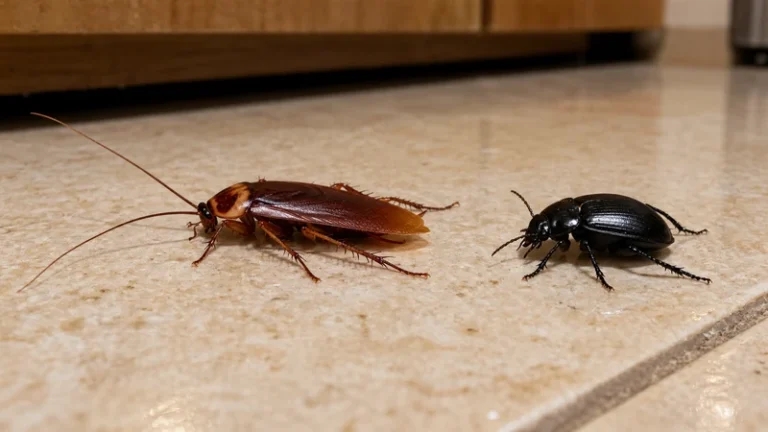
- The black carpet beetle looks solid black or brown, an indoor species sometimes mistaken for larder beetles or hide beetles.
- Irregular holes in wool, silk or felt, often in infested clothes stored in dark closets, reveal larvae eating animal fibers.
- Sand-like droppings around rugs and pet bedding mark infested areas, while unexplained itchy bumps on sleepers often trace to larvae.
How to Get Rid of Carpet Beetles
Itchy welts usually fade once the source disappears, so the real fix sits inside your closets, not your medicine cabinet. Knowing how to get rid of beetles in your house means hunting larvae, cutting their food, and blocking new entry points.
1. Find the Hidden Larvae First
Adults near windows are only the messengers. According to the University of Kentucky Department of Entomology, the larvae are the damaging stage, feeding in dark, undisturbed spots. Check under rugs, along baseboards, inside stored down blankets, wool sweaters, and book bindings, where shed skins and pet hair gather in dust.
2. Vacuum Before You Spray
Vacuuming removes more larvae than any spray. The University of Minnesota Extension recommends regular thorough cleaning of carpet edges, closet floors, vents, and upholstered furniture, then emptying the vacuum outside right away. Sweep stray food crumbs from pantry shelves too, because large infestations often grow quietly from one forgotten corner.
3. Wash and Heat-Treat Every Infested Fabric
Every infested item needs treatment before it goes back in the closet. Launder linens, pillow covers, mattress covers, and natural-fiber clothes in hot water, then dry on high heat. Dry clean delicate materials you can’t wash. Treat second-hand clothing and natural cotton the same way, since eggs hide in seams.
4. Seal Cracks and Close Entry Points
Adult beetles fly indoors on warm days, drawn to light and flowering plants. Keep doors shut, make sure windows are screened, and seal cracks around frames, vents, and utility lines. For persistent cases, a licensed technician can apply exterior perimeter treatments, cutting off adults before a problem spreads quickly indoors.
5. Lock Fabrics Away in Airtight Storage
Long-term prevention comes down to storage. Pack off-season clothes and blankets in airtight containers or sealed bags, since females can’t reach fabric for laying eggs. Keep crumbs out of bedrooms and closets, and recheck stored items every few months. Reducing exposure also keeps itchy reactions to larval hairs from returning.
Prevention
Unlike ants or fruit flies, carpet beetles ignore sugar, so prevention means starving larvae of keratin, lint, and dried debris.
- Wool handlers and museum staff face occupational exposure, which is why conservators freeze incoming textiles. Borrow that habit for thrifted stuffed toys.
- According to Penn State Extension entomologists, adults feed on flower pollen, so shake cut bouquets outside before bringing them near carpets and rugs.
- Cracks in wood floors trap hair and lint. Scraping them out, then varnishing the seams, removes a hidden larval nursery.
- Wash cotton blankets in hot water and dry-clean wool before storing, because sweat-stained fabric invites females to lay eggs.
- Vacuum under heavy furniture and along baseboards weekly, then seal the vacuum bag and send it straight to the outdoor trash.
- Dust diatomaceous earth lightly along floors in pantry areas and closets, and remove bird nests near vents before they seed an infestation.

One Comment