Baking Soda for Ants: Does It Really Work? (2026)
Quick Answer
- Baking soda offers a hit or miss result; it’s a short-term fix, not a guaranteed solution.
- The queen stays untouched and continues to reproduce, keeping the entire colony alive.
- Mixing it with powdered sugar helps lure and bait foraging individual ants effectively.
- Sodium bicarbonate may damage their digestive system, yet results stay unreliable in practice.
- You’ll spot fewer ants temporarily, but survivors return from the hidden nest quickly.
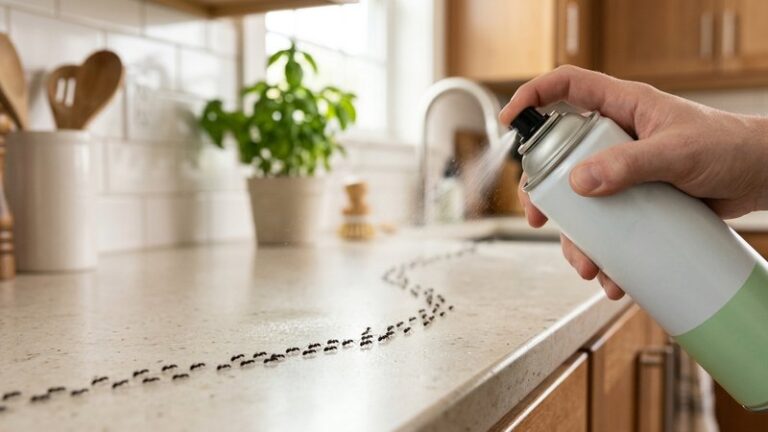
So, does baking soda truly work against ants? According to peer-reviewed research in the Journal of Economic Entomology, this common household item disrupts an ant’s body pH, delivering a potentially lethal blow. The gas production theory suggests fire ants that ingest this powder face internal chemistry chaos, though results vary.
Does Baking Soda Kill Ants?
According to pest control specialists, baking soda can kill ants through their digestive system, where the sodium bicarbonate reacts with stomach acid. This reaction proves fatal to a worker ant, though results stay temporarily limited without reaching deeper.
Field data shows 40-60% kill rates, so real-world results differ from claims. Mixing powdered sugar into a DIY bait helps ants consume the mixture, letting scouts carry it toward the hidden nest where the queen hides.
Benefits Of Professional Ant Control
According to the National Pest Management Association, licensed experts pinpoint each ant species before treatment, then apply targeted pest-fighting solutions across trails and hidden shelter points, disrupting the organized movement most DIY guides simply never address effectively.
Professionals understand body’s pH levels, avoiding guesswork about whether a small dish near food and water truly delivers a fatal punch. They map scouting patterns, target return routes, and stop colonies from prolonging survival through structural nesting behavior.
How to Prevent Ants at Home
Keeping ants out starts long before they ever reach your kitchen.
- Seal entry points: Caulk gaps around windows, doors, and foundation cracks where scouts slip in searching for food.
- Eliminate standing water: Fix leaky pipe openings and dry sinks nightly, since moisture draws carpenter ants toward your home’s structure.
- Clean thoroughly: Wipe baseboards, kitchen areas, and counters to remove scent trails that guide colonies straight to crumbs.
- Store food properly: Lock pantry spices and sweets in sealed containers, removing the shelter and prime targets ants crave.
- Disrupt trails: A quick vinegar and water wipe erases ant trails, confusing fresh foragers before they recruit others.
- Inspect regularly: According to the EPA, routine checking near behind appliances catches early signs of ants before infestations spread.
- Address moisture problems: Ventilate damp bathroom and basement zones, since humidity invites multi-queen colonies to nest indoors.
What The Research Actually Shows
Lab testing reveals modest outcomes. When exposed to baking soda at 7.11 mg per square centimeter, researchers observed it kill half the test ants across seven days of direct contact—hardly the instant knockout many DIY guides promise.
The proposed mechanism centers on pH disruption. According to entomology sources, the alkaline compound reacts with formic acid naturally present in ant stomachs, theoretically producing carbon dioxide gas internally. Ants can’t expel this gas.
That acid-plus-alkaline mixture turns fatal only when ants actually consume measurable amounts—readings shifted from 6.97 toward 7.9.
How to Make Baking Soda Ant Baits
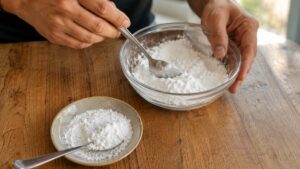
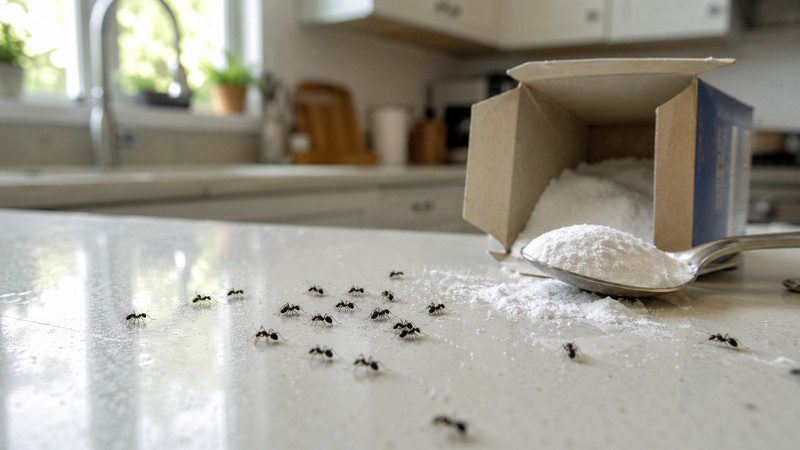
According to pest-control educators at universities, a functional DIY bait starts by mixing equal parts baking soda and sugar in a 1:1 ratio. The sugar attracts foragers while 1 tablespoon rests in a small station near active ant trails.
Placement matters more than potency here. Set each bait where individual ants travel toward food, water, or shelter, keeping the mixture dry. Too much baking soda and ants avoid the offering entirely, so restraint protects the strategic value near your entry points.
Baking Soda vs Other Methods
Comparing DIY options against professional solutions reveals significant reliability gaps.
| Method | Kill Rate | Time to Results | Colony Elimination |
| Baking Soda | ~50% | 5-7 days | Rarely |
| Boric Acid | 60-80% | 7-14 days | Sometimes |
| Professional Gel Baits | 90-99% | 2 weeks | Yes |
While baking soda appeals as one of the safest at-home remedies, its reliability stays low because worker ant deaths rarely reach the queen. Boric acid performs better through slow-acting baiting, yet professional gel baits remain the only genuinely effective route toward full colony removal.
According to pest control researchers, sugar-based baits paired with proper entry points sealing outperform scattered powders. For serious infestations, calling a pro delivers the permanent solution DIY fixes can’t.
Why Baking Soda Often Falls Short
Baking soda seems like an easy fix, but its real-world results rarely match the hype for most homeowners.
You’re Only Killing The Workers
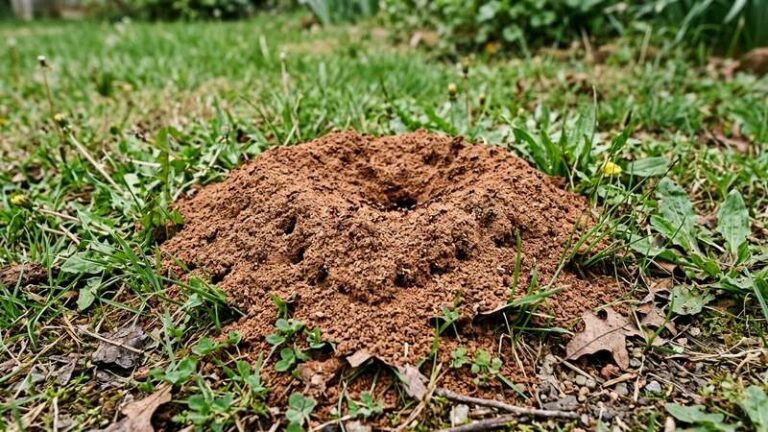
When you scatter baking soda baits near ant trails, you mostly hit the visible workers out foraging. According to pest control experts, the queen and larvae stay protected deep inside outdoor nests, untouched.
That means the colony keeps producing fresh foragers. Kill the ones you see, and replacements arrive within days, so ants come back repeatedly.
Ants Change What They Eat
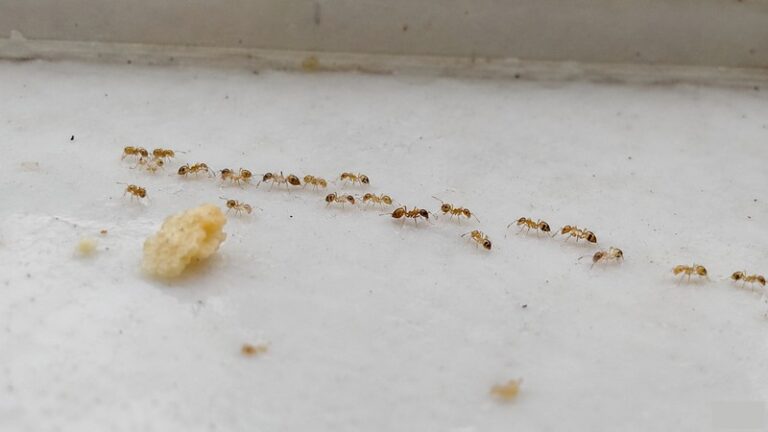
Ant diets shift seasonally. Sweet-preferring ants like odorous house ants chase sugar one week, but protein-loving ants ignore sugar-based baits entirely.
Because feeding habits vary by ant species, a single bait misses targets. Carpenter ants, for instance, let you skip sweet mixes and rethink your whole approach.
Common Ant Species and How They Respond
Ant behavior isn’t uniform, and any home remedy’s success hinges on which invader you’re actually facing across different species and their unique feeding patterns.
Some ant species chase sugar-based baits eagerly, making powdered mixtures worth trying. Others ignore sweets entirely, favoring grease or protein, which explains inconsistent results homeowners report.
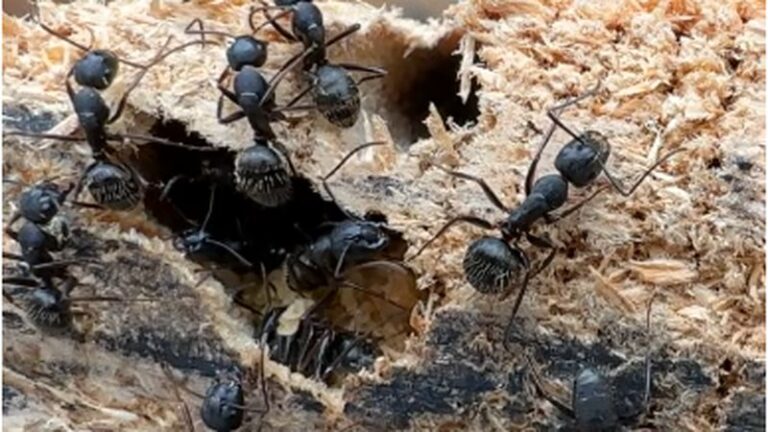
According to the University of California IPM program, carpenter ant activity demands a wholly separate approach since these pests tunnel through wood rather than forage for bait, requiring professional treatment targeting hidden nests instead.
Setting Realistic Expectations
Baking soda rarely delivers full control on its own. According to Texas A&M AgriLife Extension, it mainly affects visible workers while the colony and larvae stay protected underground, so recurrence is genuinely common.
Lab conditions differ sharply from real homes. Published lab tests show promising numbers, but humidity, colony size, and ant species all shift outcomes, meaning your kitchen results may vary far more than any tidy percentage suggests.
Expect gradual progress, not instant elimination. Treatments typically need 5-7 days of direct contact, and stubborn infestations often skip past DIY entirely toward professional intervention.
Set expectations honestly before you start scattering powder around baseboards. If ants keep returning after two patient weeks, reach out to a trusted local pro for a customized plan at info@boldpestcontrol.com.
Still fighting ants?
Get rid of ants for good — book your free inspection.
Fast, no-obligation quote from trusted local pros.
What to Do If You Find Ants in Your Home
Spotting ants indoors calls for quick, strategic action before small problems escalate fast.
- Identify the type of ant: Proper identifying matters because carpenter ant activity near wood signals structural threats, while sugar-seekers usually stay a minor nuisance.
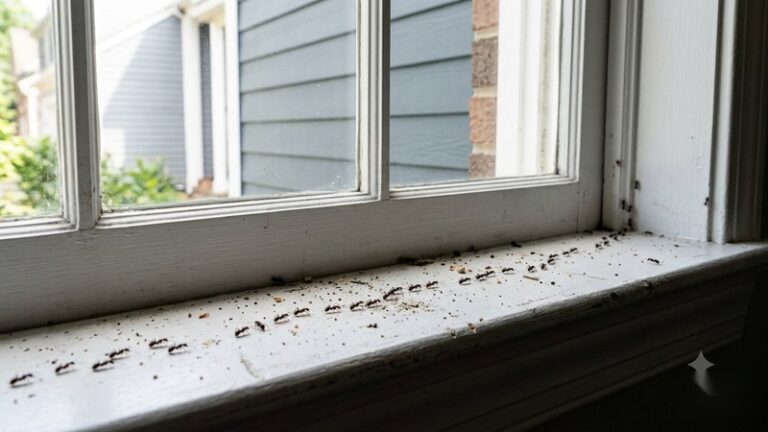
- Follow the ant trails: Trace ant trails back to entry points and hidden nests, since finding the source beats swatting visible ants one by one.
- Try targeted DIY fixes: Simple DIY fixes using vinegar, cinnamon, or lemon can disrupt scent paths, though results across a full colony stay limited.
- Watch for damage signs: Sawdust piles, hollow-sounding wood, or faint rustling in walls hint at infestations needing professional treatment, not household sprays.
- Avoid random products: Some people ask “Does Febreze kill ants?“—it may repel briefly, but it won’t reach colonies or deliver real control.
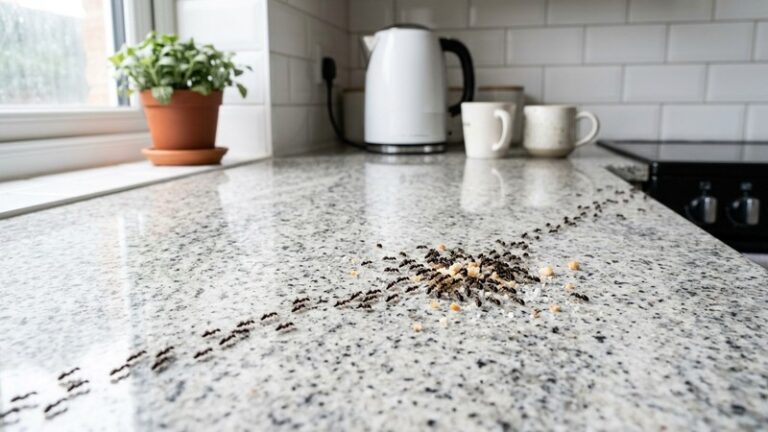
- Protect vulnerable areas: Clear the kitchen and pantry, wipe kitchen counter surfaces, and remove crumbs that keep spring ant activity thriving.
- Know when to escalate: Persistent ant trails after two weeks mean it’s time for expert help and a proper thorough inspection.
Common DIY Ant Control Methods
Homeowners often reach for scattered DIY products hoping to stop visible ants crossing counters. Yet without proper identification of the colony, powder tossed into wrong areas rarely reaches the nest, and stubborn recurrence quickly follows.
According to the University of California IPM program, different species demand tailored treatment strategies rather than one blanket fix. Ants dislike certain smells ants hate, like peppermint or citrus, which naturally repel foragers while you locate their hidden entry routes indoors.
The Downside of DIY Ant Control
Homemade fixes feel empowering, yet repellent solutions like vinegar, cinnamon, and essential oils rarely reach the colony. According to the University of California IPM program, surface sprays scatter workers while queens keep breeding underground, leaving the infestations fully intact.
Powders such as diatomaceous earth, salt, coffee grounds, and baking soda promise results, but repellents merely relocate the problem. True colony killers like borax or well-built DIY ant traps demand patience, precise ratios, and consistency most homeowners struggle to sustain reliably.
FAQs
How Long Does It Take For Baking Soda To Kill Ants?
Patience matters here. Once workers start eating it, death rates climb over 6-7 days through contact with treated surfaces. According to lab-based published studies, baits show a 50% kill rate, though full colony collapse rarely happens fast.
What’s The Best Ratio Of Baking Soda To Sugar For Ant Baits?
Mix equal parts baking soda and powdered sugar, roughly 1 tablespoon each, at a station. Skip liquids and granulated blends. Place baits near ant trails, baseboards, and pipe openings, checking and replacing every 3-4 days for freshness.
Is Baking Soda Effective Against All Ant Species?
Not equally. Odorous house ants and pavement ants respond differently than carpenter ants, which damage wood. Multi-queen colonies nesting in foundation cracks resist treatment, since killing the workers leaves roughly 10% feeding the surviving colony.
Can I Use Baking Soda Outdoors For Ant Control?
Outdoor success stays limited. Rain clumped powder into wet paste fast. According to pest-control researchers, place baits near outdoor nests and entry points, though trails shifting by season and moisture undermine reliable, effective ant control beyond temporary knockdown.