Household Spiders in Texas: Safe vs. Dangerous Species
Quick Answer
- Of roughly 900 spider species in Texas, only two harmful species, widow spiders and brown recluse, are medically significant.
- Identification starts with the eye pattern: Loxosceles carries 6 eyes, while most house spiders and Latrodectus show 8 eyes.
- Harmless spiders rarely bite; these beneficial hunters paralyze prey like flies, mites, and plant-feeding insects with venom and digestive enzymes.
- DIY prevention covers most indoor activity; a noticeable bite from sac spiders (Cheiracanthium) warrants pest control to protect your family.
Texas homes quietly host a surprising range of spiders — from beneficial natural pest control agents to genuinely dangerous species. Household spiders in Texas consume hundreds of insects — mosquitoes, flies, even disease-carrying ones — fulfilling a critical ecological role. According to the University of Texas, spiders collectively eliminate 400–800 million tons of agricultural pests worldwide each year, rarely disturbing humans.
Why Spiders Are Beneficial
Most Texas homeowners overlook a quiet truth — spiders silently manage your home’s pest load. According to Texas A&M AgriLife Extension, a single spider can consume dozens of insects weekly, targeting cockroaches, crickets, and small insects that compromise indoor sanitation. That’s unpaid, natural pest management working around the clock.
Understanding the house spider vs wolf spider dynamic reveals something important: both spider species serve ecological roles despite triggering alarm. Texas spiders act as biological controls, reducing flying prey, ground pests, and crawling insects before infestations form. Rather than immediate extermination, pest experts recommend assessment — because removing beneficial arachnids can worsen underlying insect problems on your property.
Common Household Spider Species in Texas
American House Spider
The American house spider (Steatoda adjacent, Pholcidae-neighboring common species) builds messy webs in corners, wall voids, basements, and living room crevices — spots where females larger than males quietly establish territories. According to the University of Florida Entomology Department, these eight-legged arthropods pose minimal risk to humans despite their web nuisance.
When comparing house spider vs wolf spider behavior, distinctions matter for pest identification: house spiders rely on silk glands and spinnerets to trap prey, while wolf spiders actively ground-hunt. For home and business owners in Texas, recognizing these common species early prevents misidentification and unnecessary treatment — a cornerstone of sound integrated pest management on any property.
Wolf Spider
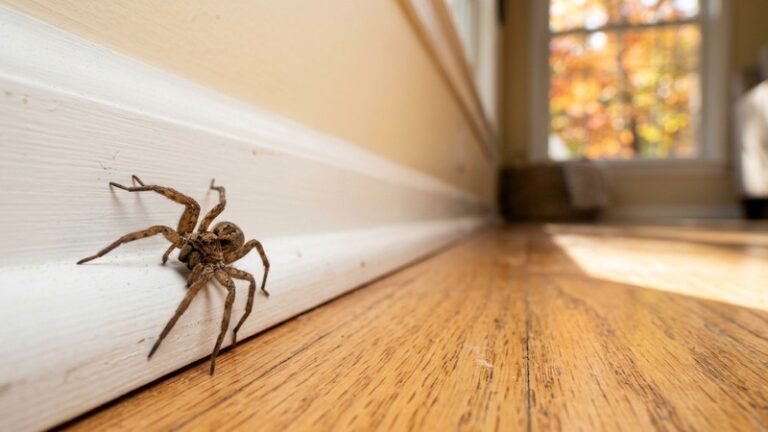
Wolf spiders don’t rely on a web to survive — they hunt actively, using their strong legs to chase prey across grass, leaf litter, and crawl spaces. According to Texas A&M AgriLife Extension, their burrows and silk retreat help them regulate temperature in Houston‘s humid conditions.
Spotting wolf spiders indoors usually signals a larger insect population nearby — they follow food sources into garages, cellars, and basements. Their 8 eyes arranged in three rows grant sharp night vision. A bite causes mild irritation, but these spiders remain non-aggressive unless directly threatened.
Jumping Spider
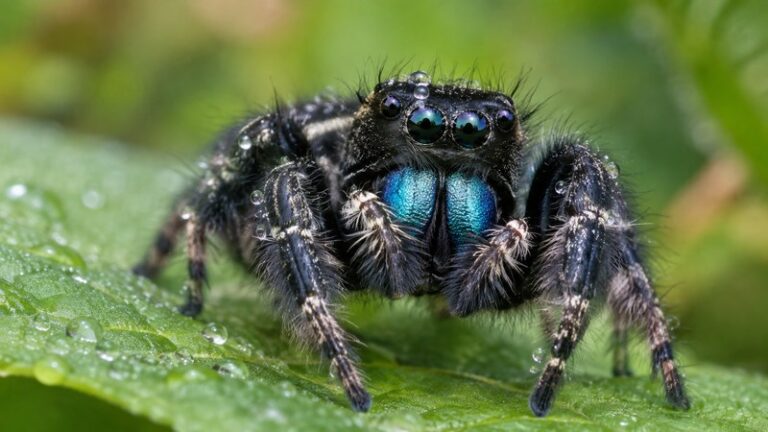
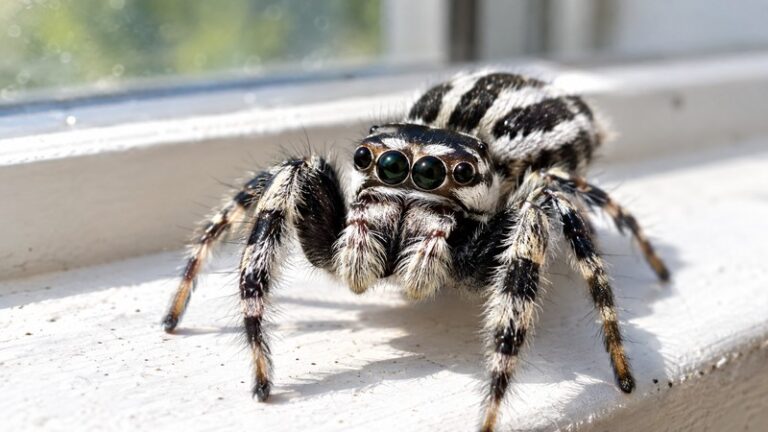
Jumping spiders possess remarkable 4 forward-facing eyes, giving them exceptional depth perception while hunting without a web. According to the University of Florida Entomology Department, these arachnids actively ambush insect prey mid-air, making them one of Texas’s most effective natural pest controllers in outdoor and indoor settings.
Unlike shy species hiding in dark places, jumping spiders actively explore windows, corners, and ceiling areas during daylight. Their bold behavior and small size — roughly 1/4 inch — make them appear in Austin homes year-round, especially during spring when insects are abundant near shrubbery and vegetation.
Tarantula (Big Spiders in Texas)
Tarantulas are among the largest arthropods in Texas, with a thick exoskeleton, jointed legs, and fangs adapted for subduing grasshopper-sized insects and small prey. According to National Geographic, these nocturnal spiders rely on their silk retreat rather than traditional orb webs, dwelling in rock ledges, burrows, and wooded areas across Austin and surrounding regions.
Despite their intimidating abdomen and size reaching over 5 inches in leg span for some species, tarantulas are remarkably non-aggressive. They rarely bite humans; their venom causes minimal swelling. Male spiders wander in fall — September through October — actively searching for mates, which explains increased spider encounters near homes and outdoor spaces during this period.
Dangerous Spiders in Texas
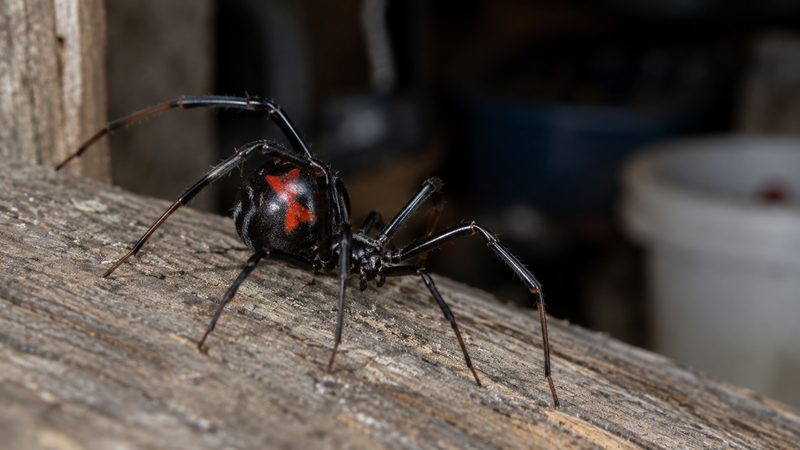
Black Widow Spider
Texas homes harbor the black widow — a venomous spider whose red hourglass marking on the underside signals serious medical danger. Found in dry dark areas like garages, sheds, and woodpiles, this Latrodectus species prefers undisturbed corners. According to Texas A&M AgriLife Extension, female widows are aggressive only when egg sacs are threatened.
The neurotoxic venom of the black widow causes severe pain, muscle cramps, and nausea — requiring immediate attention. Bites near stored firewood or outdoor furniture are most common in Texas. Children and the elderly face higher medical risk. Always wear leather gloves when handling stored items to prevent accidental bite exposure.
Brown Recluse Spider
The brown recluse carries a violin mark — that distinct fiddle-shaped stripe behind its cephalothorax — making identification critical in Texas homes. Unlike aggressive species, this shy hunter hides in cardboard boxes, basements, and closets. According to the University of Florida Entomology Department, brown recluse spiders rarely bite unless directly mishandled or cornered.
What makes brown recluse genuinely dangerous is necrotic tissue damage at the bite site — sometimes requiring medical treatment for weeks. Preferred hiding zones include cluttered storage areas, undisturbed clothing, and wall voids. Pest professionals in Texas recommend sticky traps for monitoring and eliminating hidden populations before infestations grow unmanageable.
Daddy Longlegs: Cellar Spiders vs. Harvestmen
“Daddy longlegs” is one of Texas’s most misunderstood labels — it actually refers to two completely different creatures sharing nothing but extraordinarily long legs.
Cellar Spiders
Found dangling in dark places like basements, garages, and corners, cellar spiders are true arachnids with silk glands and spinnerets. According to the University of California Riverside’s spider research division, these pale, fragile-legged spiders actively rebuild webs when disturbed rather than abandoning them.
- Cellar spiders produce irregular webs in undisturbed areas like ceiling corners and under cabinets
- Their long legs and round abdomen make them visually similar to harvestmen but biologically distinct
- Classified under Pholcidae, they’re genuinely harmless and prey on crawling insects and ants
Harvestmen
Harvestmen belong to order Opiliones — arthropods sharing a closer relation to scorpions than true spider species. They carry no silk glands, produce no webs, and possess a fused cephalothorax-abdomen structure. According to Texas A&M AgriLife Extension, harvestmen are entirely non-venomous outdoor scavengers.
- Unlike spiders, harvestmen have only 2 eyes mounted centrally on their exoskeleton
- They lack fangs capable of meaningful venom delivery — making bites medically irrelevant
- They prefer leaf litter, vegetation, and moisture zones near drainage and leaky faucets
Outdoor Spiders in Texas
Orbweaver Spiders
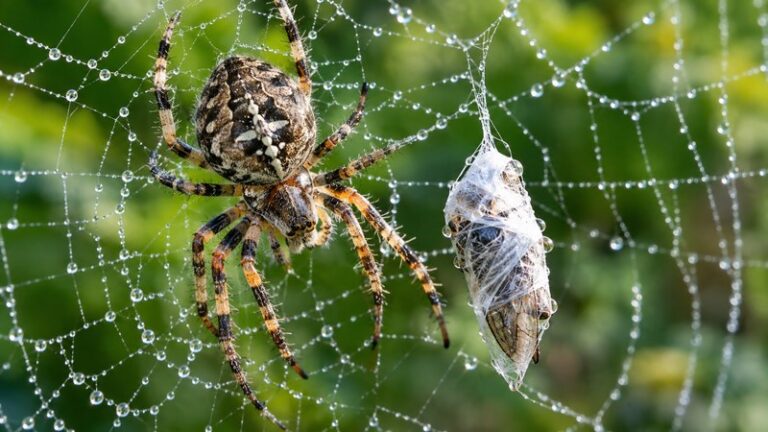
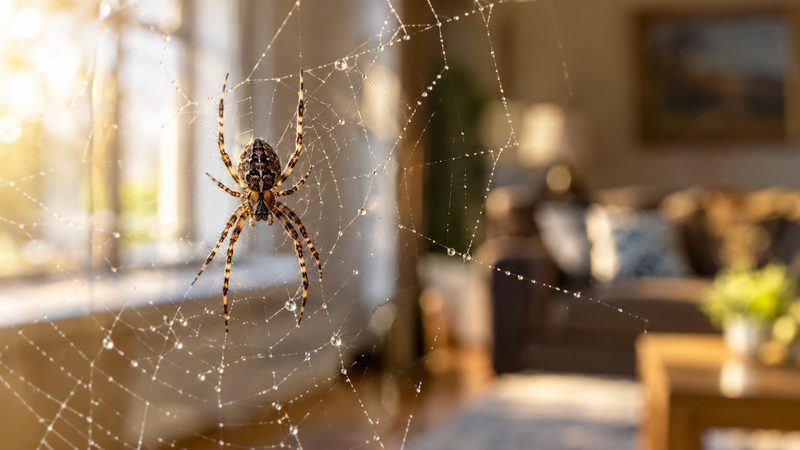
Orbweaver spiders rank among the most architecturally gifted Texas spiders you’ll encounter outdoors. According to Texas A&M AgriLife Extension, these outdoor builders construct circular webs with near-mathematical precision — each spiral thread serving as a passive trap for flying insects and moths that cross at dusk.
- Argiope aurantia, the yellow garden spider, displays striking yellow and black markings across its abdomen
- Orb-shaped webs can span 2 feet in diameter, anchored between garden shrubs and fence lines
- Most orbweavers are non-venomous to humans and rarely bite even when handled directly
Long-Jawed Orbweavers
What separates long-jawed orbweavers from typical orbweavers is structural: their elongated chelicerae project visibly forward, used to grip prey along streamside vegetation and tall reeds. According to the University of Florida Entomology Department, Tetragnatha species are almost exclusively riparian hunters favoring water-adjacent habitats.
- Tetragnatha spiders build horizontal webs low above ponds, streams, and marshy ground
- Their slender, elongated bodies and long front legs allow them to rest camouflaged along plant stems
- Long-jawed orbweavers consume aquatic insects, midges, and gnats emerging from standing water
Crab Spiders
Crab spiders don’t build webs — they ambush prey directly on flower petals, relying on color-matched camouflage that even trained eyes miss. According to the Texas Parks and Wildlife Department, Misumena vatia can shift body color between white and yellow over several days to match surrounding blooms and intercept pollinators.
- Thomisidae species hold their front two pairs of legs extended sideways, mimicking a crab’s posture perfectly
- Goldenrod crab spiders frequent wildflower patches, garden beds, and native Texas blooms during spring and summer
- Despite their potent venom used to immobilize bees, crab spiders pose no significant threat to humans or pets
Seasonal Spider Activity in Texas
Texas spiders don’t follow a single predictable pattern — their activity is tied to prey availability, humidity, and temperature shifts specific to each region. Harmful spiders like brown recluse and black widow remain active longer due to Texas’s mild winters.
- Wolf spiders and jumping spiders peak in late summer when ground insects are most abundant outdoors
- Orbweaver spiders build vertical webs heavily in fall, targeting flying prey near porch lights
- Black widow females retreat into woodpiles, cellars, and corners during cooler months for shelter
- Brown recluse moves deeper into closets, basements, and folded sheets as winter drops temperatures indoors
Common Spider Misconceptions
Several widely believed ideas about Texas spiders are factually wrong — here’s what the evidence actually shows:
- Many people assume daddy longlegs are the most venomous species, but according to UC Riverside entomologists, no toxicological evidence supports this myth
- Wolf spiders look aggressive but rarely bite unless physically handled or cornered — they are ground hunters, not human-threat seekers
- Jumping spiders are feared for their speed, but their defensive bite is medically insignificant and they pose no dangerous risk to humans
- People misidentify cobwebs of the American house spider as brown recluse webs — the recluse actually uses a silk retreat, not typical tangled webs
- Assuming all large hairy spiders are tarantulas is common — in Texas, many are simply wolf spiders with mottled, brownish-gray coloring and eyeshine visible by flashlight
Prevention & How to Get Rid of Spiders
Texas homes deal with spider activity year-round, and knowing how to get rid of spiders in Texas starts with prevention — sealing entry points, cutting clutter, and using the right control method at the right time.
Structural Prevention
Most homeowners overlook what’s happening at the foundation level. According to the National Pest Management Association, exclusion methods applied at door frames, crawl spaces, and wall voids before an infestation takes hold are the single most cost-effective layer of spider population control available.
- Seal gaps under doors, crevices, and cinder blocks with weatherstripping or caulk
- Install fine mesh over rain spouts, gas meters, and electric meters where spiders shelter
- Check limestone foundation cracks and crawl spaces in older Austin and Houston homes regularly
Prevention Steps
- Remove woodpiles, boards, and debris stacked against exterior walls
- Replace outdoor white bulbs with yellow sodium-vapor lights to reduce flying insects that attract spiders
- Trim vegetation, shrubbery, and tall grass at least 12 inches from the structure
- Store firewood, storage boxes, and clothing elevated off the ground
General Sanitation and Exclusion
Seasonal spider activity peaks in September–November and March–May, which is when regular inspection and clean-up matter most. According to Texas A&M AgriLife Extension, reducing prey insects indoors through basic sanitation directly reduces the spider population without any product use.
- Vacuum loose webs, messy webs, and egg sacs from corners, under furniture, and under cabinets
- Clear folded sheets, towels, shoes, and gloves from basements and attics — shake out clothes before wearing
- Keep bathrooms, cellars, and damp areas dry; moisture invites both spiders and prey insects
Humane Removal
Not every spider needs to be killed. Species like the jumping spider or wolf spider found indoors are harmless spiders doing pest work for free. A sheet of paper and cup method — trap, slide, relocate — is all that’s needed to remove them without harm.
- Catch spiders on walls, windows, or decks using a jar and stiff card
- Relocate captured specimens to wooded areas or backyard vegetation well away from entry points
- Avoid handling during mating season when male spiders are more likely to be mishandled and defensive
Mechanical Control
Sticky traps placed along baseboards, door frames, and inside garages and sheds give you a real-time picture of which species are active. According to University of California IPM, monitoring with glue boards before escalating to chemical options is a key part of responsible integrated management.
- Position traps in hidden places — corners, under furniture, and near termite bait stations
- Check traps weekly during peak activity months like October and September
- Use silk dragline cut-down (removing web scaffolding regularly) to discourage web-rebuilding species like orbweavers
Chemical Control
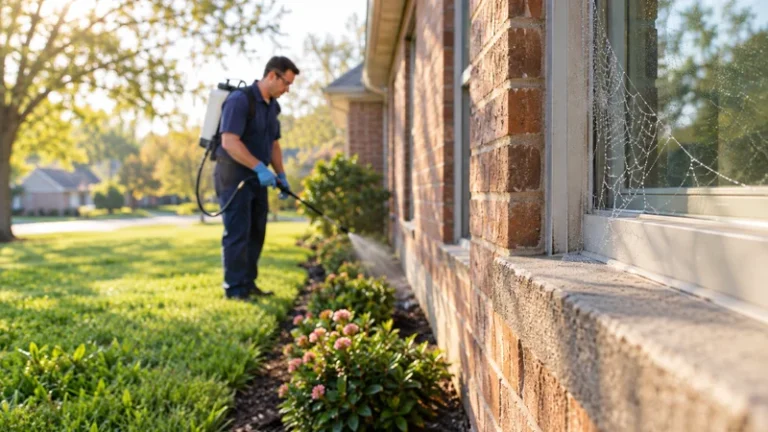
Chemical control works best when targeted — not broadcast. Residual sprays applied to crawl spaces, wall voids, sheds, and along baseboards address nocturnal species like brown recluse that are rarely seen. Always choose products labeled for spider use and follow label directions strictly.
- Apply residual insecticide dusts inside attics, insulation, and wall voids where brown recluse hunts
- Use perimeter sprays around rain spouts, electric meters, and mailboxes every 60–90 days
- Avoid spraying near water dishes in a secure enclosure if a pet tarantula or other arachnid is kept on-site
Alternatives
For those avoiding synthetic chemicals, diatomaceous earth applied in crawl spaces, basements, and door frames physically damages spider exoskeletons. Essential oil-based repellents containing peppermint are also showing early results in discouraging common spider entry, though the scientific basis for long-term efficacy is still limited.
When to Call a Professional
Recognizing when household spider issues exceed basic management decisions requires understanding spider behavior and knowing which species demand expert early intervention.
- Spotting widow spiders or recluse spiders indoors signals a serious infestation requiring licensed pest professionals immediately.
- Recurring nuisance webs near crawl spaces, wall voids, or attics suggest hidden breeding areas beyond DIY reach.
- Bites causing severe pain, muscle cramping, swelling, or nausea demand medical attention and professional identification of the culprit species.
- Egg sacs discovered in hidden places like storage areas or under furniture indicate rapid spider infestations ahead.
- Elderly, children, or pets exposed to venom risks elevate the need for professional exclusion methods and professional spider control.
According to Texas A&M AgriLife Extension, professional pest managers apply pesticides like bifenthrin or deltamethrin with precision targeting wall voids, baseboards, and door facings — areas where brown recluse and black widow spiders establish deep harborage. Attempting physical removal without protective gear near medically significant species risks accidental contact, worsening outcomes for the household.
Seeing Spiders at Home?
Get rid of spiders for good — book your free inspection.
Fast, no-obligation quote from trusted local pest control pros.
First Aid for Spider Bites
Most spider bites in Texas are minor — but knowing early response steps matters when brown recluse or widow spiders may be involved:
- Clean the bite area immediately with soap and water to reduce bacteria risk and slow tissue damage
- Apply a cold compress to manage redness, swelling, and early itch in the 1 to 3 hours following the bite
- Watch for necrotic changes, blister formation, or a slow-healing lesion appearing within 24 hours — these signal recluse venom
- If muscle stiffness, tremors, abdominal pain, or trouble breathing develop, head to the emergency room immediately
- Always bring the spider — dead or photographed — for diagnosis; many bites are misdiagnosed as Staphylococcus infections without specimen confirmation
Integrated Management
Effective spider control rarely comes from a single tactic — it demands combining seal entry points, sanitation, and targeted chemical control into one cohesive system. According to Texas A&M AgriLife Extension, layering structural exclusion with consistent declutter habits eliminates hiding spots far more reliably than standalone sprays.
- Diatomaceous earth and boric acid applied to wall voids and under cabinets disrupt crawling insects without harsh exposure
- Yellow bug lights at exterior lighting points reduce insect attraction, cutting the food sources that draw spiders indoors
- Rotating vacuum removal of egg cases and webs with periodic caulk application along cracks and doors builds lasting protection