Why Do Ants Carry Dead Ants? The Real Reason
TLDR
- Ants practice necrophoresis, hauling dead nest-mates away because oleic acid flags a fallen member and triggers removal behavior in nearby workers.
- E.O. Wilson documented this in 1958; when a colony member died, its body gets carried to midden piles that double as ant graveyards safeguarding colony survival.
- This sanitation system blocks bacteria, disease, and pathogens from reaching the queen and developing larvae inside a clean functional nest.
- Because worker ants move dead bugs in a straight line, midden piles reliably reveal hidden nests—priceless intel for pest control.
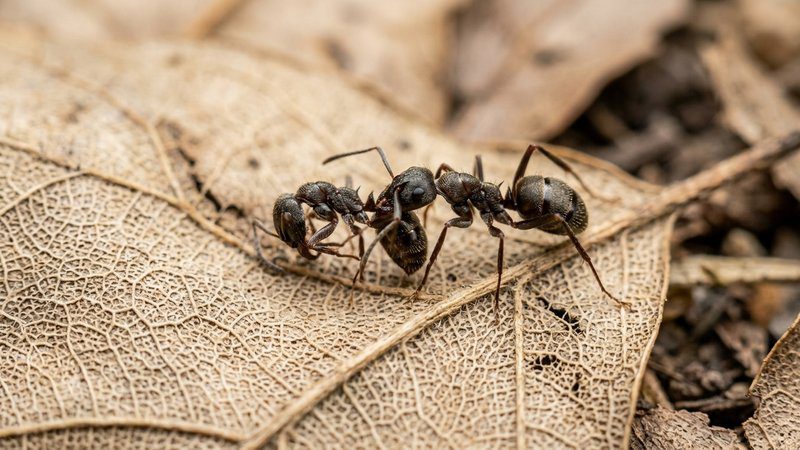
According to entomologists, few colony behaviors reveal social structure like ants carrying dead ants. Within tightly packed colonies housing thousands of ants, corpses pose deadly health threats. When an ant dies, a chemical signal triggers automatic, reliable removal of dead colony members from crowded environments.
Why Do Ants Carry Dead Ants?
Ants haul away their fallen not out of grief but out of survival math. Every corpse left in the nest becomes a launchpad for harmful bacteria and fungi, threatening the whole colony packed tightly into closed nests.
This is where necrophoresis becomes a survival tool. According to research published in PNAS, dying triggers death fatty acids like oleic acid and linoleic acid to build up on bodies within hours, prompting live ants to react with a swift removal response.
Here’s what actually drives this cleanup routine:
- Reducing germ pressure inside crowded living areas
- Boosting social immunity across the colony
- Keeping waste separate from foraging paths
Left unchecked, germ-fighting secretions alone can’t protect a mature colony nearby from spreading illness.
What Is an Ant “Midden”?
An ant midden functions as the colony’s refuse zone, where dead ants, food scraps, and piles of debris accumulate. According to Alexandria field observations, these outdoor graveyards sit one to two body lengths from main entrances, revealing the actual colony through careful inspections of nests.
Locating middens guides targeted treatment, since pavement ants and odorous house ants favor covered spots with steady moisture and good drainage. Watch foundation cracks, walls, mulch, leaf litter, and building overhangs; three small piles near deck stairs often expose indoor ant problems requiring structural repairs.
The Role of Ants’ Complex Communication Systems
Ant coordination relies on layered chemical language rather than random signaling. According to researchers publishing in Insectes Sociaux journal, worker ants and soldier ants interpret particular pheromones during the transport of deceased ants, a carrying behaviour revealing how the ant colony sustains order through precise chemical exchange systems.
The significance of chemical communication mechanisms extends beyond simple alerts. Studies in the Animal Behaviour journal show pheromones trigger a specific reaction, prompting extraction and grooming near the nest. This communication governs coordination, letting the colony manage its actions of ants transporting dead ants from same colony apart from live ones.
What Does This Behavior Mean for Homeowners?
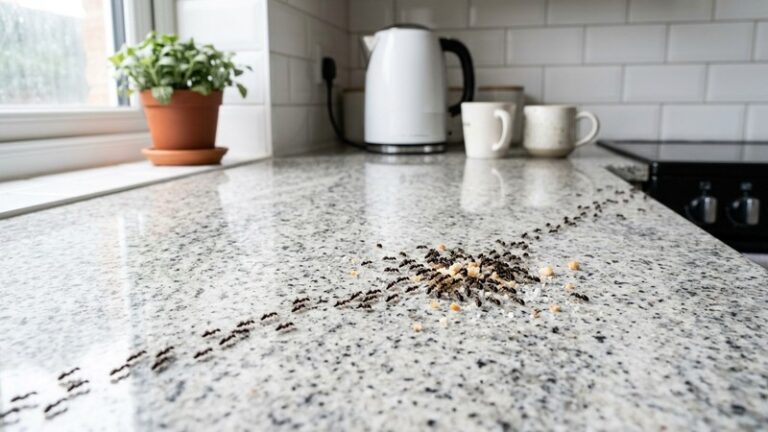
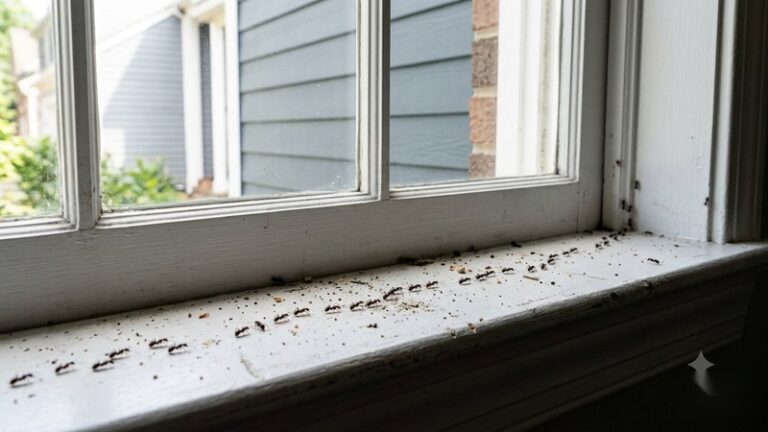
When ants carry dead ants across your floors, they’re broadcasting a hidden truth: a colony sits nest close by, established and thriving somewhere within your structure.
Watch for these telltale signals:
- Scattered ant graveyards near walls
- Persistent trash zones by entry points
- Corpse clusters trailing toward moisture sources or foundations
According to entomologists at Texas A&M AgriLife Extension, these debris piles act as a road map, letting foragers navigate. Spotting them early means you can trace the problem before infestations deepen inside.
How Ant Colonies Expand Over Time
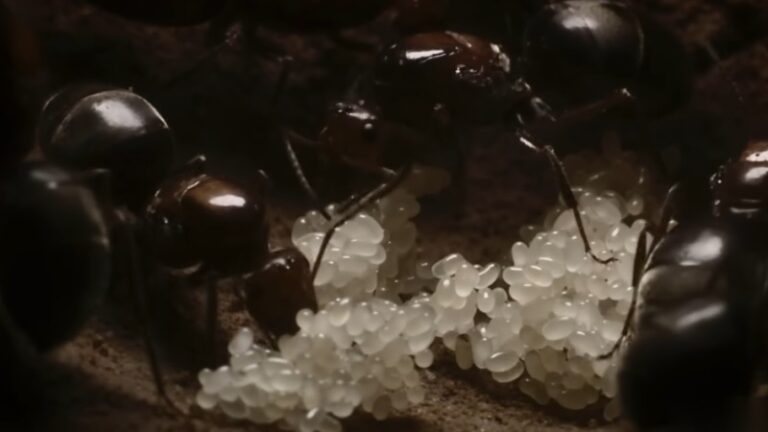
According to myrmecologist Deborah Gordon, growing colonies face intricate challenges as queens produce eggs inside protected underground chambers. Through budding, a queen and workers split off, spreading into new nests near kitchens, baseboards, and hidden nesting areas seeking consistent food.
Expansion follows survival needs: moisture, shelter, and resources drive colonies to relocate when outdoor conditions turn unfavorable. During drought or flooding, species behave differently, sending foraging workers toward entry points, where budding fuels reinfestation unless eliminating ants at the source halts it.
Why Do Ants Invade Homes?
According to Bold Pest Control, ants push indoors chasing food and water sources, and once scout ants map a reliable supply, they lay pheromone trails guiding steady worker traffic. Cracked baseboard gaps and entry points near a sink become open doorways for hungry colonies seeking shelter.
Weather swings and shrinking outdoor resources drive deeper invasions, and as colonies grow through natural reproduction cycles, pressure builds inside your property. Improper treatments that only disturb the colony trigger budding, letting groups split off into a new nest, worsening spread instead of eliminating them.
Prevention Vs. Professional Treatment
According to pest management specialists, blocking every entry point with sealant and cutting off moisture sources works as long term prevention. Homeowners eliminating short term relief habits, clearing damp wood near foundations, disrupt nesting locations before an infestation can quietly escalate untreated indoors.
Yet professionals argue customized approach beats guesswork, since species behave differently across seasonal conditions. Expert care targeting the queen through non-repellent products achieves full elimination, while surface treatment alone lets colonies relocate, budding into satellite nests and spreading the problem wider.
Tailored Ant Control Solutions Treatment
Every ant problem starts differently, which is why proper identification drives lasting results. According to Bold Pest Control, household ants, ghost ants chasing sweets and moisture, plus carpenter ants causing structural damage, each behave differently, demanding distinct control strategies matched precisely to the invading species present.
Fire ants bring painful stings, while invasive bigheaded ants form large colonies resisting generic fixes. Effective treatment methods target the queen and hidden nests, preventing budding and reinfestation. Professional pest control stops spreading, eliminating ants at the source, whereas incorrect methods and rushed DIY treatments worsen infestations.
Who Does the Work: Undertaker Ants
Not every worker handles the dead. According to entomological research from Stanford, specialized undertaker ants take on corpse removal, and studies show these are typically middle-aged to older workers. Intermittent foragers often rotate through this grim duty inside and outside the nest.
Why assign this role narrowly? The logic is containment. Concentrating removal among fewer workers limits how widely disease risk spreads through the colony. According to myrmecologist Deborah Gordon, this division keeps healthy brood-tenders separated from potentially contaminated bodies, tightening the whole removal process against pathogen exposure.
Using This Behavior To Find Hidden Nests
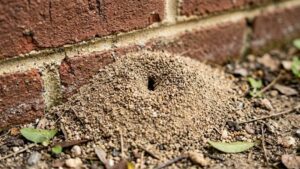
Necrophoresis leaves a physical trail, and according to entomologists at Texas A&M AgriLife, those midden piles become reliable signposts. Reading corpse removal patterns carefully lets you trace activity straight toward the actual colony rather than random surface wandering.
Here is what seasoned technicians actually watch for:
- Follow the graveyards — clusters of ant graveyards rarely sit far from the main colony, so mapping them narrows your search radius fast.
- Track the trails — corpse removal patterns run along trails that loop back toward nesting zones.
- Note indoor clusters — repeated indoor problems paired with debris often signal hidden nests tucked inside walls or voids.
- Read the species — first ID the species, since removal distance varies by ant type.
Interpreting these signs takes practice, and a proper assessment by registered technicians turns scattered clues into a confident diagnosis. Pairing that read with targeted treatment and non-repellent products means you strike the source, not just the visible foragers dragging their dead.
Case Study: Reading Middens To Crack A Wall-Void Nest
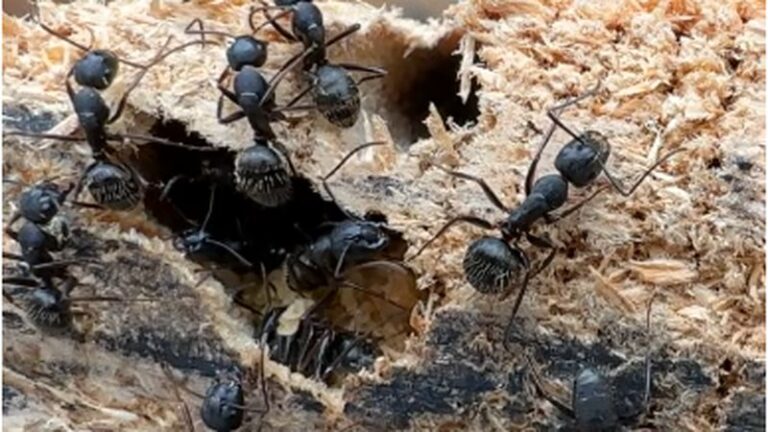
Documented field work shows how tracing debris lines exposed a concealed carpenter ant nest, confirming that corpse removal patterns genuinely reveal what surface inspections miss.
How Midden Piles Tell You About Colony Health
According to entomologists at the University of Florida, scattered midden piles signal more than tidiness. When you spot multiple scattered midden piles across your property, it often reflects multiple colonies operating nearby, each maintaining separate ant graveyards while managing internal disease pressures quietly.
A stressed colony reveals itself through unusual patterns. High mortality rates, possibly from pesticide exposure or spreading disease, produce heavier waste accumulation. This pattern frequently indicates a serious infestation warranting professional assessment, since surface cleanup alone rarely resolves the deeper treatment approach needed here.
How Treatment Connects to Necrophoresis
According to pest control researchers, necrophoresis reveals how a colony responds to intervention. When treatment disrupts colony patterns, workers keep coming back to move corpses, exposing ant social behavior that helps professionals track recurring ant issues across a property.
Smart technicians read seasonal behavior shifts to adjust their approach, using follow-up visits timed against how the main colony processes deaths. This corpse-removal instinct, studied widely, gives applicators a living map connecting surface activity back to the hidden nest itself.
Professional Ant Control From Bold Pest Control
Ants are complex, highly organized, and persistent creatures whose infestations rarely resolve on their own. When your comfort and safety are on the line, expert care makes the difference between recurring frustration and lasting results.
Here’s how we help:
- Thorough Ant Inspections — pinpointing entry routes and hidden ant problems before they grow.
- Accurate Identification — matching targeted ant treatments to the exact species invading your space.
- Colony & Queen Elimination — striking the colony at its core through queen elimination tactics.
- Perimeter Defense — installing barrier protection so pests don’t return after treatment.
Left alone, ant activity escalates quickly, which is why our professional ant control solutions emphasize long term protection rather than quick fixes. We tailor pest prevention plans around your property’s real conditions, not generic assumptions.
Whether you’re one of the homeowners guarding a family space or managing businesses that depend on cleanliness, we deliver residential and commercial pest control built to last across Austin, Hurst, Keller, Southlake, and Queens Cove.
Reach out anytime at info@boldpestcontrol.com and our team will schedule an inspection, walk you through findings, and design a treatment plan matched to your infestation, timeline, and budget for total peace of mind.
Still Fighting Ants?
Get rid of ants for good — book your free inspection.
Fast, no-obligation quote from trusted local pest control pros.
Evolutionary Reasons for Carrying Dead Ants
The behavior traces to natural selection favoring colonies that minimized threats. According to myrmecologist Dr. Deborah Gordon, removing dead bodies reduces worker death rates, directly boosting colony survival since harmful bacteria and fungi thrive where corpses accumulate near densely populated chambers.
This necrophoresis evolved alongside the immune system of the superorganism, where grooming and germ-fighting secretions work together. Scientists note that carrying dead ants away helped ancestral lineages resist disease transmission, conserving shared genes and passing this instinct through countless generations of workers.
Studies and Research on Ant Behaviour
According to research published in PNAS, scientists studying necrophoresis discovered that death fatty acids like oleic acid and linoleic acid build up on bodies within hours. These chemical signals trigger removal, revealing how ant colonies maintain hygiene through remarkably coordinated biological chemical processes.
Researchers using RFID tags tracked undertaker ants, observing how chemical profiles and walk at different speeds distinguish body removal specialists. Studies on Polyrhachis Dives documented a dead mate carried for one week, while Harpegnathos Venator workers move away from nest to die, fascinating scientists.
Other Interesting Behaviors Of Ants
Beyond corpse handling, ants reveal fascinating range. According to Antwiki researchers, some species build pebble circles around nest openings, while others manage moisture sources cleverly. Can ants swim? Many workers pitch in during floods, forming rafts. Carpenter ants even excavate damp wood, showing remarkable disrupt routines adaptability.
Understanding Ant Colonies
Colonies function as coordinated superorganisms. According to Myrmecology studies, age-based task assignment dictates roles: middle-aged, older worker ants become undertaker ants, handling body removal and trash. Scientists track intermittent foragers using RFID tags, observing how ants walk at different speeds and shift inside and outside the nest daily.
Conclusion And Implications Of Ant Behavior
Though tiny, ants have remarkably adapted to diverse environments, and their survivability stems from behavioral flexibility. According to Britannica, the conduct of ants—even among these tiniest beings—reveals sophisticated behaviours rivaling large animals. Humans studying them uncover surprising complexity.
Observing and understanding the enigmas of ant behaviour teaches us much about the natural world. As National Geographic notes, their adaptability positions ants among the most resilient living entities on Earth, thriving where countless other species fail entirely.
Final Thoughts on the Significance of Ant Behavior
According to myrmecologist Dr. E.O. Wilson’s foundational work, transporting dead bodies reflects sophisticated effective systems within any colony. This disease control mechanism, alongside resource repurposing and conservation of genes, reveals how these scientists-studied insects communicate and maintain structure through remarkable coordination.
Researchers now translate this ant’s behaviour into novel algorithms powering robotics and artificial intelligence. Beyond pest management and farming, understanding these tactics aids controlling ant populations, mitigating effects on crops, and protecting broader ecosystems that depend heavily upon these tiny yet influential architects.
FAQs
Why Do Ants Carry Dead Ants Away From Their Nest?
Deep inside the nest, cleanliness keeps colonies alive. With limited space, ants carry the body away to protect living areas and stop disease transmission. This corpse carrying prevents spread of diseases among healthy members in densely populated quarters, safeguarding overall functioning of ant colonies from within.
How Do Ants Know When Another Ant Is Dead?
Chemical communication drives everything here. When a colony member died, death fatty acids like oleic acid and linoleic acid build up on bodies. Per PNAS research, these chemical signals alert nearby ants, who follow the pheromone trail, locate the deceased ant, then carry it back to signal the need for necrophoresis.
What Are Ant Midden Piles And How Can They Help Locate Nests?
Colonies build middens—designated disposal areas functioning as a cemetery or garbage dump. These hold dead ants, leftover food particles, and nest debris, keeping contamination risks away while safeguarding the queen. Positioned near nest openings, sometimes over a meter out, these pebble-lined middens reliably reveal an established colony’s location.
Do All Worker Ants Remove Dead Bodies Or Just Certain Ones?
Not every worker handles this grim task. Specialized undertakers respond to loss of life signals, since live ants trigger a removal response once death chemicals overwhelm fading life signals. According to Stanford biologist Deborah Gordon, this division keeps nest cleanup efficient, letting foragers head toward the nest undisturbed by corpses.
How Does Understanding Ant Corpse Removal Help With Pest Control?
Carrying dead ants signals organized maintenance, not random movement—proof of an established nest with fixed foraging routes. For homeowners, spotting this means long term ant activity, not a temporary issue. Left untreated, hidden infestations escalate. According to pest control experts, tracking this structure exposes entry points where colonies have settled in.
What Does It Mean If I Find Multiple Ant Graveyards Around My Property?
Multiple outdoor graveyards flag serious pest control value. When the problem comes back despite ants in kitchen treatments, scattered piles reveal satellite nests. Check the distance from entry points—typically one to two body lengths—near cracks and moisture areas. Old wings, soil, and dead ant parts expose a carpenter ant colony.