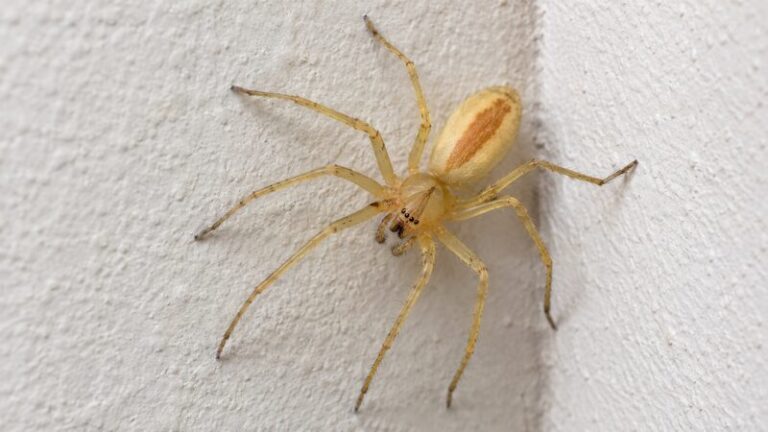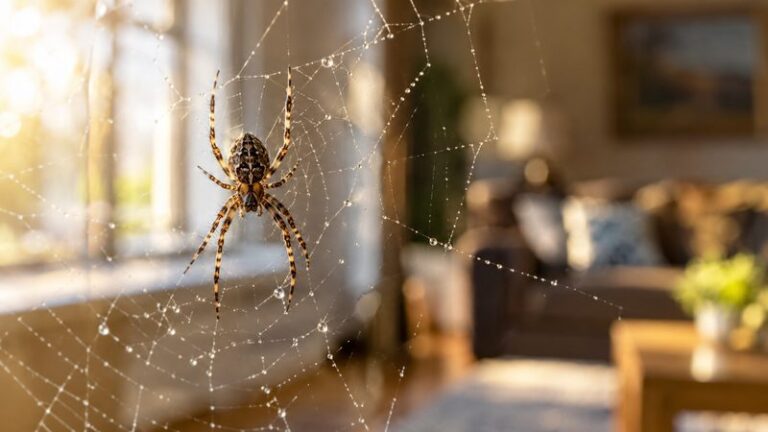
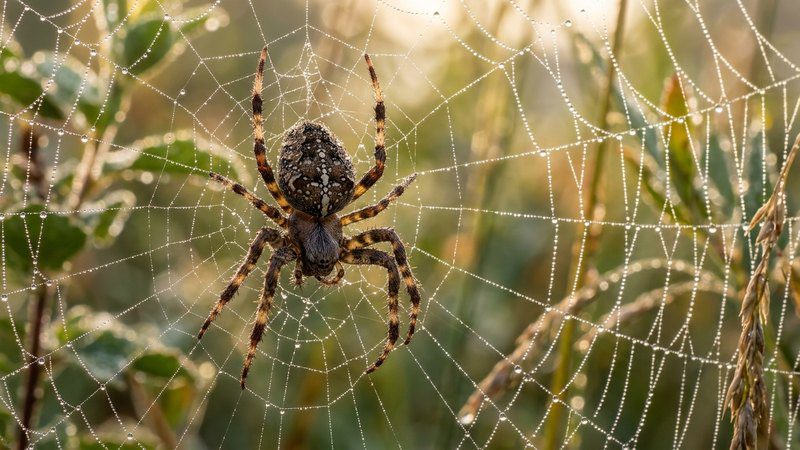
Do Spiders Have Tongues? The Surprising Truth
Quick Answer
- No, spiders don’t possess true tongues the way people do; their chelicerae perform every feeding role a tongue would.
- These chelicerae work as the primary feeding appendages, carrying venom-injecting fangs that immobilize captured insects before digestion.
- For tasting, taste-sensitive hairs along their legs and pedipalps judge whether something is edible, replacing any tongue entirely.
- Because they cannot chew solid food, spiders liquefy prey using enzymes, then draw the liquid meal steadily inward.
Ever paused to watch spiders weave intricate webs and wondered what lies inside that mouth? These arachnids spark fascination and debates alike. Do they own a tongue? Their formidable fangs, hidden organs, and puzzling sense of taste fuel endless misconceptions. Let’s untangle the captivating behaviors and spider anatomy behind how these skilled hunters truly feed.
Fascination With Spiders
Few eight-legged creatures provoke such contradictory reactions. For some, spiders trigger shivers down the spines, genuine wariness, even outright terror. Yet these same feared animals spark deep curiosity among arachnid enthusiasts, who find their intricate webs and stealthy hunting techniques utterly fascinating rather than frightening.
According to the Burke Museum’s arachnologist Rod Crawford, most revulsion stems from misunderstanding. Beneath the intimidating appearance lies a complex anatomy rewarding study. The order of Araneae occupies a special place among humans, its bewildering adaptations and astonishing webs turning old fears into genuine interest.
Curiosity About Spider Anatomy
Ever since a young age, I studied these creepy crawlies with a mix of caution and mild disgust, yet real wonder soon took over. Their anatomies are frankly astounding — miniature works of art tucked inside every corner of the world of spiders we routinely ignore.
According to Foelix’s Biology of Spiders, these air-breathing arthropods carry bodies split into two segments — a fused cephalothorax joined to a soft abdomen, with eight legs attached to the front section. Once you patiently observe their unique anatomies up close, curiosity about arachnids rarely fades.
Spider Mouthparts: An Overview
Chelicerae: The Primary Feeding Appendages
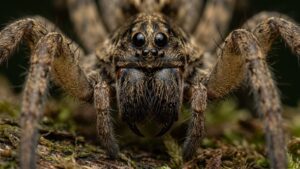
Forget the idea of a hidden jaw somewhere behind the eyes. A spider’s real feeding machinery sits at the front of the cephalothorax, where two fang-shaped jaws emerge from hardened cuticle blocks. According to Britannica, these spider mouthparts define how every arachnid handles its meal.
The chelicerae themselves act as spider’s jaws, a paired set that some texts label jaw-like body parts. Unlike the sideways mandibles of insects, these move in a pincer-style grip, letting the spider hold and reposition a struggling catch with startling control.
Here’s a detail worth flagging: chelicerae aren’t just weapons, they’re the spider’s primary tool for feeding. Each carries serrated jaws with sharp edges, and just behind them sit glands and small muscles driving the vertical movements that grip, pierce, and steady dinner before any venom flows into the wound.
The Australian Museum notes that in most species the fangs fold neatly against these jaws when idle. This opening and closing motion, combined with a row of teeth along the inner hair-covered edge, quietly filters and preps food before it reaches the gut.
Fangs: Venom-Injecting Structures
If chelicerae are the arms, fangs are the needles. These curved, hollow structures sit at the tip of each jaw, and their whole job is delivery. University entomology sources describe how they pierce prey and open a channel straight into the body.
Behind each fang lies the real payload. Venom glands seated in the bases pump toxin through the specialized fangs the moment they strike. According to arachnologists, spiders use this to subdue and immobilize prey, but also to inject venom defensively when an enemy gets too close. The chemistry varies wildly between species.
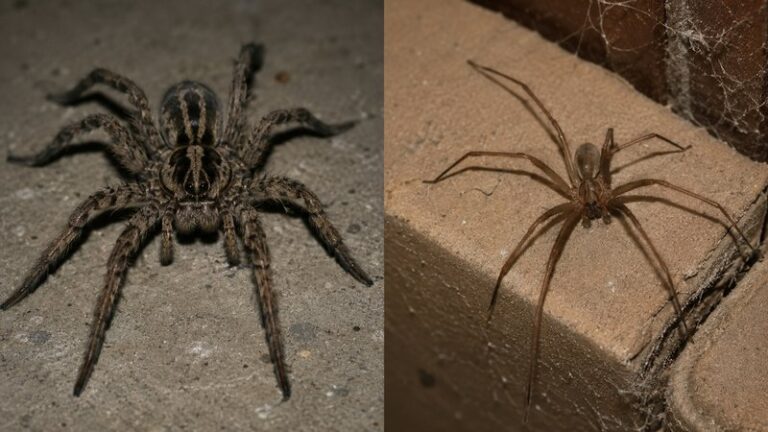
Not every spider carries the same arsenal. The Australian Museum points out that venomous spiders like black widows and brown recluses wield potent doses, while a wolf spider relies on larger fangs and brute grip. Either way, the fang is where hunting turns into feeding.
Clarifying Misconceptions About Spider Tongues
Now the big myth. People search whether spiders have traditional tongues, and the honest answer is no. There’s no fleshy, muscular tongue anchoring the floor of a spider’s mouth. What looks tongue-adjacent is usually the labium, a hardened lower plate, not a taste organ.
The confusion is fair. Spiders eat, so a tongue feels intuitive. But there are no taste buds lining the mouths the way ours are. Instead, the tasting job is outsourced elsewhere on the body.
This is where trichobothria enter the story. According to entomology researchers, these sensory hairs on the legs detect chemical cues and vibrations, meaning a spider effectively tastes and smells through its feet, not any tongue it never had.
Exploring Alternate Terminologies For Spider Mouthparts
Because there’s no tongue, biologists lean on precise names. The upper lip is the labrum. Flanking the mouth are the endites, or maxillae, which work with the leg-like palpi or feelers to steer food. These aren’t tongues, yet they cover every job a tongue might handle in another animal.
You’ll also meet tongue-like appendages in comparative texts, or tongue-like structures, when scientists set spiders beside insects and crustaceans. It’s a loose label for parts handling sucking and manipulating liquids — proof spiders own a full mouth toolkit, just never a tongue.
Spiders’ Mouth Anatomy
A common misconception pictures a spider’s feeding apparatus working like ours, yet no tongue sits inside. The mouthparts instead rely on paired jaws, tipped with teeth and hollow fangs. According to Britannica, these specialized mouthparts pierce prey and inject venom into helpless victims almost instantly.
Curiously, spiders lack traditional taste buds and sensory structures resembling a tongue. Their cheliceral palps act as sensory appendages, helping them taste surroundings. Each chelicera shows two segments with a scissor-like appearance, a design entomologists at Britannica describe as remarkably efficient for handling struggling meals.
Feeding Habits And Techniques Of Spiders
When hollow fangs puncture a target, venomous fangs inject fluid causing toxic effects, paralysis, and death. Britannica explains digestive enzymes liquefy internal tissues into liquid form, which spiders suck via the digestive tract. This digestion process lets them consume soft organs and juices without chewing.
Techniques vary widely: web-building spiders trap insects, whereas jumping spiders rely on sharp vision, agility, and clever ambush. Britannica notes some throw silk to wrap and hold prey. People often ask, will spiders eat dead bugs—yes, hungry ones scavenge captured prey during food scarcity.
Usage Of Venom To Immobilize Prey
Contrary to popular belief, most venomous species rarely aim to kill instantly. Their venom compositions work to paralyse, letting widow spiders and tarantulas subdue struggling prey. According to Britannica, this chemical defense doubles as a tactical shortcut, sparing energy during risky, unpredictable capturing prey encounters.
The fangs themselves act less like daggers and more like precision robust tools. Wolf spiders rely on smaller fangs to deliver venom quickly, while ambush hunters strike first. This immobilizing step, entomologists note, prevents injury before feeding, turning raw aggression into calculated, energy-saving survival.
How Do Spiders Handle Food?
Spiders never chew solids the way we picture. Instead, they manipulate prey externally, drooled enzymes and strong chemicals dissolving tissue into a mushy bolus. The Australian Museum explains this liquid food approach: macerated prey’s innards get liquidized before anything at all reaches the spider’s stomach.
Once ingested, the mashed meal passes through a narrow tube and coxi into the gut. So do spiders poop? Yes—leftover liquid diet waste exits as tiny pellets. According to National Geographic, this remarkably tidy internal digestive system leaves surprisingly little residual solid food behind.
How Do Spiders Eat?
Technically, spiders don’t eat the way mammals do—they drink. Piercing the shell, they inject venoms and digestive fluid, then slurp the results. There are no teeth for grinding; instead, patient external digestion gradually turns a solid catch into a sippable, entirely consumable liquid broth.
Before any meal begins, predatory behavior decides the menu. Some spiders ensnare prey in silk; others deliver a venomous bite, then use suction movements to swallow the broth. Wildlife experts note this remarkable hunting techniques flexibility explains why spiders thrive nearly everywhere on Earth today.
Lack Of Traditional Taste Buds In Spiders’ Mouths
Unlike humans, spiders lack taste receptors clustered on a tongue. According to the Australian Museum, their gustatory functions depend on chemical detectors scattered across the body. These sensory organs interpret molecules, quietly distinguishing edible morsels from inedible or harmful substances long before actual feeding begins.
Instead of a mouth crowded with buds, taste perception emerges through tactile receptors and taste-sensing hairs dotting the legs. The Burke Museum notes these microscopic hairs act as taste sensing tools, letting spiders smell food, judge acidic foods, and firmly reject bad-tasting foods by instinct.
Trichobothria: Sensory Hairs That Aid in Detecting Vibrations and Air Movements
According to the Australian Museum, trichobothria are ultra-fine hairs that register faint air movements and web vibrations long before a spider actually sees anything approaching. These delicate filaments read the natural world as subtle pressure shifts, translating breezes and tremors into meaningful sensory data instantly.
Positioned across the entire exoskeletal surface, these clever arachnids decode disturbances through rhythmic pulses rippling along their silk strands. Sudden erratic movements trigger instant flight; gentle signals often suggest nearby prey. Such refined adaptations turn communication and danger warnings into an elegant, wordless survival language.
Can Spiders Taste Food?
Do spiders truly taste anything at all? According to the Australian Museum, they sense flavour through chemosensitive palps and legs rather than any actual tongue. Before consuming prey, a spider carefully samples chemical cues, deciding whether the captured insects are worth its deliberate feeding effort.
These carnivorous creatures rely heavily on taste-by-touch, letting tiny sensory receptors guide the delicate manipulation of food and its safe consumption. Their rather peculiar eating habits hinge on detecting body fluids and moisture, ensuring only suitable meals proceed toward securing prey and their eventual nourishment.
Spinnerets: Silk-Spinning Organs Located At The Rear Of The Abdomen
Tucked at the abdomen’s rear, a spider’s spinnerets work like living nozzles. According to arachnologists, these flexible silk-spinning spinnerets house hundreds of microscopic spigots, each feeding liquid protein outward. That precise silk production hardens almost instantly upon contact with open air, forming a durable thread.
Most spiders carry two or three paired spinnerets, though some species keep more. Materials scientists note that separate silk glands supply each pair, letting one animal produce several separate threads. These finely tuned mechanisms explain why one small spider can manufacture several distinct silk types.
Function And Versatility Of Silk In A Spider’s Life
Silk is far more than a snare. Web-building supports nearly every task a spider faces: hunting webs seize meals, draglines anchor safe descents, and silken egg sacs shield developing young. Naturalists observe that protective shelters woven from thread guard many species from harsh outdoor weather.
Beyond capture, silk transmits information. Spider webs act as communication networks, where web vibrations reveal an approaching mate, a struggling insect, or looming danger signals. Some hunters patrol these hunting grounds constantly, ready to dismantle web sections and rebuild whenever conditions quietly shift around them.
Spider Silk And Its Many Uses
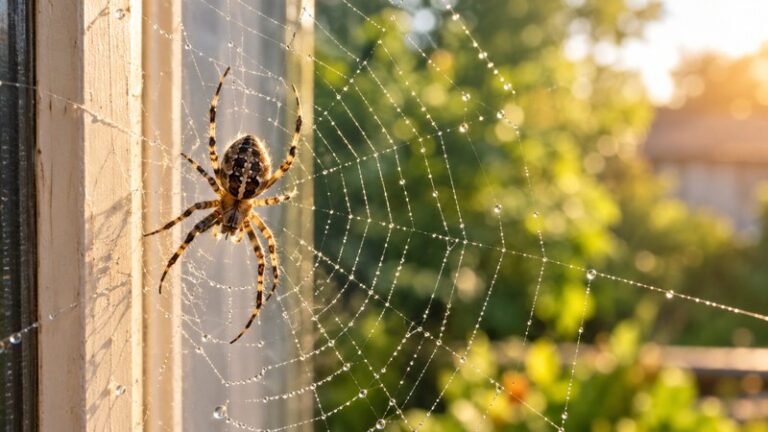
Silk’s applications read like an engineer’s catalogue. An orb-weaving spider spins circular-shaped webs that rival any fishing net, while intricate silk structures form sticky strands built for trapping insects mid-flight. Each web structure reflects a single species’ particular web-building patterns and its hunting strategy overall.
Uses diverge sharply between families. Cobweb weavers rig irregular tangles indoors, whereas the remarkable underwater web of the diving bell spider traps air below ponds. Materials scientists study these spider webs because their strength-to-weight ratio outperforms steel, inspiring modern surgical sutures and lightweight body armor.
Do Spiders Drink Water?
Do spiders drink water? Yes—most sip glistening morning dew beading on vegetation at dawn, while thirsty cobweb weavers lap droplets from their own silk. These predators rely on liquid nutrition, yet the urge to drink water clearly persists across every dwelling and hunting ground.
Curiously, the Australian water spider builds shimmering air pockets to survive submerged, gliding beneath the surface of the water like a tiny diver. Such specialized feeding behaviors show hydration shaping how they capture prey, since damp dew and moist soil quietly refill their reserves daily.
Spider Communication Beyond Oral Language
Spiders converse without voices, plucking trembling webs to broadcast urgent intent across taut silk. Male spiders tap rhythmic courtship rituals signalling availability and desirability, while rivals thrum aggressive behavior during territorial disputes, fiercely defending turf, ownership, and hard-won homes whenever restless mates quietly wander near.
Beyond courtship, tiny elongated hairs read faint air movements, alerting spiders to approaching prey, lurking threats, and shifting food sources throughout their surrounding environment. Sensitive receptors catch smell drifting on air, while abrupt tremors flash a silent warning signal announcing imminent danger looming dangerously close.
Web Vibrations As A Means For Mating, Territorial Disputes, And Danger Signals
Arachnologists describe webs as vibrational instruments rather than spoken words, translating pluck patterns into precise messages. A courting male taps rhythmic subtle movements, signaling intent to receptive female spiders. This tactile communication replaces oral language, letting courtship behaviors unfold safely across the fine silken lines.
Territorial rivals broadcast aggressive gestures through the mesh, converting social interactions into vibrational standoffs before contact escalates. Environmental interactions like wind or trapped prey generate distinct danger frequencies. The dazzling male peacock spider amplifies elaborate movements and bright colors, pairing visual flair with rhythmic tremors.
Comparison With Other Arthropods Like Insects Or Crustaceans — Differences In Structure, Function, And Evolutionary Adaptations
Unlike insects carrying six legs and antennae, spiders belong among arthropods with eight legs, a fused head and thorax, plus grasping appendages. Crustaceans add branching limbs and hardened shells. These segmented parts reveal a shared ancestry yet a striking structural divergence beneath surface anatomical similarity.
Functionally, spiders wield enlarged fangs to inject venom while insect jaws chew and crustacean claws grasp — each an evolutionary adaptation. Distinct body shape, size, and hunting style separate lineages. Across 40,000 known species, divergent anatomies reveal how selective pressures continually refine every ancient arthropod design.
Examples Of Unique Adaptations Among Different Spider Species
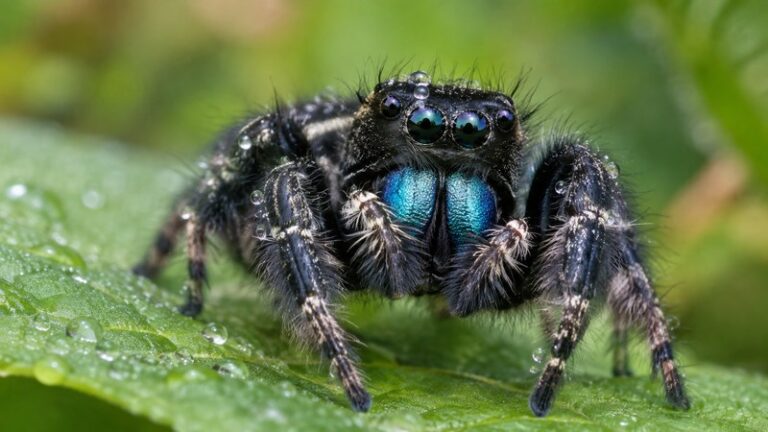
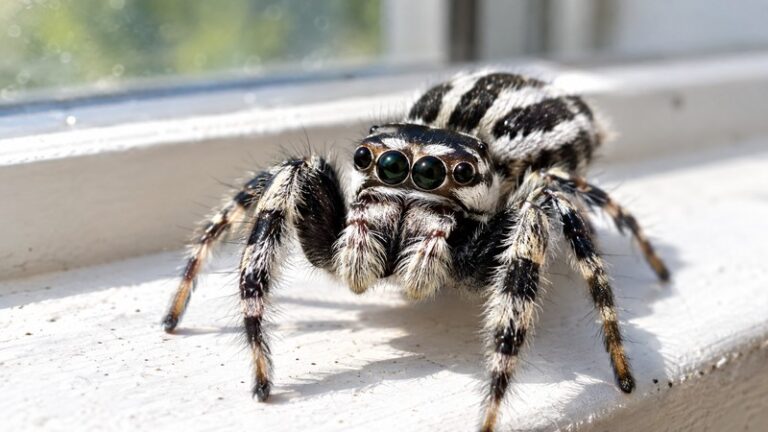
Across countless spider species, adaptations diverge wildly. Jumping spiders rely on sharp eyesight and remarkable agility, using strong legs to leap and pounce on prey items. Their prominent eyes and fuzzy bodies mark them clearly as active hunters, while orb weavers favor patient weaving instead.
Consider ballooning: University of Bristol researchers found spiders detect atmospheric electric fields to balloon skyward, showcasing silk elasticity and strength. Meanwhile, the crab spiders scuttle sideways among bright flowers, and fishing spiders hunt at water’s edge—each coloration reflecting distinct hunting methods across many families.
Interesting Trivia Regarding Specialized Feeding Behaviors
Here’s a bit of odd trivia: spiders cannot chew solids, so they predigest meals externally. Digestive fluid liquefied internal tissues inside the prey’s body, then a sucking stomach and dilation muscles pump the predigested parts through a tiny mouth orifice, leaving a hollow shell behind.
According to arachnologists, spider venom serves immobilizing roles—subduing prey far larger. Harmless species target smaller insects, while others tackle larger animals. Using their first pair of legs to handle food, spiders firmly crush and mash victims, then leave them sucked dry and fully consumed.
Why Are Spiders Important?
Spiders matter enormously in the ecosystem. They devour flies, fleas, mites, lice, and ticks, curbing pests that spread skin infections. Despite fearsome reputations, serious bites rare among medically important spiders like the brown recluse or black widow, whose true spider bite risk stays remarkably low.
Culturally, spiders inspire stories worldwide—Anansi the trickster among Akan people of Ghana, Grandmother Spider among the Hopi tribe, and Arachne in Greek mythology. Scientifically, their silk yields bandages, fishing nets, and cloth. As Baba Dioum, the Senegalese conservationist, taught: we conserve what we love.
Spiders Of Three Rivers
Around Three Rivers, spider diversity surprises newcomers. According to an interpretive naturalist at the Upper Midwest Environmental Science Center, riverside ecosystems shelter countless garden spiders among native prairie plants. These insect eaters quietly patrol every spider’s habitat, thriving wherever moisture, cover, and abundant prey overlap.
Naturalists working near French Island, Wisconsin routinely collect, photograph, and identify local species to map biodiversity. Many web-building spiders anchor silk across trees and low plants, while ground hunters roam leaf litter. Three Rivers mirrors this pattern, rewarding curious observers who quietly explore outdoors nearby.
Breaking Myths About Spiders
Few creatures evoke fear like spiders, yet most misconceptions collapse under honest scrutiny. Popularized by Charlotte’s Web, gentle portrayals still understate their real value. Scientists stress precise language around spider anatomy, noting spiders lack true tongues entirely, relying instead on chelicerae for feeding and digestion.
Contrary to popular belief, spiders benefit people enormously. According to Nyffeler and Birkhofer 2017, they devour flies, mosquitoes, aphids, and beetles threatening crops and spreading disease. Lacking traditional tongues, their distinct mouthparts deploy protrusible appendages, showing exactly why alternative terminologies describe spider feeding far better.
Are Daddy Long Legs Dangerous?
Persistent rumors claim daddy long legs harbor deadly venom-injecting needles yet cannot bite anyone. According to UC Riverside entomologists, this belief is false. Their modest fang structures vary noticeably in size and shape, yet pose no serious threat toward most humans or larger animals whatsoever.
Confusingly, daddy long legs names both cellar spiders and harvestmen, the latter arthropods within class Arachnida alongside scorpions. Harvestmen lack injecting venom completely, instead capturing and holding food using jaws suited for mechanical chewing. Neither variety endangers people despite their genuinely unsettling, spindly indoor appearance.
Seeing Spiders at Home?
Get rid of spiders for good — book your free inspection.
Fast, no-obligation quote from trusted local pest control pros.
Ways To Learn More About Spiders
Building real knowledge about spiders begins with patient observation, never fear. Quality field guides deepen understanding of their diversity, from tiny jumpers to orb-weavers. Spiders inhabit every continent except Antarctica, displaying astonishing color variation and remarkably varied hunting methods worth studying closely across changing seasons.
Beyond casual interest, spiders offer immense research potential for medicine and modern materials science. Curious learners can join citizen-science surveys, tour natural-history museums, or examine spinnerets and silk glands under magnification. According to university extension programs, trustworthy resources reward patient, ongoing curiosity about these creatures.
Are There Lips On Spiders?
Contrary to widespread misconceptions, spiders lack anything resembling human lips at all. According to the Australian Museum’s arachnologists, their mouth anatomy relies on hardened parts at the base of their heads. The spider’s chelicerae hinge at a flexible joint, and this functional aspect replaces lips entirely.
Do Spiders Possess Taste Receptors?
Rather than housing taste buds, spiders detect flavor through chemosensitive hairs scattered across their legs and bodies. Research from the Burke Museum notes these receptors evaluate objects before consumption, distinguishing good-tasting prey instantly. Effectively, tongue’s functions get outsourced to leg sensors, alongside smell detection nearby.
What Can Be Found Within A Spider’s Mouth?
Peering inside reveals no teeth whatsoever. Instead, the straw-like mouth orifice channels liquefied meals rearward through the foregut into the hindgut. Digestive substances dissolve tissue externally first, then a powerful sucking action draws everything in. Spiders essentially shred nothing—they slurpie prey through small holes.
Is There A Presence Of A Brain In Spiders?
Yes, spiders genuinely possess a brain, though it sprawls unusually. According to Scientific American, neural tissue fills the internal parts of the spider’s body, even extending into legs. This condensed nervous system coordinates the spider’s eyes and movement, proving every arachnid thinks surprisingly efficiently overall.
The Wrap Up
To wrap up, spiders reveal a predatory brilliance sharpened across millions of years. Their feeding habits blend patient ambush tactics with restless active hunting, proving these diverse creatures master survival through remarkable structure, clever defending, and slow, deliberate evolutionary adaptations shaping every generation quietly today.
Ultimately, these fascinating creatures thrive through predatory nature and patience, ambushing unsuspecting prey with lightning-fast precision. Beyond seizing trapped insects, they broadcast mating opportunities, show tender maternal care, and cleverly outwit enemies each day, reminding us tongueless hunters still communicate, hydrate, and endure remarkably well.