Subterranean Termites in Texas: Signs & Control
Most homeowners assume wood-destroying insects announce themselves, yet subterranean termites are masters of silence. According to the Center for Urban and Structural Entomology in College Station, these social insects build hidden colonies beneath soil, staying invisible.
What makes them economically important isn’t size but persistence. Operating from underground nests, foraging workers travel through shelter tubes into wooden structures, consuming cellulose materials quietly while difficult to detect damage spreads across Texas homes for years.
Identification
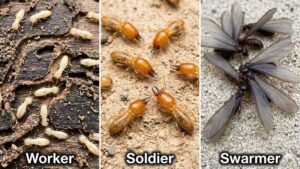
Telling a subterranean termite colony apart from other wood-infesting insects starts with recognizing its three functional forms: the reproductives, the pseudergate workers, and the soldiers. Each caste emerges through a series of developmental shifts, beginning as eggs, passing through the larva stage, and then diverging by role as the mature colony assigns duties based on food availability and temperature.
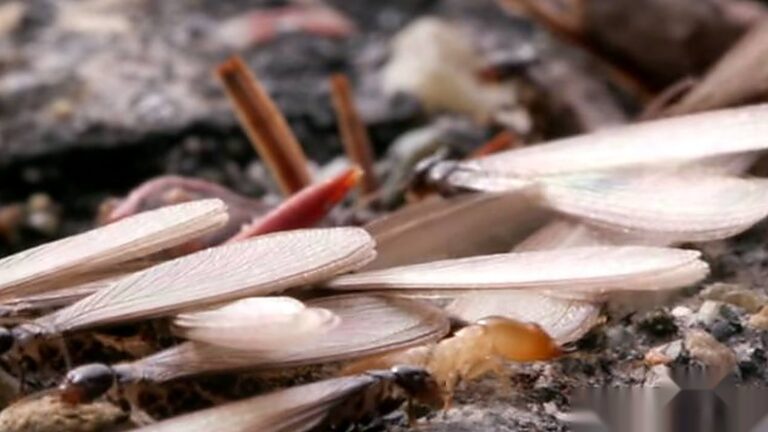
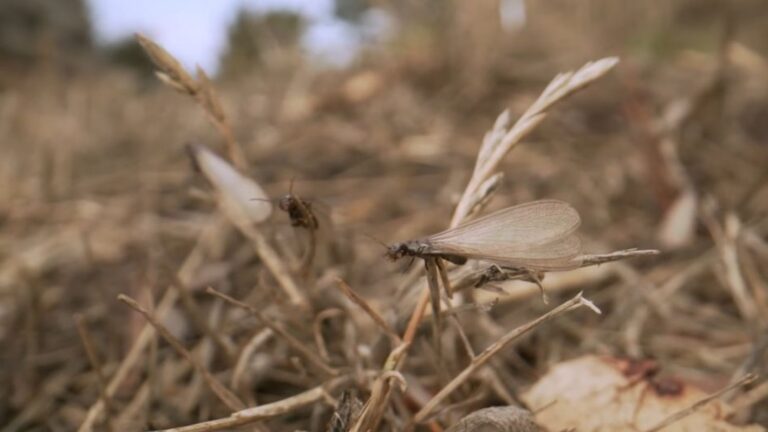
The reproductive form is the most visible to homeowners. Swarmers, technically the winged primary reproductives, carry two equal-length wings and a darker body ranging from dark brown to black. According to Texas A&M AgriLife Extension, these weak fliers depend on wind currents during spring and early summer, appearing as early as January and February in South Texas and around April and May in the Panhandle, their flights shaped by environmental factors like heat, light, and moisture.
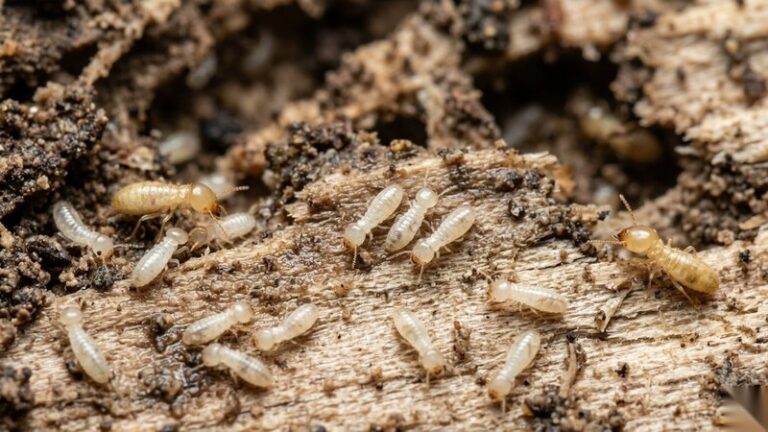
Workers make up the bulk of any colony and do the actual feeding. Pale, soft-bodied, and blind, they tunnel through cellulose—paper, cotton, burlap, and assorted plant products—relying on protozoans and bacteria in their hindguts to digest tough fibers. Their constant foraging is precisely why they cause the most structural harm, sustaining the brood and feeding developing larvae.
The soldier form serves a purely defensive purpose. Identifiable by their elongated, hardened soldier head capsules and pronounced mandibles, soldiers cannot feed themselves and must be nourished by workers. Their distinct proportional anatomy makes them one of the clearest diagnostic features under a hand lens.
Distinguishing these castes matters because Formosan termites present similar forms yet differ sharply in scale, aggression, and treatment response.
Biology And Habits
Most homeowners in Texas first encounter the subterranean termites problem not through damage, but through a sudden indoor cloud of swarmers. These alates reach swarm at night activity during late May and early June, though some colonies trigger early spring flights when warmth and humidity align. The reproductive caste matures only after a colony achieves colony stability spanning years, and environmental triggers like rainfall and rising soil temperature push the winged reproductives toward the surface. Attracted to lights, these coal black insects with smoky gray translucent wings often gather near windows, signaling that an established nest lies somewhere nearby.
The initial flight is brutally inefficient. According to Texas A&M AgriLife Extension entomologists, the overwhelming majority of alates perish within hours, falling prey to birds, ants, and even other termites. Their transparent wings carry them only short distances before they drop, shed those wings, and crawl across exposed ground where dehydration and predation eliminate nearly all of them.
Survivors begin the pairing ritual almost immediately. A male follows a female in tandem until they locate suitable moisture-rich earth, then mate and seal themselves into a small chamber. This founding pair becomes the primary queen and king. Their earliest offspring are tended as termite larvae that hatch within a few weeks, taking on early lifecycle roles as the first workers before any specialized caste appears.
Colony architecture follows a layered caste structure. The queens lay eggs continuously, and the primary queen can be supplemented by secondary and tertiary reproductives drawn from brachypterous nymph stages, ensuring the colony persists even if the founder dies. Development moves from egg to larva to pseudergates and onward, with each adult form filling a role. The creamy white workers handle forage duties, the soldiers with brownish heads and heavy mandibles defend against invaders, and a stable population of viable eggs keeps the sub-colony expanding. This redundancy is precisely why a mature Reticulitermes colony resists casual eradication.
Maximum colony size depends on food availability, soil moisture, and seasonal length. As numbers swell, satellite nests form when foraging tunnels extend far enough that distant feeding groups operate semi-independently. Texas A&M researchers note that Reticulitermes flavipes colonies in the state can splinter into multiple feeding centers, each potentially producing its own secondary reproductives and effectively multiplying the original threat.
Nutritionally, these insects are committed cellulose feeders. They ingest wood and other plant material, breaking down cellulose through protozoa and bacteria living in their guts. The creamy white workers do the eating, then feed castes that cannot forage—using mouthparts built for chewing—and they groom queen and brood through trophallaxis. This shared-gut digestion explains why the colony functions as a single processing unit rather than a collection of individuals.
Certain conditions make a food source irresistible. Wood already softened by wood decay or colonized by fungi attracts foragers far more readily than sound timber, since fungal activity raises moisture and pre-digests some fibers, lowering the energy cost of feeding.
Their defining weakness is water. Subterranean termites face constant dehydration risk and depend on steady moisture contact, which is why they rarely sever ties with the soil. Maintaining humidity inside their galleries lets them survive where surface conditions would otherwise kill them within hours.
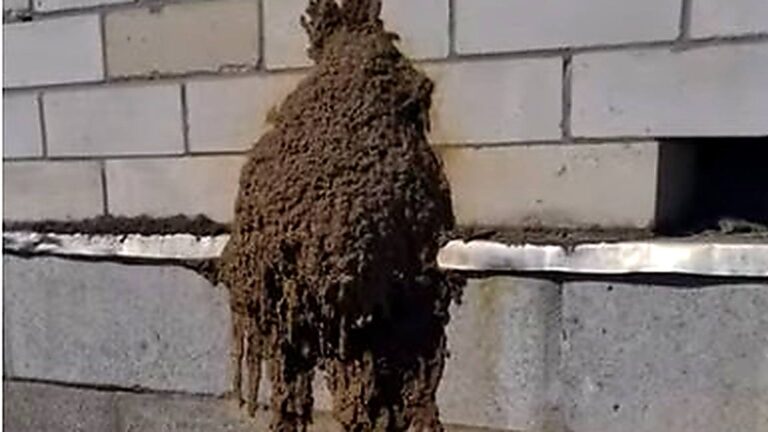
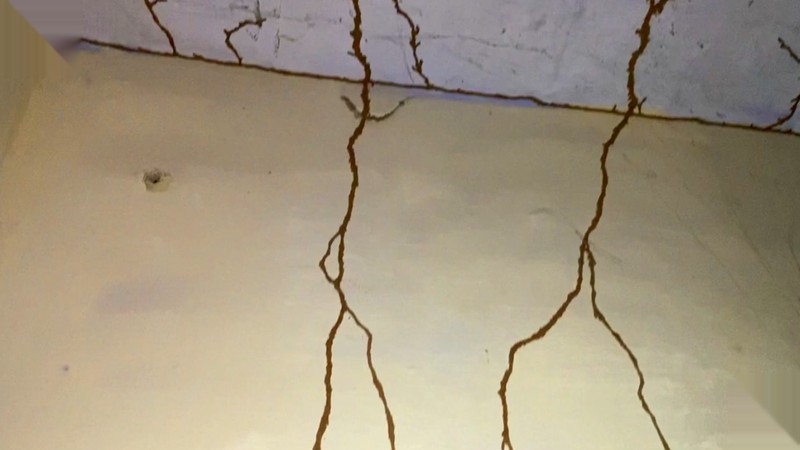
To bridge dry, exposed gaps between soil and food, they construct shelter tubes—pencil-width tunnels of mud, saliva, and fecal material. According to University of Florida IFAS specialists, these tubes shield foragers from predators like ants and from drying air, allowing the colony to travel up foundations, through cracks, and into walls without ever exposing itself to open daylight.
During active infestation these termites move through joists, piers, and structural wood while leaving few outward clues. The most reliable signs of their presence are the mud shelter tubes climbing foundation surfaces, discarded wings near windowsills after a swarm, and hollow-sounding or blistered wood that conceals interior galleries—each a quiet indicator that the colony has already established itself.
Damage
Across Texas, subterranean termites quietly cause severe structural damage to unprotected homes long before anyone notices. Reticulitermes flavipes, the most broadly distributed native species, hollows out structural lumber from the inside, while the more aggressive Formosan termite can compromise wooden structures in roughly 2 years. The financial weight is real: infestations contribute to hundreds of millions in damage nationally each year. If you suspect active feeding, acting early matters—our guide on how to kill termites walks through the treatment options that actually stop the colony.
Signs Of Infestation
Catching an infestation early depends on recognizing a few reliable indicators around the foundation, windows, and doorframes. Most homeowners spot trouble only when the colony reveals itself seasonally or structurally.
Swarmers: In early spring, winged reproductives called alates leave the nest to start new colonies. These dark, 3/8 inch insects with translucent wings are often mistaken for flying ants, but their equal wings and narrow body distinguish them. Finding discarded wings on floors or windowsills is frequently the first signal a colony is established nearby.
Mud Tubes: The most diagnostic sign is the network of shelter tubes these insects build to bridge soil and wood. Constructed from fecal secretions, salivary secretions, and debris, these pencil-width galleries protect worker termites from dehydration as they travel from moist soil up across masonry, piers, and expansion joints. Inspectors look for them along the foundation, in the crawl space, and near utility entries, plumbing, and earth-to-wood contact points. Breaking one open and rechecking days later confirms whether the colony is active, since termites quickly repair an ongoing infestation.
Damaged Drywall And Trim: Because activity stays hidden, surfaces like wall coverings, baseboards, and wood trim may blister, sag, or sound hollow when tapped. Tiny pinholes packed with soil in cracks, paint that bubbles unexpectedly, or blistered wood along hardwood flooring all point to feeding behind the surface, often near elevated moisture levels.
Suspect Termites?
Protect your home — book your free termite inspection.
Fast, no-obligation quote from trusted local termite control pros.
Characteristics Of Damaged Wood
Wood attacked by subterranean species has a distinctive look: galleries run with the soft grain, leaving the harder heartwood ridged while the interior fills with soil, mud, and fecal material. Unlike drywood damage, you rarely see clean sawdust; instead the weak structural members feel spongy, and floor joists or floor beams may flex underfoot — quiet evidence the colony has been feeding undetected.
Formosan Termite Distribution in Texas
The Formosan subterranean termite earns its reputation as a destructive, invasive pest species through sheer numbers. According to Texas A&M AgriLife Extension, mature larger colonies house millions of individuals, dwarfing what most native subterranean termites ever achieve.
Spread here rarely happens naturally. Researchers note infested shoring timbers, recycled railroad ties, and landscaping site materials carry the Formosan termite across Texas, since this spreading mechanism quietly relocates a hidden colony during ordinary traveling between properties. To understand the full picture of how termites spread from property to property, it helps to know the routes they exploit.
According to Texas A&M AgriLife Extension, their dietary flexibility is especially concerning. Beyond eat more wood, they gnaw plastic, asphalt, soft metal, even non-cellulose materials seeking moisture requirements, a documented voracity and adaptivity explaining their unstoppable distribution across thirty counties.
Where Subterranean Termites Are Found
Across the United States, these insects colonize every state except Alaska, though Texas carries unusual weight in their story. The native subterranean termite, genus Reticulitermes, blankets the landscape, while the economically important Formosan subterranean termite stakes a tighter claim along coastal areas, quietly moving north each season.
How did Coptotermes formosanus arrive? It was introduced, transported through landscape timbers, railroad cross-timbers, mulch, and wooden pallets. According to Texas A&M AgriLife Extension, recycled wooden products and retaining walls seed isolated infestations, letting populations establish footholds far from any original colony before spreading outward.
The financial weight is staggering. Texas A&M researchers estimate roughly $500 million in annual losses statewide, and within active zones a structure faces a 70 percent probability of attack over 25 years. That math reframes home protection not as optional upkeep but as a measured defense against near-inevitable pressure.
History in Texas
The story of these pests in the Lone Star State traces back to a single documented moment. According to Texas A&M AgriLife research, the first infestations surfaced near the Houston Ship Channel in 1956, where shoring timbers transported from the Far East carried hidden colonies into Pasadena, Harris County.
What began at that industrial waterway didn’t stay contained for long. From those early port arrivals, the spread reached across roughly 30 Texas counties, concentrating heavily within sprawling metropolitan areas. Entomologists note this trajectory mirrors how human commerce, more than natural migration, dictated where these wood-destroyers eventually established their stubborn foothold throughout the region.
Native Origin
The Formosan subterranean termite was first described as a species in 1909.
This structural pest originated from the Asian island of Formosa, modern Taiwan.
According to entomological records, scientists consider it native to China, despite the described name.
It later spread across Japan, Sri Lanka, the Philippines, Guam, and Hawaii too.
Current Location: Subterranean Termite Distribution
U.S. Habitat:
Few structural pest species rival the reach of this wood-feeding insect across America’s warmer belt.
U.S. Present:
According to the Texas A&M AgriLife Extension, this subterranean termite first reached the continental United States through a Houston shipyard, with detection confirmed in 1965. Subsequent records traced its movement into Louisiana by 1966, then Charleston, South Carolina around 1967, cementing its grip across the southern U.S.
According to USDA records, infested vessels likely carried colonies homeward after wartime deployment.
Texas:
Native to Asia, specifically the Island of Formosa (Taiwan), this species lent its termite name to global pest literature after early sightings.
Resembles
Many homeowners first confused subterranean termite activity with wood-destroying fungi, since both leave deterioration behind. According to Texas A&M AgriLife, the pale spotted appearance and soft fecal material lining surfaces mimics ordinary wood decay convincingly.
The mud packed into tunnels and galleries follows soft spring-growth along the wood grain, and lingering moisture within tunnel surfaces deepens the resemblance, making early infestation signs genuinely hard to distinguish from harmless rot.
Management (Formosan)
Across Texas, suppressing colonies of this aggressive invader demands more than liquid termiticides. According to Texas A&M AgriLife, baiting treatments disrupt foraging territory, while physical barriers and stainless steel mesh deny shelter beneath slab construction.
Effective chemical management combines pre-construction treatments at full label rate with post-construction foam treatments injected into wall voids. Treating utility entrances, soil-filled porches, and void areas interrupts mud tubes, starving these 10 million foraging workers spread across several colonies.
Control
When tackling subterranean termites, homeowners must understand that chemical barriers alone rarely suffice. According to Texas A&M AgriLife Extension, combining soil treatment with bait stations creates layered defense, disrupting the colony while protecting vulnerable areas effectively. For a step-by-step breakdown of each method, see our full guide on how to kill termites.
A certified applicator applies termiticide along foundations, establishing a continuous termiticide barrier. The monitoring process tracks foraging workers consuming treated bait, gradually reaching the nest. This successful treatment demands proper treatment timing and skilled application techniques throughout. Rather than risk a partial DIY job, most homeowners book professional termite control services to guarantee full-perimeter coverage.
FAQs
What Will An Inspection Cost?
When you contact companies for termite help, prices swing widely based on your structure’s size and regional termite pressure. According to Texas A&M AgriLife Extension, charges reflect treatment options, coverage breadth, and whether damages fall under protective terms—so compare carefully before committing.
Always scrutinize contract terms alongside renewal options, since cheaper bids sometimes void warranty protections later. A truly licensed operator registered with SPCS justifies their fee through documented termite experience, ongoing training, and verifiable confirm license status—value that flat-rate quotes rarely capture upfront for homeowners.
What Does Such An Inspection Involve?
A qualified wood destroying insect inspector examines your structure methodically, probing accessible areas where cellulose material meets vulnerability. The University of Kentucky Entomology notes subterranean termites exploit earth-wood contact, so foundation zones, crawl space, and any wood debris receive concentrated scrutiny during this careful inspection.
Expect attention toward moisture pockets, insufficient ventilation, faulty grade, and firewood stored against walls. The licensed person documents active infestation evidence, sometimes breaking apart suspect timber, then issues a structural damage report detailing findings, warranty scope, and remediation pathways without unnecessary dismantling.
If None Of These Signs Is Present, Does That Mean My Home Is Free Of Termites?
Unfortunately not. Active infestations prove notoriously difficult to detect because these insects blend in behind foundation walls, slabs, and concrete where casual observation fails. Texas A&M specialists warn that utility penetrations and crawl space piers frequently conceal live termites despite a seemingly clean home.
Absent swarmers, mud tubes, or damaged wood, hidden galleries may still expand silently. That’s why regular inspection matters—probing corners with a screwdriver, listening for a dull sound, and checking soil line cracks catches new damage that surface glances overlook entirely.
How Can I Tell If I Have A Termite Problem? And, If So, What Kind?
Watch windows and windowsills for discarded wings or dead termites clustering near indoor lights—a telling natural phenomenon during seasonal swarms. The National Pest Management Association explains mud tubes climbing house walls signal subterranean activity, while bodies caught in spider webs near utility openings confirm presence.
Identifying which kind guides treatment. Tap suspect structure timber: a dull thudding sound under hammer probing suggests hollow wood damage. Inspect outdoors along foundation piers; subterranean colonies demand soil moisture, distinguishing them from drywood invaders needing none.
Where Are Termites Found In The U.S.?
Across the United States, these destructive insect pests inflict billions of dollars in damage yearly, thriving wherever wood and cellulose sustain them. According to the USDA Forest Service, subterranean termites dominate broadly, colonizing homes, businesses, and warehouses through hidden wallboards, siding, and wood trim.
Texas homeowners face especially persistent infestations given warm, humid conditions favoring isolated infestations statewide. which is why central Texas residents often line up termite control in Austin before swarm season begins. The broader world hosts several hundred species across family groups like Rhinotermitidae and Kalotermitidae, though regional distribution shapes which structures demand vigilant preventive measures and proactive precautions.
Are There Different Kinds Of Termites?
Yes—and the distinction drives strategy. Subterranean termites require soil to live and reproduce, building underground nests linked by tunnel networks drawing moisture from earth. Drywood termites, conversely, thrive with no soil contact, nesting directly inside walls and wooden building materials.
The Texas coastal areas near Houston and Corpus Christi harbor both, complicating control. As social insects within an organized caste system—unlike ants or bees—each type extracts moisture from wood differently, meaning a single property occasionally suffers multiple infestations requiring distinct remedies.