Termite Eggs Or Droppings? How To Identify Them
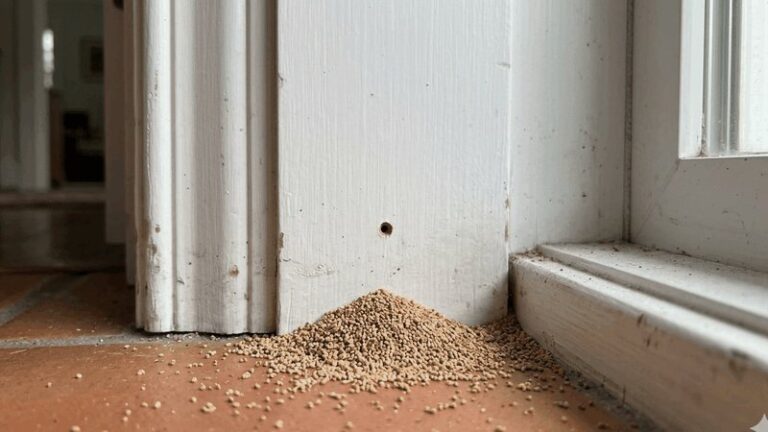
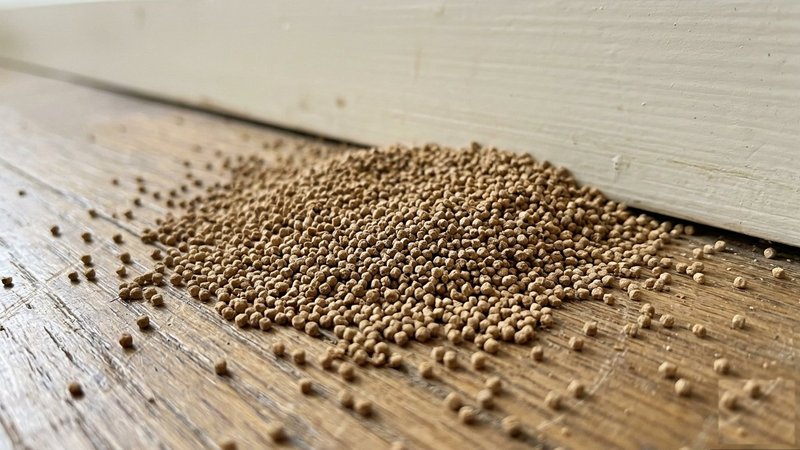
If you’ve ever spotted strange piles of frass near your baseboards, you’re likely dealing with termite droppings—those tiny, brownish pellets that resemble coffee grounds scattered along windows and wooden surfaces indoors.
These hard, dry specks often signal an active termite infestation hiding within your colonies of digested wood, where drywood termites push waste through kick-out holes, leaving telltale wood-colored pellets behind.
What Do Termite Eggs Or Droppings Look Like?
Anyone who has spent time inspecting homes for termite activity learns quickly that the droppings rarely announce themselves. They masquerade as ordinary debris, which is precisely why so many infestations go unnoticed until the wood behind a wall is already compromised.
What throws people off is the resemblance to everyday particles. Run your fingers through a pile and you’ll notice it feels gritty rather than soft, a subtle distinction that separates termite droppings from genuine wood shavings. The pellets themselves are remarkably uniform, almost as if measured by hand.
Here Are Some Common Characteristics Of Termite Frass:
- Tiny, granular pieces that look deceptively like coffee grounds scattered across a surface — each pellet is roughly the size of a poppy seed.
- A color range spanning light brown to black, shifting depending on the species of wood being consumed rather than the termites themselves.
- Six-sided, ridged pellets with a distinctly elongated, capsule shape — a feature you’ll only catch under magnification.
- Telltale piles accumulating beneath wooden floorboards, along window sills, and on carpets where gravity pulls the expelled waste downward.
- Deposits collecting around porches, inside attics, and tucked into crawlspaces — the quiet zones where these pests work undisturbed for years.
One thing worth stressing: the frass itself is not harmful, but its presence is a flag you shouldn’t ignore. Spotting these grains means it’s time to schedule a professional termite inspection and map out a treatment plan before the colony digs deeper.
Where Are Common Places To Find Termite Droppings?
According to pest control experts, you’ll often discover frass near windows and baseboards, where drywood termites push out waste through kick-out holes, leaving telltale wood-colored pellets scattered across floors below their hidden galleries.
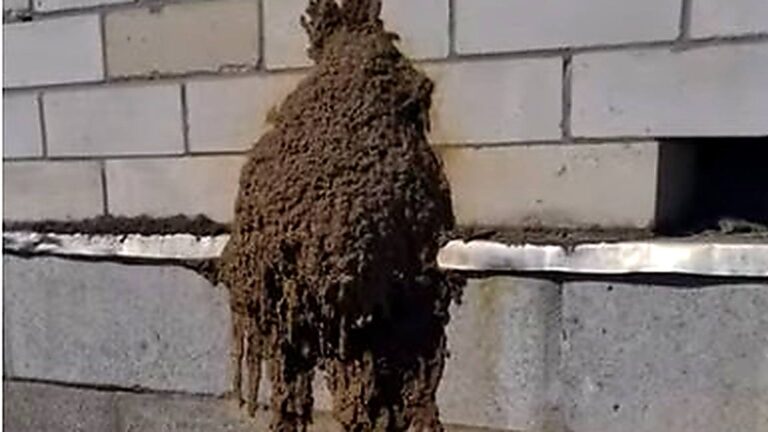
Inspect your attic, crawl spaces, and areas with exposed wood along the roof line, since subterranean termites build mud tubes against foundation walls, fences, and sheds, depositing termite frass where termite damage silently spreads.
Are Termite Droppings Dangerous?
Many homeowners assume frass carries pathogens, yet termite excrement rarely poses direct harm. According to the EPA, these light brown to black pellets are essentially digested sawdust lacking the disease vectors found in rodent droppings.
The real concern isn’t the termite poop itself but what it signals. Spotting these extremely small, hard to spot clumps near mud tunnels confirms an active infestation silently consuming wood behind your walls right now.
What Should I Do If I See Termite Droppings
According to the EPA, spotting frass signals an active drywood termite infestation, so contact a pest control company immediately to confirm the termite problem before damage worsens. Don’t disturb the pile.
While these wood-colored pellets seem harmless, they reveal termites nest activity hidden behind baseboards or walls. A licensed inspector locates kick-out holes, assesses wood damage, and recommends targeted professional treatment for lasting protection.
What Do Termites Look Like?
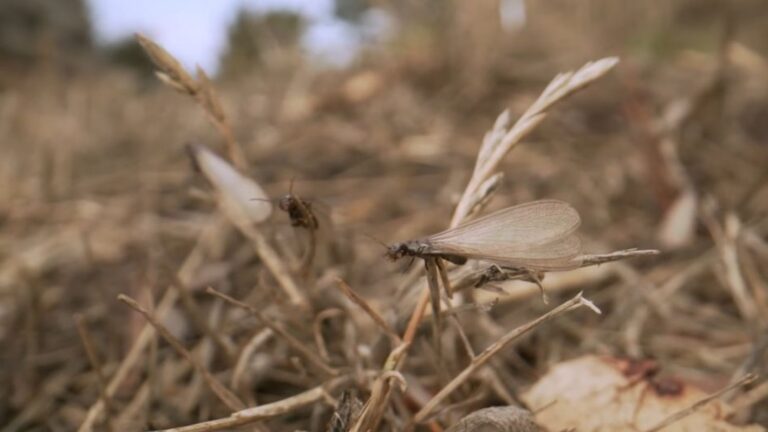
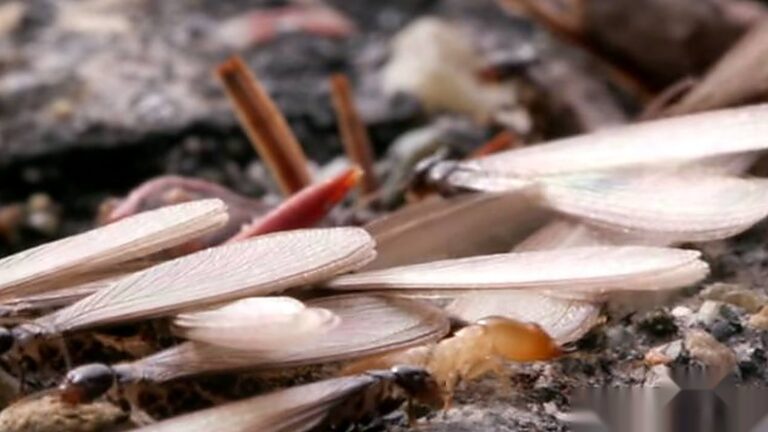
You’ll spot the evidence long before you spot the insect—but recognizing one matters when you finally do. Termites run from a mere ⅛ inch up to roughly an inch, carrying four wings of nearly equal length laced with pale veins. Their coloring shifts from creamy white to brown to black, and the exact look depends heavily on which species has moved in:
Subterranean Termites
- Creamy white to dark brown or black
- Long, narrow oval shape body
- Around ⅛ inch in length
- Widespread across the United States
- Most common and destructive type
Drywood Termites
- Light brown coloring
- Stout, cylindrical body
- Roughly ⅜ to 1 inch long
- Favor coastal regions: South Carolina, Texas, California
- Nest directly inside dry wood
Formosan Termites
- Yellowish-brown tone
- Oval frame with a rectangular head
- About ½ inch long
- Found in Hawaii, North Carolina, Georgia, Virginia, Alabama, Florida
- An aggressive species with massive colonies
Dampwood Termites
- Brownish, larger-bodied
- Heavier, robust build
- Between ½ to ⅝ inch
- Range along Pacific Coast states and southern Florida
- Drawn to damp, rotting wood
According to the University of Kentucky Entomology department, the swarmers (reproductive individuals) are the caste most homeowners actually see, since workers and soldiers stay hidden within the nest.
Other Signs of Termites
If you’ve ruled out frass but still suspect trouble, your walls may be hiding more than you think. Termites rarely announce themselves, so watch for subtler clues across your living space. According to the EPA, early detection saves thousands in costly repairs. Some common ones include:
- Hollow-sounding wooden construction when tapped
- Mud tubes climbing your foundation
- Discarded wings near window sills
- Tight or warped doors from moisture
- Bubbling or peeling paint surfaces
- Faint clicking inside wood walls
What Color Are Termites?
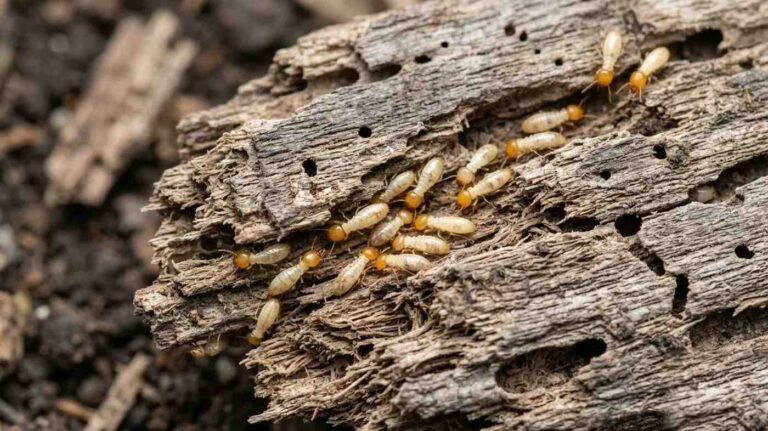
Most termites show a pale appearance, though shades shift across the termite caste system. Worker termites carry pale bodies, while soldiers display darker bodies with larger heads built for guarding the colony safely.
According to the University of Kentucky Entomology, reproductives like swarmers appear brown or black, whereas the queen and larvae stay white. These social creatures vary in tone, helping each role stay recognizable inside their hidden nest.
Termite Castes
Within any colony, a strict division governs life. The termite caste system separates roles cleanly: larvae mature into workers, soldiers, or reproductives, each shaped differently by function rather than the role assigned at birth.
According to the University of Kentucky Entomology department, this social structure sustains the entire group. Worker termites with pale bodies feed everyone, while those with darker bodies and larger heads guard tunnels, defending the queen ceaselessly.
What Do Termite Eggs Look Like?
Eggs remain remarkably tiny and cream-colored, deposited deep where the king and queen reside. The reproductive termites producing them rely on chemical signals to communicate, coordinating care across generations through scent rather than sight.
According to Texas A&M AgriLife Extension, fresh clutches appear opaque and off-white, almost translucent. Hidden from light, these clusters stay protected, since adults possess no eyes and instead navigate via vibration and pheromone trails underground.
Workers
The backbone of every nest, workers are wingless and built for labor. Their soft, elongated body with six legs moves constantly, using powerful mandibles for chewing wood and feeding the colony’s dependent members daily.
According to Penn State Extension, these enlarged, white individuals never rest from foraging. They tend larvae, repair galleries, and supply nutrients, performing duties that keep soldiers, the queen, and growing brood entirely alive.
Bugs That Look Like Termites
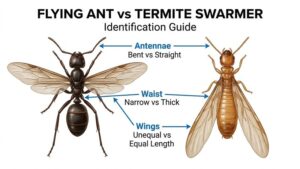
Misidentification derails effective termite control before it begins, and confirming what you’re actually facing through a professional termite inspection protects your home from the wrong treatment entirely. Correct identification saves money and structural integrity.
Termites Vs Flying Ants
The most common confusion comes from winged ants, which are routinely mistaken for termite swarmers during spring mating flights. While both are small winged insects with four wings, the differences in body shape, antennae, and wing proportion matter. Getting this wrong means homeowners chase the wrong pest while real damage spreads.
Several insects share traits that fool the untrained eye, so watch for these telltale separators:
- Antennae — Straight antennae signal termites; bent or elbowed ones point to ants.
- Wings — Termites have two pairs of wings of equal size; flying ants show unequal pairs.
- Waist — Ants pinch sharply at the middle; termites stay broad end to end.
- Color — Amber to dark brown alates differ from the orangish heads of certain reproductive swarmers.
Where Do Termites Live?
Termites are social insects that build large colonies, and where they settle depends entirely on the species. Most thrive in dark, humid spots with steady access to cellulose. According to the University of Kentucky Entomology department, subterranean types are the most widespread in North America, nesting in damp soil while quietly reaching nearby timber.
Drywood termites behave differently. They skip soil contact altogether, living directly inside dry house wood, furniture, and even utility poles. Dampwood termites prefer decaying wood with high moisture content, which is why fallen logs and rotting wood in shaded yards attract them. Formosan swarms favor warmer zones like South Florida and the Gulf Coast, forming massive underground colonies.
You’re most likely to find them:
- Inside beams, floors, and walls
- Within mud tubes near foundations
- Around dying trees and mulch
- In moist, damp wood outdoors
- Beneath secondary above-ground nests
What Causes Termites?
Most infestations trace back to a single culprit: water. Moisture that collects against your foundation or pools from poor drainage softens wood and signals shelter to colonies hunting for their next home. According to Texas A&M AgriLife Extension, standing water near a structure acts as an open invitation, since termites are drawn to dampness before anything else.
A second driver is contact between cellulose and earth. Wood touching damp soil lets subterranean colonies tunnel upward unseen. Termites are attracted to moisture first, then the easy meal—remove one and you break the chain. Untreated lumber and buried scraps quietly compound the problem over time.
You could be at risk if:
- Gutters or grading let rainwater drain toward your foundation.
- Firewood, mulch, or wood debris sits directly against the house.
- Leaky pipes or AC condensation keep crawl spaces persistently damp.
- Soil stays wet against wooden siding, posts, or deck supports.
Are Termites Harmful to Humans?
Most people assume these insects pose direct danger, yet the reality differs. Termites don’t bite humans, and they aren’t venomous. Their threat targets your property, silently working through structures rather than attacking the people inside.
That said, sensitive people may experience trouble when breathing the fine dust and debris these pests generate. Such exposure occasionally triggers an allergic reaction, though serious cases remain uncommon among most healthy homeowners encountering active colonies.
How To Get Rid Of Termites
Eliminating these wood-destroying pests requires matching the method to the colony type and severity. Below are the primary approaches practitioners rely on, from least invasive barriers to whole-structure intervention.
Physical And Barrier-Based Methods. Nonchemical defenses block entry mechanically. Stainless steel mesh or sand barriers installed around the foundation interrupt the access route colonies use to reach structure timber.
A Practical Barrier Example. During new building projects, contractors embed a termite barrier beneath slabs. According to the EPA, this physical layer forces foraging insects into the open, where inspection catches them early.
Soil And Perimeter Chemical Treatments. Liquid termiticides applied to the soil create a treated zone around the home. This perimeter treatment intercepts subterranean termites traveling through cracks in concrete and plumbing seams.
Bait And Feeding-Based Methods. Bait stations exploit how workers share food. Placed near standing water or stacked firewood, they deliver slow-acting chemicals that foragers carry back, collapsing the colony over weeks.
Wood And Pre-Construction Treatments. Borate-coated treated wood resists attack before framing begins. According to the USDA Forest Service, pressure-treating lumber during construction sharply reduces later risk factors tied to wood-to-home contact.
Whole-Structure Extreme Treatment. Severe drywood termites sometimes demand tent fumigation. Professionals seal the building and release gas that penetrates every gallery—an extreme, licensed-only pest control company option for total eradication.
Natural And Home Remedy Options. Beneficial nematodes introduced into damp soil hunt larvae underground. According to Texas A&M AgriLife Extension, these microscopic worms parasitize colonies without synthetic chemicals, suiting cautious homeowners.
A Natural Chemical Compound Option. Boric acid disrupts termite digestion and nervous function. Dusted into wall voids or mixed with bait, this naturally derived compound kills foragers while staying gentler than industrial termiticides.
Plant-Based Oil Options. Certain essential oils repel and kill on contact, dissolving the insects’ protective coating. Applied to infested wood, they offer a low-toxicity spot treatment:
- Orange oil
- Neem oil
- Clove oil
- Cedarwood oil
- Vetiver oil
Termite Prevention
Stopping termites before they settle is far easier than dealing with an active colony later on. According to the EPA, reducing moisture and removing wood-to-soil contact are two of the most effective ways to keep these pests away. Here are some simple steps to keep termites out of your home:
- Seal cracks around your foundation, windows, and utility lines promptly.
- Fix leaky pipes and gutters to stop moisture buildup near walls.
- Move wood piles and firewood well away from your home’s exterior.
- Keep mulch and soil from touching wooden siding or framing.
- Grade your lawn so water drains away from the foundation.
- Trim shrubs and plants back to keep out hidden entry points.
- Ventilate crawl spaces and attics to lower trapped humidity.
- Store lumber and cardboard off the ground in dry areas.
- Schedule yearly professional inspections to catch problems early.
- Replace damaged or water-stained wood before termites find it.
Termite Control: How To Find The Right Service Provider
When termites invade and you spot signs of termites like mud tubes or termite droppings, the smartest move is calling a pest control company that can confirm the termite problem quickly.
According to the National Pest Management Association, wings left behind signal trouble, so professionals inspect thoroughly, identify the type of termites, and recommend a course of action suited to your property and situation.
Suspect Termites?
Protect your home — book your free termite inspection.
Fast, no-obligation quote from trusted local termite control pros.
Takeaways
A termite infestation rarely announces itself loudly; tiny clues like sawdust near woodwork often appear first, so staying observant around your home prevents costly surprises before damage spreads silently underneath.
According to University extension entomologists, early professional extermination beats DIY guesswork, since drywood termites, subterranean termites, and others demand different methods—a reason expert inspection protects both structure and long-term peace.
Key Takeaways
- The most reliable early sign of termites is frass—tiny fecal pellets that look like coarse salt and pepper or sawdust.
- Each individual termite dropping is oval-shaped with six concave sides and rounded ends, roughly 1 millimeter long.
- Check wooden floorboards, crawlspaces, attic floors, and corners of rooms where small piles collect beneath kick-out holes.
- Schedule a professional termite inspection promptly, since drywood termites can cause structural problems before visible termite damage appears.
Termite waste rarely makes headlines, yet it quietly betrays one of the costliest pests around homes. Spotting it early separates a minor nuisance from a full-blown crisis.
Among the clearest red flags, termite droppings signal active feeding inside your wood, and recognizing them matters because drywood termites push out debris through tiny openings as they tunnel, leaving telltale mounds behind.
FAQs
Do Termites Bite?
According to the National Pest Management Association, termites don’t bite people or spread diseases. However, disturbed colonies near wood walls may release termite dust, triggering allergies and respiratory irritation in sensitive individuals.
Why Am I Seeing Termites All Of A Sudden?
You’re likely witnessing swarmers attracted to light through window sills and exterior lighting. These winged reproductives swarm out to mate and establish new colonies, signaling a nearby infestation indoors.
How To Find Out If You Have Termites?
Watch for discarded wings, hollow-sounding wood, and blistered paint near foundation walls. Mud tubes along crawl spaces and sagging floors with stuck windows strongly suggest hidden termite damage worsening inside out.
Does Home Insurance Cover Termites?
According to the Insurance Information Institute, most policies exclude termite destruction since damage develops slowly over years. Insurers consider structural problems from infestation preventable maintenance, not sudden damaged events warranting compensation claims.
What Kills Termites Instantly?
Sulfuryl fluoride gas during house tenting kills an entire colony rapidly. Termiticides applied by a licensed structural pest control operator create lethal barrier zones, while borate wood treatment stops feeding quickly.